Emergency guides
Sewage Backing Up Into the House: What to Do
Published November 1, 2026. Updated November 1, 2026.
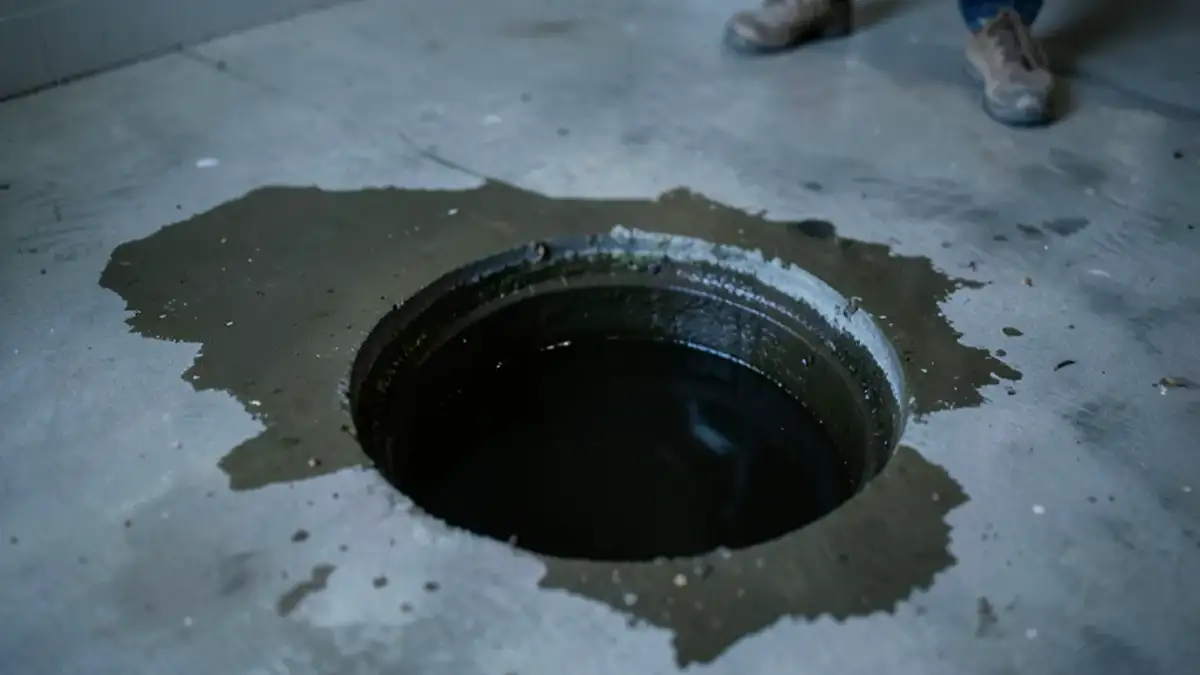
Sewage backing up into the house means stop all water use now, keep people and pets away from the spill, and call a plumber. Every flush and every load of laundry adds to what is coming up. This guide covers first steps, your line versus the city main, safe cleanup and what to ask your insurer.
Sewage Backing Up in Your House: What Do You Do First?
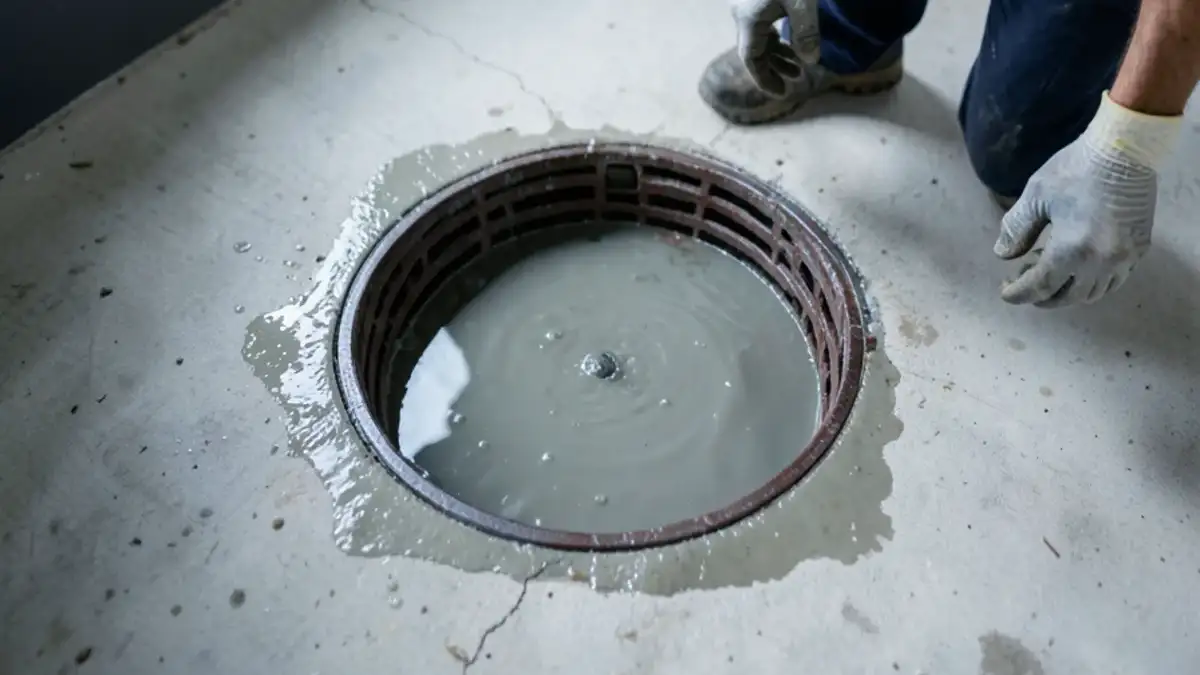
Stop all water use, then keep everyone out of the wet area. That means no flushing, no showers, no dishwasher and no laundry, because every drain you run sends more water toward the lowest opening in the house.
Then work through this list:
- Keep people and pets away. The EPA says to avoid contact with backed-up sewage because it may contain harmful pathogens.
- Check the electrical risk. If there is standing water and you can reach the main panel from a dry spot, the CDC says you can switch power off. If you would have to step into water, call an electrician.
- Open a window if you can do so safely, and keep children out of the basement.
- Call a plumber. Say which drains are affected and whether the lowest drain is the one coming up.
- Photograph the spill before cleanup, for your insurer.
- Call your local health department for guidance on cleanup, as the EPA advises.
Call us at (209) 563-1400 and describe what you see. Our Google hours run 7:15 AM to 6:15 PM every day.
Skip the common mistakes while you wait. Do not pour chemical drain cleaner down a floor drain, because it will not reach a blockage in the main line. Do not plunge a toilet that is pushing water up from below. Do not wade barefoot through the spill to rescue boxes. Do not let children or pets play in the basement until it has been cleaned and dried.
Sewage coming up through a floor drain? Call (209) 563-1400
Open 7 days, 7:15 AM to 6:15 PM. Tell us what is happening and we will give you a clear, upfront quote.
Is the Backup in Your Line or the City Main?
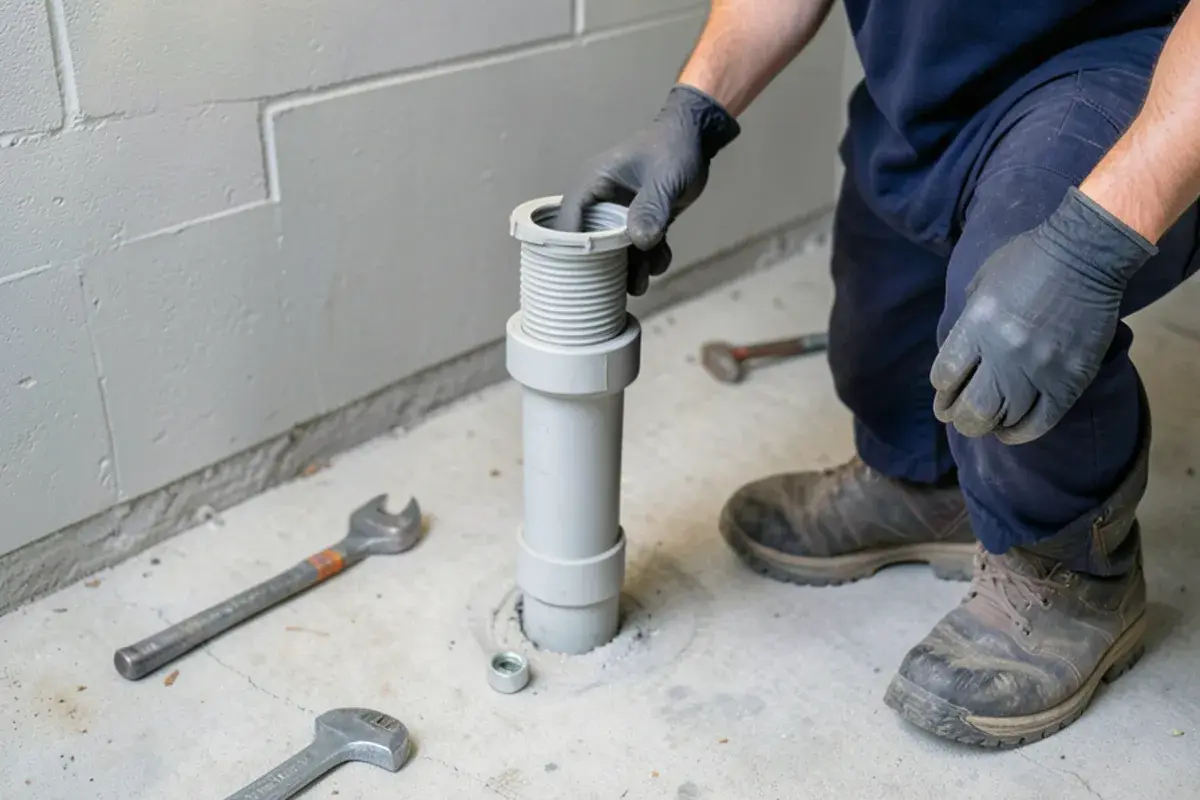
If only the lowest drain backs up, or several fixtures act up together, the blockage is in the main line that carries everything out of the house. A single toilet or sink that backs up is a branch drain. The two have different fixes.
The pattern helps you tell yours from the street's:
| What you see | Likely location | First move |
|---|---|---|
| One sink or tub slow, nothing else | Branch drain | Stop using that fixture, call for drain cleaning |
| Floor drain gurgles when the washer runs | Your sewer line | Stop water use, find the cleanout |
| Floor drain and several fixtures back up | Your sewer line or the main | Stop water use, call a plumber |
| Sewage rises while nobody is running water | More likely the city main | Call the city first |
| Neighbors on the street report the same | City main | Call public works, then your plumber |
The line from the house to the street is normally the owner's. Des Plaines is one Illinois city that states it plainly: the lateral is owned and maintained by the property owner, and typical homeowners insurance does not cover those costs. Rules differ by town, so ask your village or city.
Should You Call the City or a Plumber First?
Call the city first if anything points to the main. Illinois towns handle this differently. Belleville says a backup that rises when no water is being used is more likely in the city's line, and advises calling the city even if you are unsure. Oak Forest goes further: it clears a blocked main at no charge, but if you call a plumber first, the plumber's fee is yours even when the blockage is in the main.
We found no published backup procedure for Morton or Washington, so save the public works number now and ask who to call first, and who answers on a weekend. If the backup follows your own water use, Belleville's rule of thumb says the trouble is probably between the house and the street, and that is a plumber's call.
Do not count on a city check for the damage. Belleville says it is not automatically liable for property damage or cleanup, and that cleanup stays with the resident even when its main caused the backup. Ask your own town how a claim works, and keep damaged items until an adjuster has seen them.
What We Look For When We Arrive at a Backup
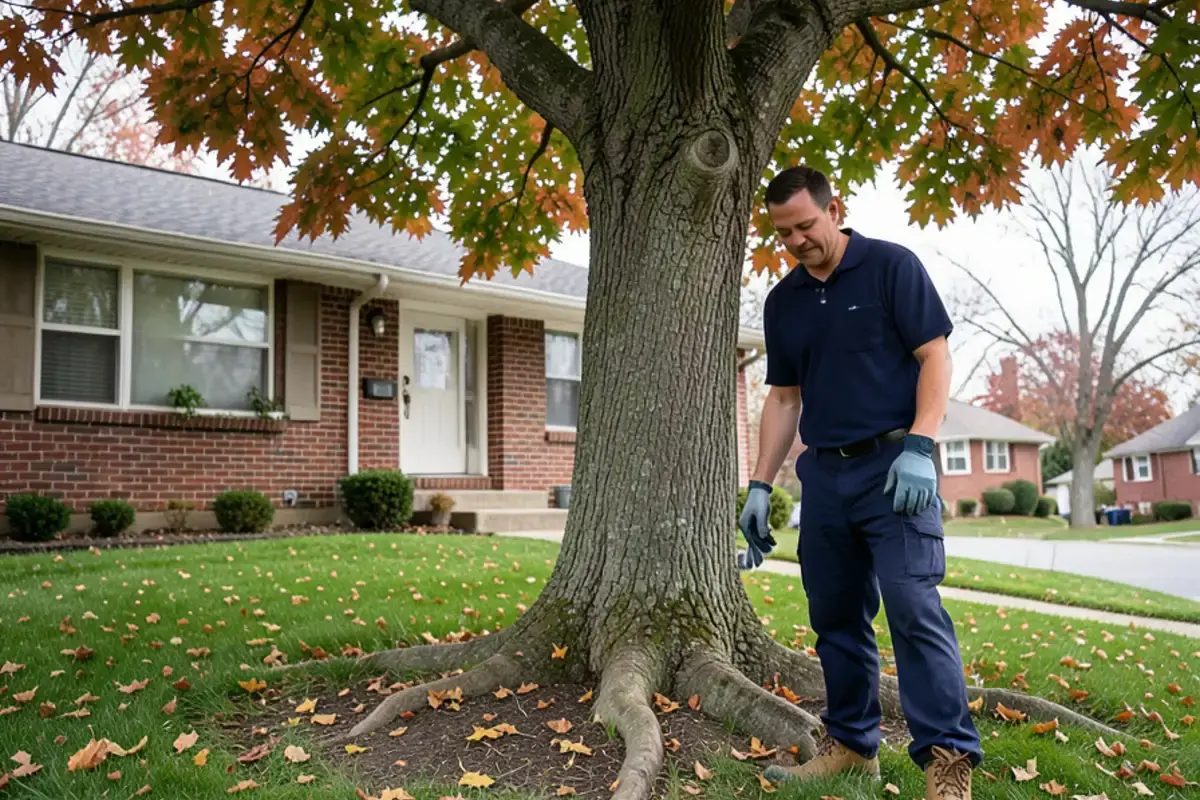
We start with the cleanout, because that is where we get the cable into the line. In an older Morton home on a tree-lined street, the first thing we want to know is whether roots or a collapsed joint are the cause, since a line that backs up once on roots tends to do it again.
We check the lowest fixture, run the cable toward the street, and look at what comes back. Roots, grease, paper or wipes each tell us something. After the line runs clear, we run water through it to confirm, and a camera pass tells you whether the pipe itself has a problem.
Two trade-offs are worth knowing before we start. Cabling opens a path through the blockage, but it proves nothing about the pipe, so a line cleared today can back up again if a root entry or a sag caused it. A camera answers that, but it is an added cost, and it needs a line that has drained, so it may be a second step. If this is the first backup in years and the cable brings back wipes or grease, cleaning alone may be fair. If it brings back roots, or this is the second backup in a year, we will tell you the footage is worth paying for.
Our emergency sewer backup page covers the visit. Sewer line cleaning covers the cable work.
Morton is about nine miles from our Washington base. A Morton call starts the same way as any other: tell us what is happening, and we will tell you when we can be there.
How Do You Clean Up After Sewage Backs Up?
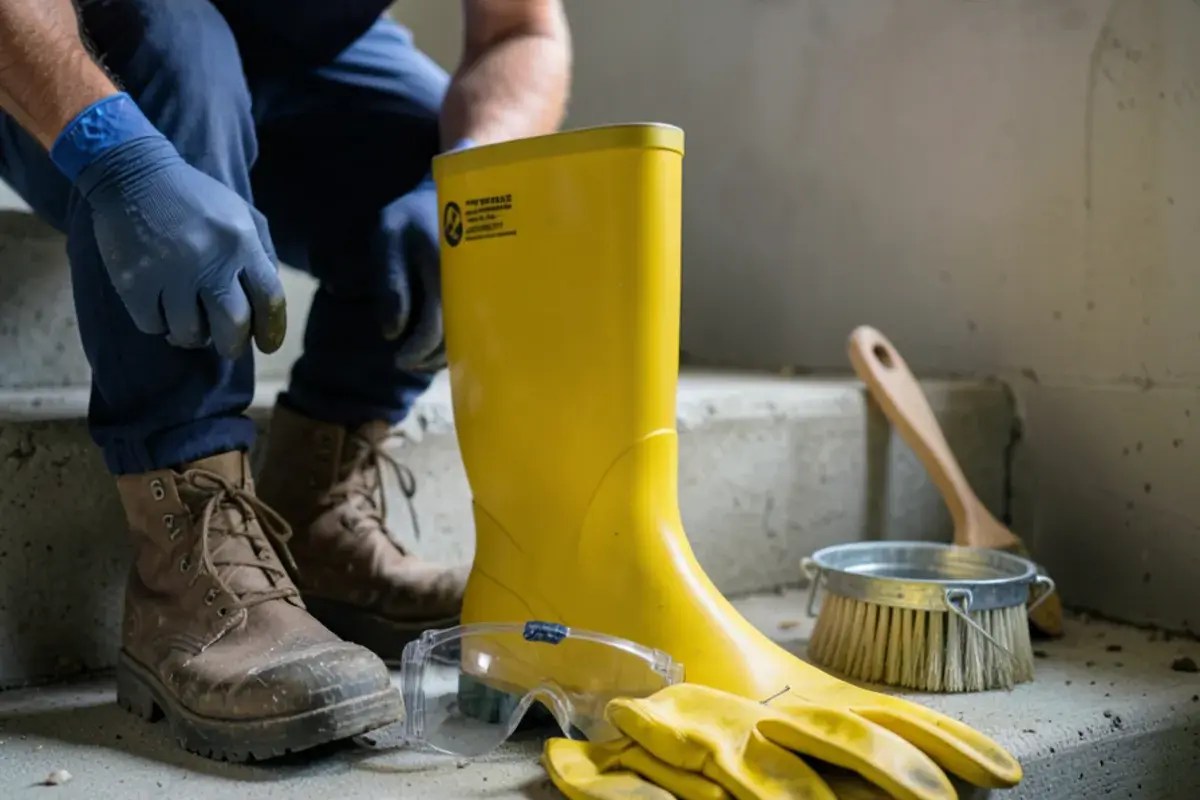
Wear rubber boots, long rubber gloves and goggles, and cover any cuts with a waterproof bandage. The CDC lists that gear for sewage, and it says to throw away what you cannot clean or dry quickly: carpet, rugs, upholstered furniture and paper goods.
The EPA recommends disinfecting exposed items and areas with a mixture of 90 percent water and 10 percent household bleach, and keeping the area unused until it has been completely dry for at least a full day. Never mix bleach with other cleaners. Wet drywall and insulation that touched sewage usually come out. Large spills are often better left to a cleanup contractor, and your health department can advise. Clearing the line is our side of this job. Cleaning the room is a separate job, and it is not a service we list.
What Stays and What Goes?
The Indiana Department of Health's backup guidance sorts a basement like this. It is a neighboring state's advice, so check with your local health department too.
| Item | Usual outcome |
|---|---|
| Food, cosmetics, stuffed animals, baby toys | Throw away if they may be contaminated |
| Mattresses, pillows, upholstered furniture, books, most paper | Usually throw away, because they soak up contamination |
| Wall to wall carpet and foam padding | Usually throw away, since wet carpet rarely returns to its size |
| Clothing and small throw rugs | Wash in warm or hot water, with bleach if possible |
| Wallboard | Often cut out, because it wicks moisture above the water line |
| Wood studs and sills | Usually kept if cleaned, disinfected and fully dried |
| Concrete walls and floors | Wash thoroughly and let dry |
Seal what you discard in heavy plastic bags. Leave the furnace blower and central air off if the ducts sat in wastewater, because they would carry it through the house.
Will Insurance Pay for a Sewage Backup?
Possibly, but only if your policy has the coverage. Triple-I says sewer backups are not covered under a typical homeowners policy and must be added as a separate product or endorsement. Read your policy for a water backup endorsement, call your agent, and photograph before cleanup. Our guide on whether homeowners insurance covers sewer backups explains how to check.
Get the Line Open First, Then Deal With the Room
Nothing you clean stays clean while the line is blocked, so stop the water, make the calls and leave the scrubbing until the drain runs free. Nate B. wrote that water came up from a basement sink and an upstairs tub, and that Monty came right over. That was one past call, and we will tell you honestly when we can be there.
Call (209) 563-1400 and say which drains are affected and whether anyone was running water when the sewage rose. Once the line is open, a sewer camera inspection shows whether the same backup is likely to come back.
Sources
- U.S. EPA: Resolving Septic System Malfunctions (sewage backing up into a home)
- CDC: Reentering Your Flooded Home, Safety Guidelines
- Triple-I: Which disasters are covered by homeowners insurance?
- City of Des Plaines: Sewer System (private sewer laterals)
- Indiana Department of Health: Homeowner Guidance on Cleaning Up After Residential Sanitary Sewer Backups
- City of Belleville: Sewer Backups, What Every Homeowner Should Know
- City of Oak Forest: Sewer Backup FAQ

Written by the Professional Sewer & Drain Services team
A plumbing and sewer company based in Washington, IL. About us