Sump Pump Service in Washington, IL
Pumps tested, replaced and backed up so the pit keeps working when the storm and the outage arrive together.
- 4.8 on Google, 16 reviews
- Open 7 days, 7:15 AM to 6:15 PM
- Based in Washington, IL
- Google reviews going back 10 years
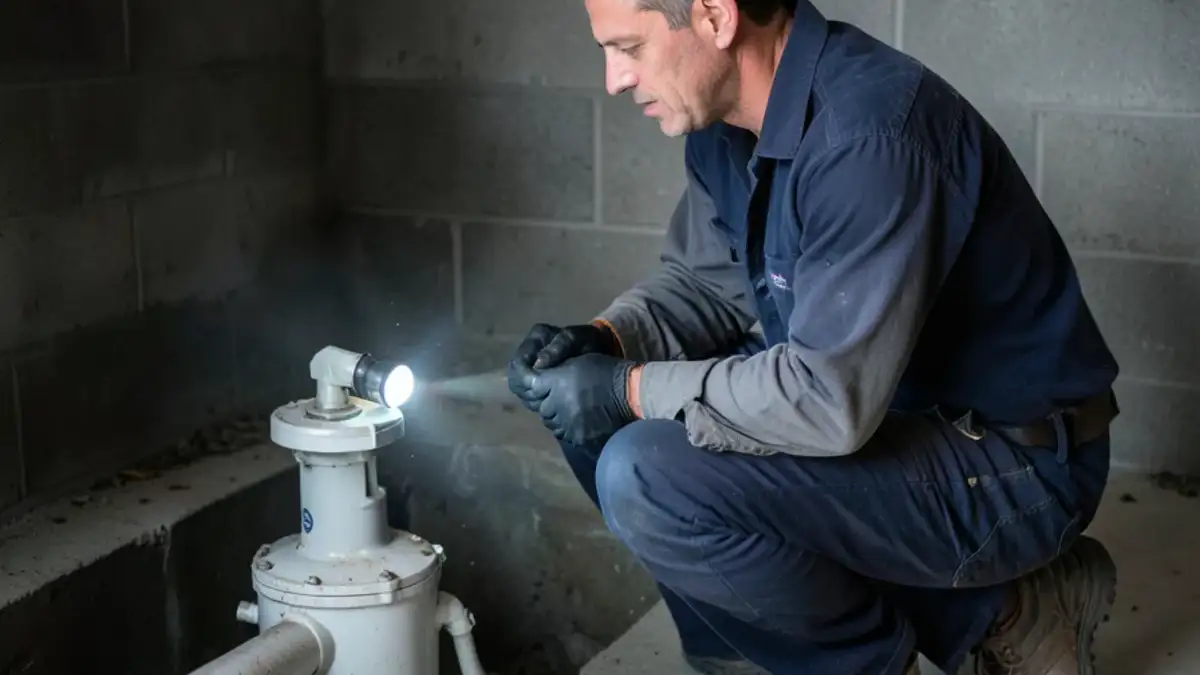
Sump pump service in Washington, IL means testing the pump under load, repairing or replacing a weak one, adding battery backup, and sending the discharge outside instead of into the sanitary sewer. Washington averages about 38 to 39 inches of precipitation a year, so a basement pit does real work. An untested pump is a guess.
How Do You Test a Sump Pump?
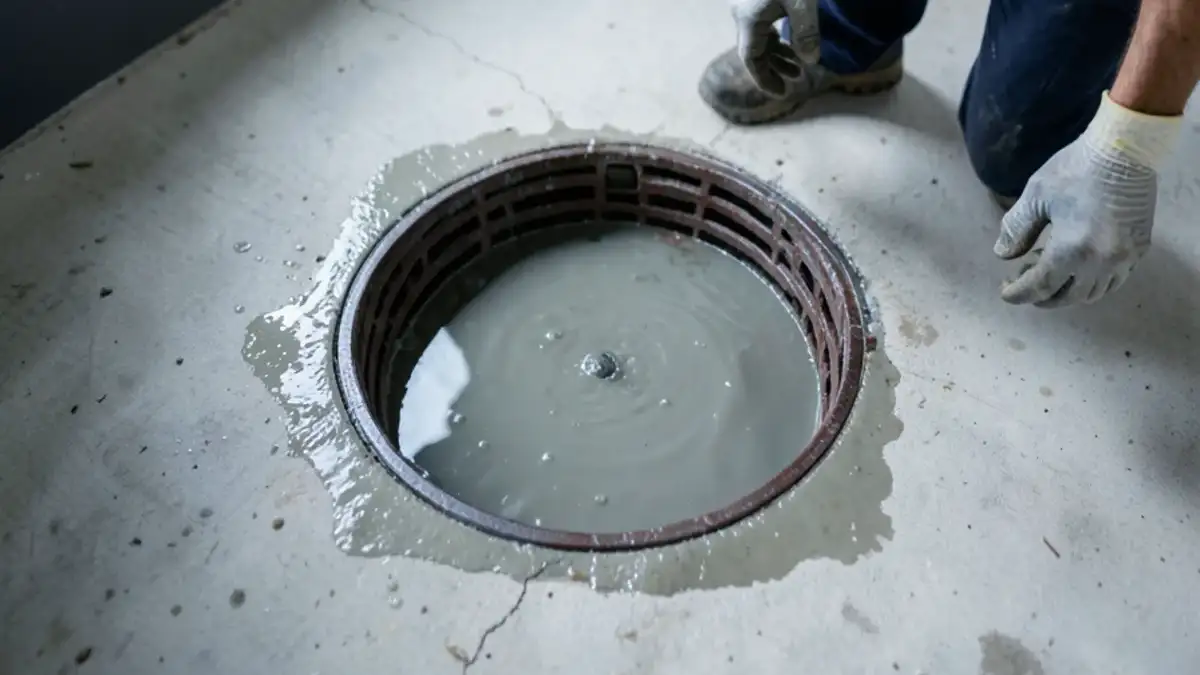
Test it by filling the pit and watching the pump work. Do it in dry weather, before the spring melt, and again each fall.
- Make sure the pump is plugged in, ideally to its own outlet.
- Pour a few buckets of water slowly into the pit until the float rises.
- Watch the pump start, empty the pit and shut off on its own.
- Look outside and confirm water leaves the discharge pipe.
- Listen for grinding, rattling or a motor that hums without pumping.
- Lift the float by hand to confirm it moves freely and does not catch on the side of the pit.
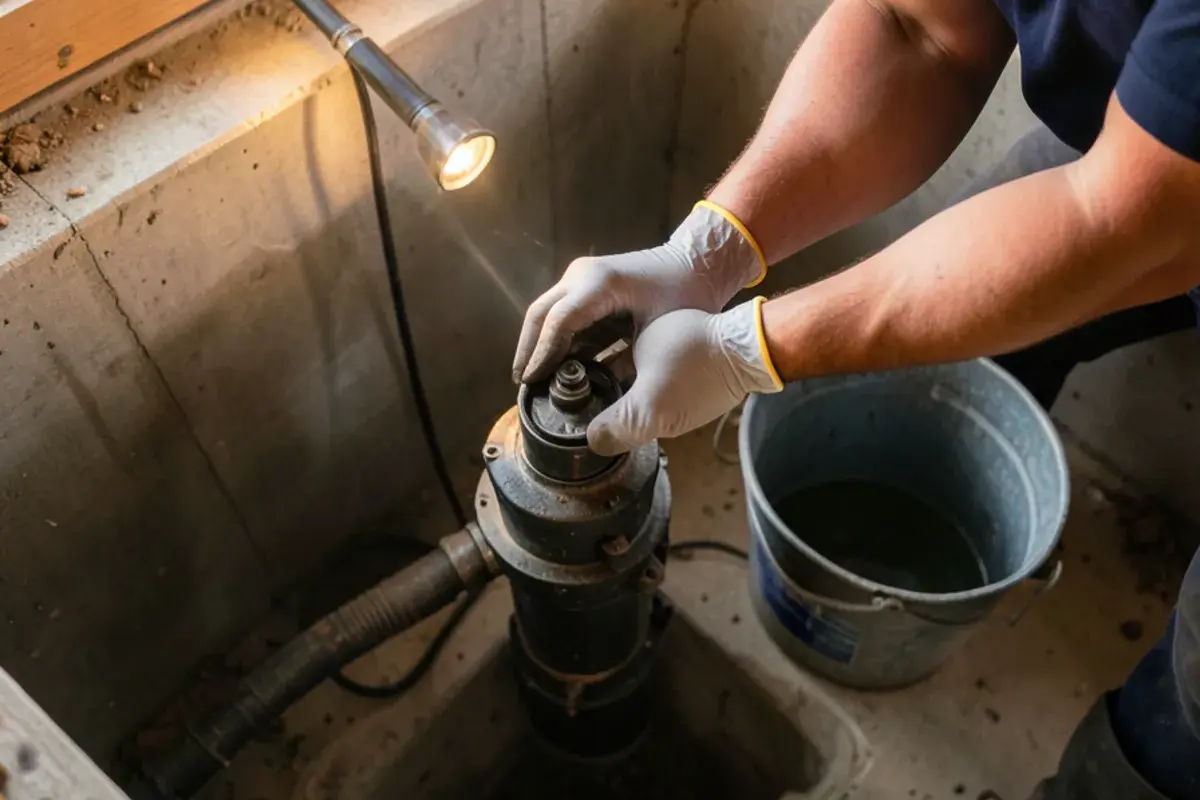
A pump that starts but moves little water may have a worn impeller or a clogged intake. If the water falls back into the pit after the pump stops, the check valve on the discharge line has failed. Call us for either one.
Why Do Washington Basements Depend on the Pit?
Washington gets about 38 to 39 inches of precipitation across roughly 108 days a year, and about 24 inches of that falls as snow (BestPlaces). Snowmelt on frozen ground has nowhere to soak in, so it runs toward the foundation. The pit collects it before it reaches the floor.
The housing mix matters too. The median Washington home was built in 1978, and the largest block of homes, about 21%, dates to 2000 through 2009 (Point2homes, citing Census data). Many of those houses have basements with a perimeter drain tile that feeds a pit. After the 2013 tornado, many homes were rebuilt from 2014 onward, and a rebuilt basement has the same need.
The worst timing is a thunderstorm that knocks out the power. The pit fills fastest exactly when an electric pump cannot run. A quiet pump in a dry August tells you little, so a failure usually shows during the first big melt.
Battery Backup: What It Covers and What It Does Not
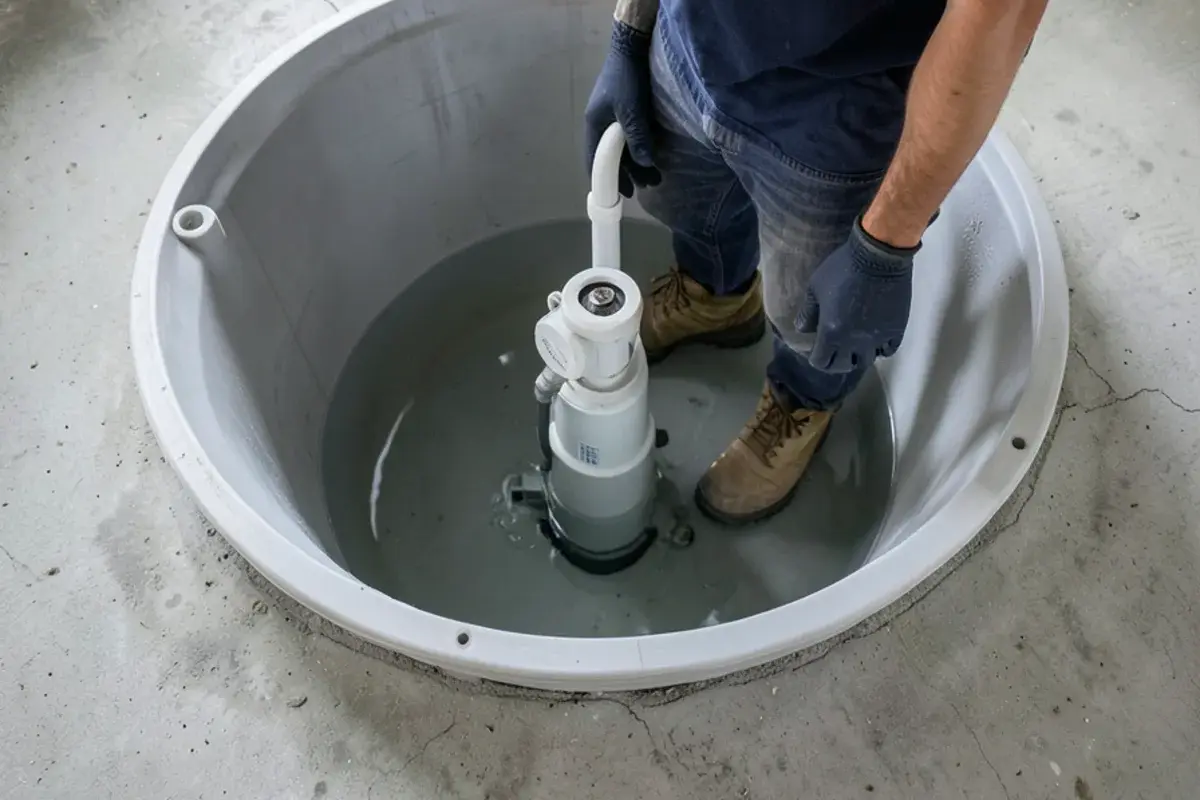
A battery backup runs a second pump when household power fails. It does not make a weak main pump strong. These are the common options.
| Backup type | Helps when | Limit |
|---|---|---|
| Battery-powered second pump | Power fails during a storm | Runs for hours, not days; the battery wears out |
| Generator, wired to the pump | Outage lasts a long time | Needs fuel and someone home to start it |
| Water-powered backup | Power fails and the home is on city water | Needs water pressure, so it fails on a well when the outage stops the well pump |
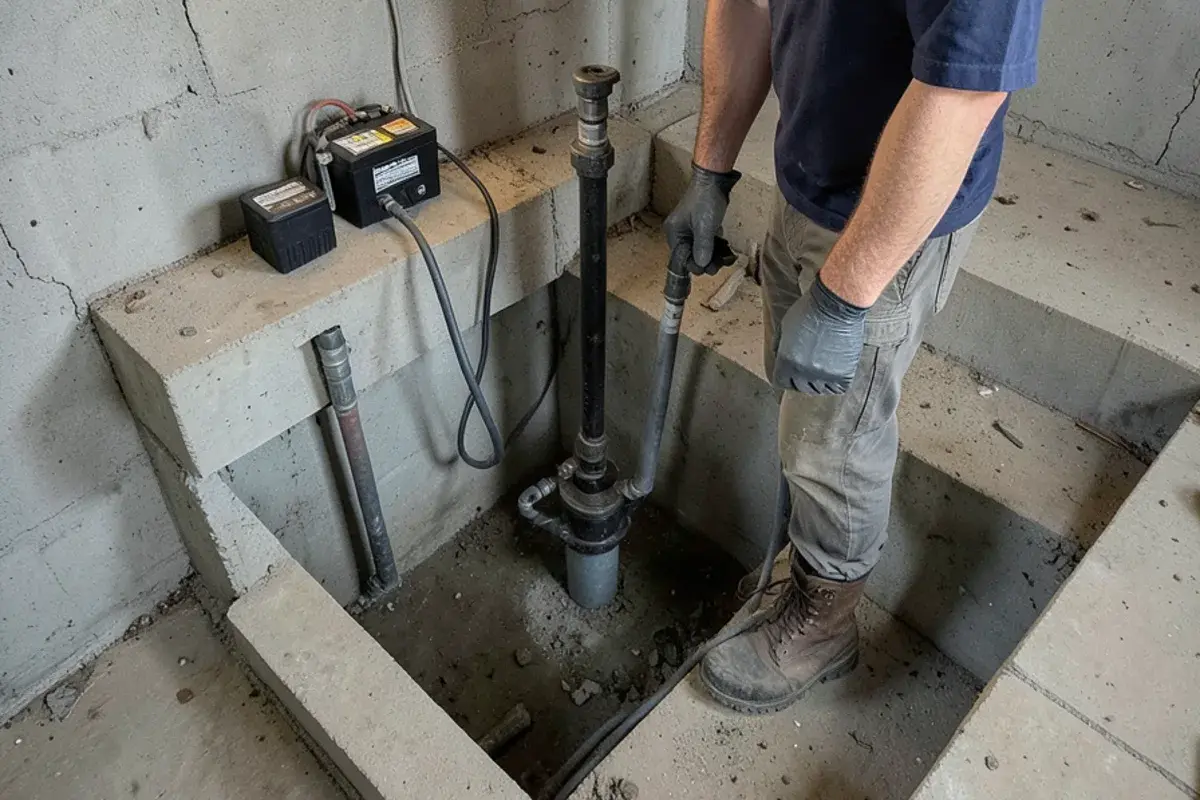
We set the backup pump on its own float, higher than the main pump's, so it only starts if the main one fails or the pit is rising too fast. A high-water alarm tells you before the floor does. Test the battery each season, since a battery with no visible problem can still fail under load.
Basement water coming up? Call (209) 563-1400
Open 7 days, 7:15 AM to 6:15 PM. Tell us what is happening and we will give you a clear, upfront quote.
Request a Quote
Water moving right now? Call first: (209) 563-1400. For anything that can wait, send the details here.
Where Does the Discharge Go?
Outdoors, away from the foundation, and never into the sanitary sewer. Clean sump water in a sanitary line adds to the flow that already strains sewers during heavy rain, and it is one reason some homes back up when the neighborhood floods.
A proposed ordinance in Washington would amend Chapters 52 and 96 on private sewer laterals. As the draft is described, it would bar sump and perimeter tile discharge into sanitary sewers and authorize city inspection. It is proposed, not confirmed as law. Check its status with the city before you assume either way.
If your sump is plumbed to a floor drain or a sewer line, tell us when you call. Rerouting is usually a matter of running the discharge pipe through the rim joist to a safe outdoor point, and that is a better time to do it than after a rule changes.
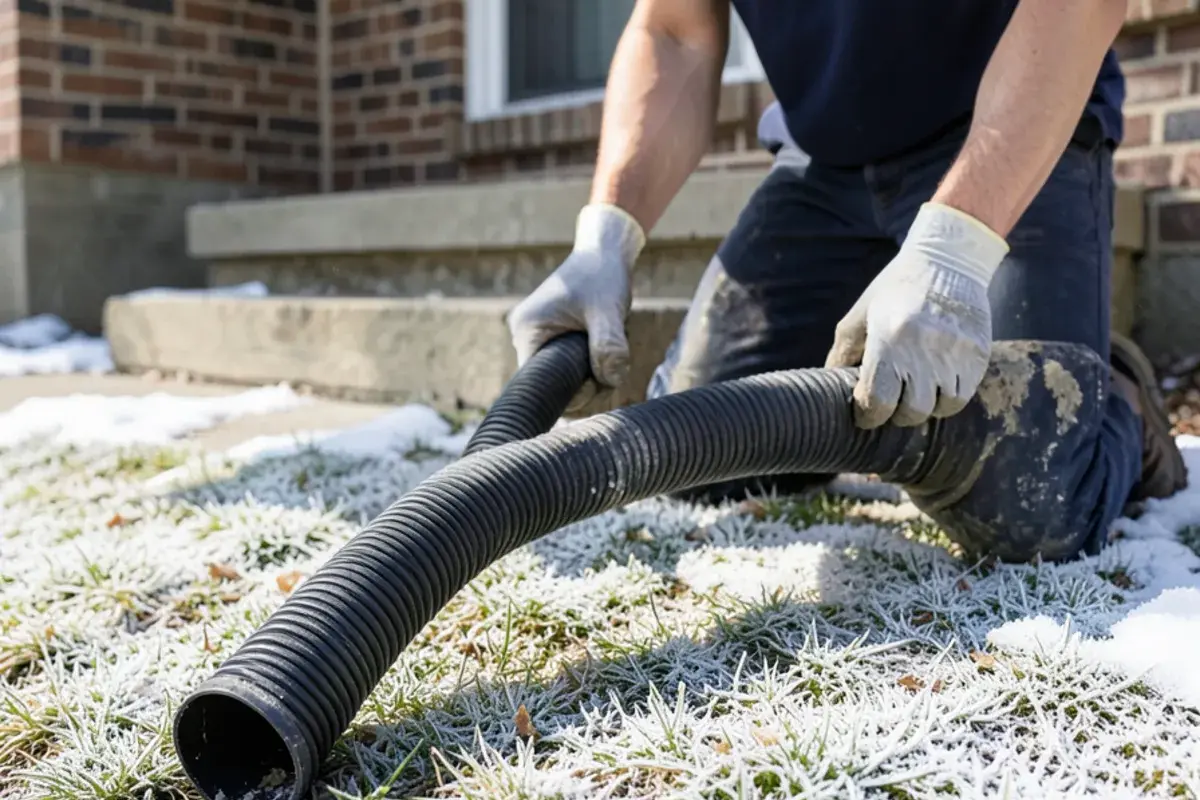
In winter the outdoor end can freeze. Keep the outlet open, pointed downhill and clear of snow, and the pump will not push against ice.
What Does Sump Pump Service Include?
Sump pump service covers the system from the pit to the point where water leaves the yard, not only the pump. A pump in good order still fails you if the check valve sticks or the outdoor end freezes.
- Testing the pump under real water, float and switch included
- Repairing or replacing the pump, float or check valve
- Adding backup, battery or water-powered, with a high-water alarm if you want one
- Rerouting discharge away from a floor drain or sewer connection
- Checking the outlet so the pump has a clear path outdoors
Grading, downspouts and foundation cracks sit outside this work. If water enters through the walls, the pit may be doing its job and the problem starts elsewhere, and we tell you what we see. Installing a new pit in a basement that has none is a larger job, so ask us to look at it first.
What Happens During a Sump Pump Visit?
The visit follows the pit from inside to the yard.
- Look at the pit. We check size, debris, standing water and whether the pump sits level.
- Test the pump. We fill the pit and watch the float, switch and motor under load.
- Check the discharge. The check valve, the pipe run and the outdoor end all get a look.
- Check the power. The outlet and cord matter as much as the pump.
- Repair, replace or add backup. We explain the trade-offs, then you decide.
- Test again. Water runs out the discharge pipe before we leave.
What Changes the Cost of Sump Pump Work?
You get a clear, upfront quote for your job. These are the things that move it:
- Repair or replacement. A new float or check valve is a smaller job than a new pump.
- Pit condition. A cracked or undersized pit may need work first.
- Backup type. A battery system, a generator hookup and a water-powered unit differ in parts and labor.
- Discharge path. A longer run, or a reroute away from the sewer, adds pipe and time.
- Access. A tight, finished basement takes longer than an open one.
Ask when the pump was installed. Age is a fair reason to replace one before the wet season.
Washington homes differ here. A 2000s basement with a tile-fed pit and an easy wall exit costs less to serve than an older basement where the discharge must be moved off a sewer connection. Winter work on a frozen outlet takes longer than the same job in dry weather, so test in the fall.
Who Sets the Rules for Sump Water?
Your town and sewer provider do, and they differ by system. Washington's proposed ordinance, described above, has no confirmed status, so ask the city. Illinois American Water's guidance for its wastewater customers is firmer: discharge only to the yard or a storm sewer, and it calls connecting a sump pump to a sanitary pipe illegal.
Pump and piping work is plumbing, and the Illinois Department of Public Health requires a license for anyone who installs or repairs plumbing, under 225 ILCS 320. Ask for the number and verify it. If a new discharge line means digging in the yard, JULIE needs a call at 811 at least 48 hours ahead.
Why Professional Sewer & Drain for This Work
Open seven days
The Google listing shows 7:15 AM to 6:15 PM, seven days a week. Customers have reviewed Saturday and Sunday calls, and basement water does not keep a weekday schedule.
We explain how to stop the next one
Jason P. and Roben V. each described advice on preventing a repeat problem. After a pump job you should know what failed and what to check.
Showed up when they said
Molly J. described a crew that arrived at the time promised, with the work done correctly on the first visit.
Pricing reviewers call reasonable
Seven of the reviews on our Google profile call the price reasonable or affordable. That is what past customers said, not a quote, and you get a clear, upfront quote for your own job.
What Customers Say
4.8 out of 5 from 16 Google reviews, checked November 2026. Read all reviews
“Just a superb experience in quality and customer service and price. Called these guys at 5:30p and they were here by 6:00p and Monte did his work in the dark by flashlight! Not only did he do a fantastic job he also educated us on how to prevent these problems from becoming a much bigger and more expensive issue. I would recommend this company to anyone, they are committed to doing a professional job, ensuring it is done right and with very affordable prices.”
“Monte and Hunter came out on a Sunday (morning no less!) to help us with a mess from a backed up sewer. Lots of roots! They used two different sized cutters with a monster snake and cleaned it out all the way to the city sewer. We'd had another "sewer service" a few weeks ago and the experience was night and day different. I definitely recommend them.”
“Had water coming up from sink in basement and tub upstairs. Called Monty and he came right over. He did an awesome job and was very knowledgeable and professional. Very reasonably priced too. He had the problem fixed in no time. I highly recommend this company.”
Sump Pump Service Questions
Can my sump pump discharge into the sewer drain?
How long will a battery backup run my sump pump?
Do I need a sump pump if my basement has never flooded?
Why does my sump pump run when it is not raining?
Should I repair or replace a sump pump?
Where should a sump pump discharge line end in winter?
Sump Pump Service in Washington? Call (209) 563-1400
Open 7 days, 7:15 AM to 6:15 PM. Tell us what is happening and we will give you a clear, upfront quote.
Where We Provide This Service
We service sump pumps from our Washington base across Tazewell and Woodford counties. In Germantown Hills, newer homes sit on bluff land where pits and pumps are part of the basement. Established streets in Morton and homes near the river in East Peoria lean on the same pit during spring melt and heavy rain. Metamora has older houses where the discharge path is worth checking. The full list is on the service areas page.
- Germantown Hills: Newer homes on 764-foot high ground still lean on pits and pumps.
- Morton: Established basements take the same spring melt as Washington's.
- East Peoria: A city first settled on a swampy floodplain makes pit upkeep a priority.
- Metamora: Old houses near the village core deserve a look at the discharge path.
- Creve Coeur: The village calls its sewers aging, so keep sump water out of them.
- Dunlap: Three in four homes postdate 1970, so pump age is worth checking.
- Chillicothe: A river town at 528 feet, where wet seasons load the pit.
- Peoria: Combined sewers make it worth keeping clear water out of the drain.