Toilet Repair and Installation in Washington, IL
Running, clogged, rocking or leaking at the base: we fix it or set a new toilet.
- 4.8 on Google, 16 reviews
- Open 7 days, 7:15 AM to 6:15 PM
- Based in Washington, IL
- Google reviews going back 10 years
Toilet repair and installation in Washington, IL covers four common problems: a toilet that runs, one that clogs, one that leaks at the base and one that is past saving. Most repairs are a small part, a flapper, a fill valve or a wax ring. Replacement makes sense when the porcelain is cracked or an older toilet wastes water.
Why Is My Toilet Running?
A running toilet is almost always a flapper or a fill valve. Take the tank lid off and watch.
- Water trickles into the bowl. The flapper is worn, warped or caught on its chain. Replace it.
- Water spills into the overflow tube. The float is set too high, or the fill valve is not shutting off.
- Toilet refills by itself every few minutes. That is a "phantom flush," a slow leak past the flapper.
- Handle sticks. The chain is too tight or too loose, or the handle is loose.
The EPA's dye test confirms a leak. Add a few drops of food coloring to the tank, wait 10 minutes without flushing and check the bowl. If color shows, the flapper is leaking. Flush right after.
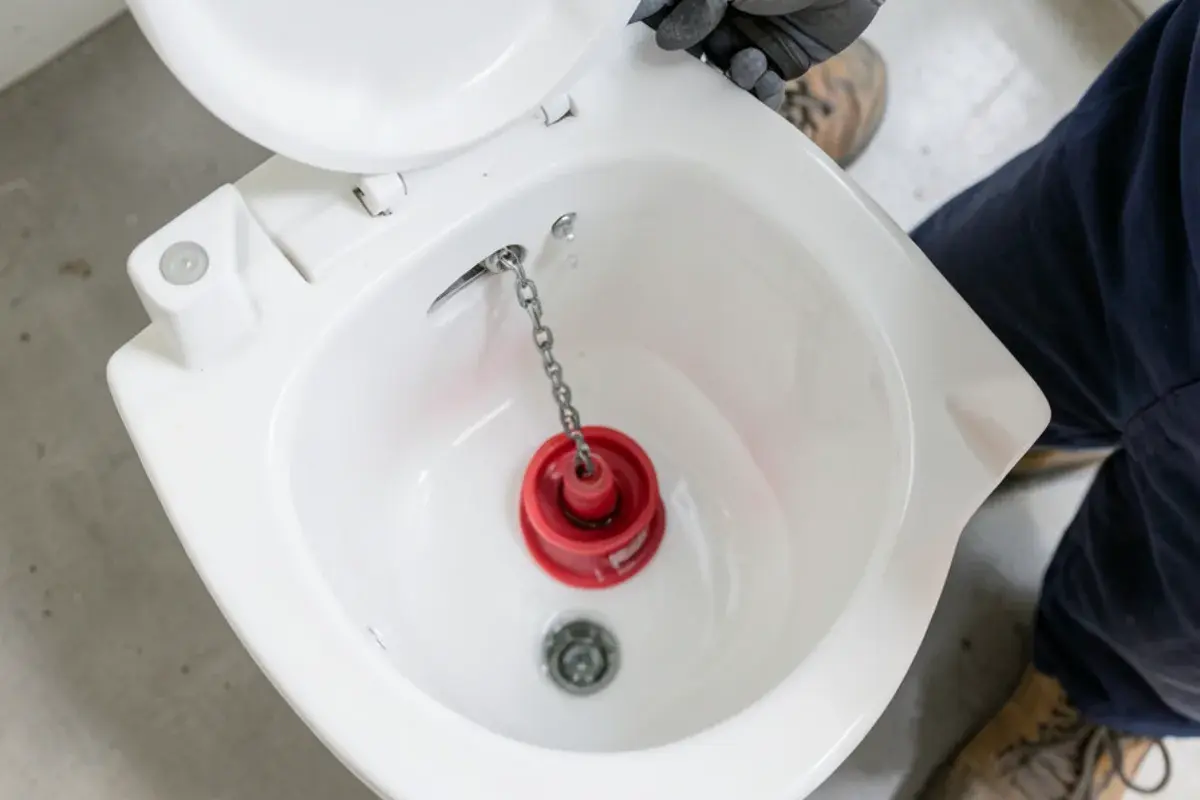
A leaking toilet adds to the water bill and the sewer charge. Fix it early.
What to Do for a Clogged Toilet
Plunge with a flange plunger first, with enough water in the bowl to cover the cup. Push slowly, then pull hard. Pour in nothing. Chemical drain cleaner in a toilet can sit in the bowl and burn skin when you plunge.
If that fails, a closet auger reaches the trap and often pulls out the problem. If a toddler's toy, a wipe or a brush is stuck, an auger can push it deeper. We pull the toilet when that is likelier.
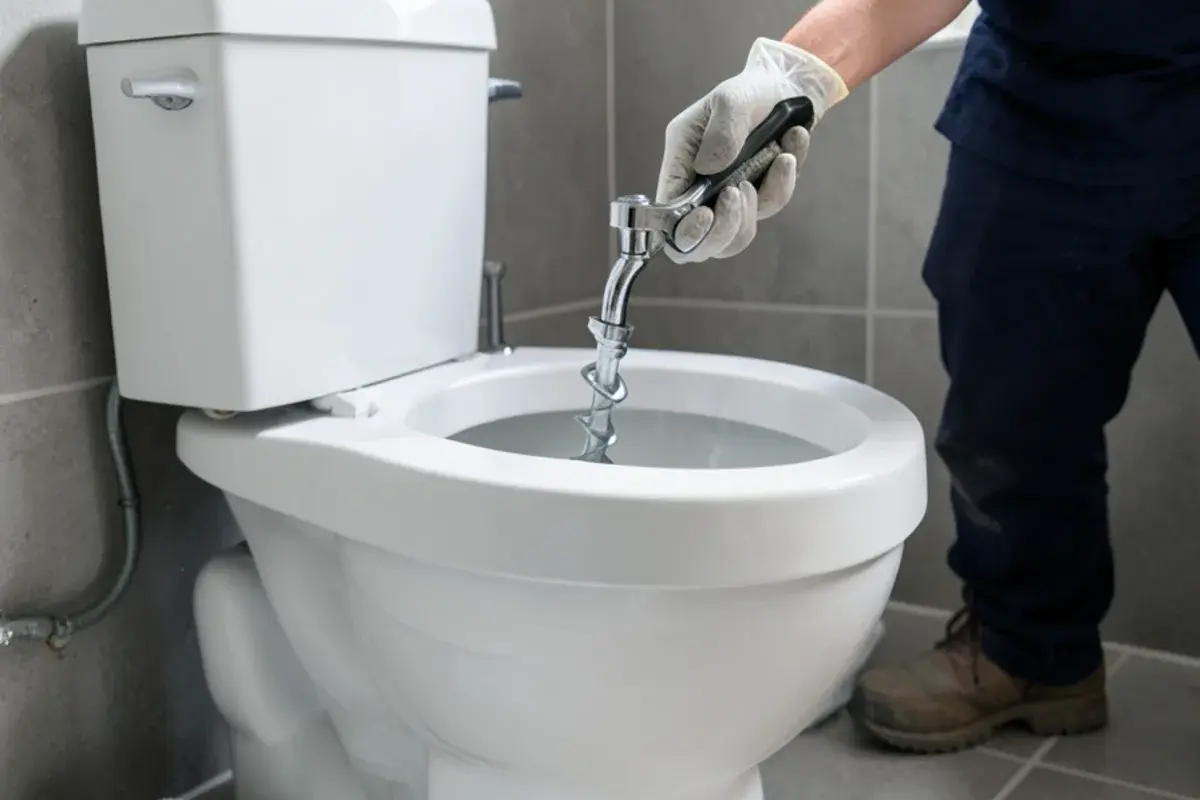
The question that matters is whether this is one toilet or the whole house. If the tub gurgles, a basement drain bubbles or two fixtures slow down together, the main line is the issue, and our sewer line cleaning covers that. For repeat clogs in a sink or tub, see drain cleaning.
A basement bathroom may drain to a pit with a pump rather than into the main by gravity. A failing pump looks like a clogged toilet. Mention the pit when you call.
Toilet clogged or overflowing? Call (209) 563-1400
Open 7 days, 7:15 AM to 6:15 PM. Tell us what is happening and we will give you a clear, upfront quote.
Request a Quote
Water moving right now? Call first: (209) 563-1400. For anything that can wait, send the details here.
Why Is There Water Around the Base?
Water at the base means the seal failed, the bolts loosened or something else is dripping. Check in this order:
- Dry the tank and supply line. Cold tanks sweat in summer, and condensation drips down.
- Check the supply connection. A loose or cracked supply line can drip onto the floor.
- Rock the toilet. If it moves, the flange or bolts are loose, and the wax seal breaks every time it shifts.
- Look at the floor. Soft or stained flooring around the base means the leak has been running a while.
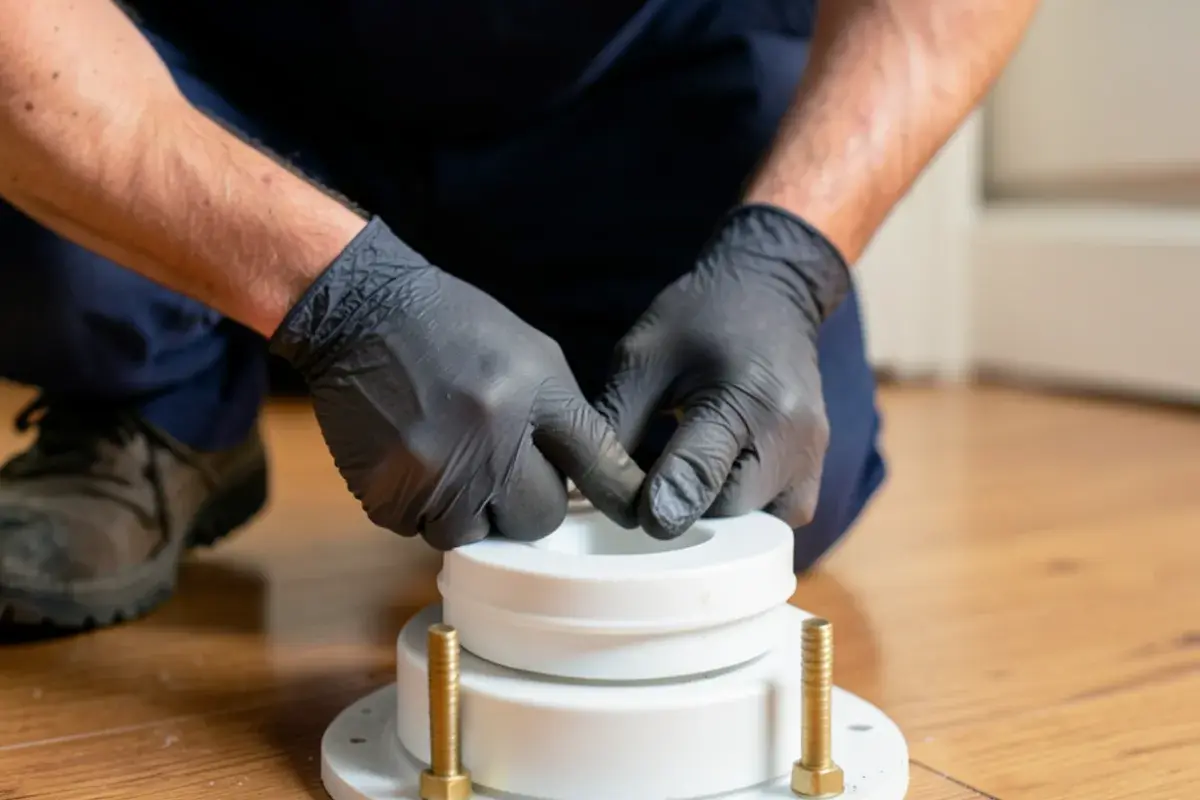
The wax ring sits between the toilet and the floor flange. It seals the drain and keeps sewer gas out. Once the toilet is pulled, a new ring is a small cost, but a rotted subfloor or a cracked flange is a bigger repair. Water below a second-floor bathroom may show on the ceiling first. That is a case for leak detection.
What Does a Toilet Visit Include?
A toilet visit covers everything from the supply stop to the seal at the floor. Tell us what you see, and we will say whether to expect a part, a reset or a new toilet.
- Tank repairs: flapper, fill valve, handle and chain
- Clearing the bowl and trap, with the toilet pulled if something is stuck
- Base repairs: a new wax ring, new bolts and a level reset
- Flange and supply fixes: a cracked flange, a stop valve that leaks or a worn supply line
- New toilet installation, set level, sealed and tested
A soft subfloor is the one surprise, and we show it to you before any added work. Flooring beyond the flange area belongs to a floor installer. Repeat clogs that reach past the toilet are a line problem, not a toilet problem, and we tell you when that is what we find.
How Does Toilet Repair and Installation Work?
A repair visit and a replacement follow different steps, so tell us which you expect.
For a repair, we diagnose the cause, replace the failing part and test the flush and fill. For replacement:
- Shut the water off at the stop valve and drain the tank and bowl.
- Disconnect and lift the old toilet, then scrape off the old wax.
- Inspect the flange and floor. A cracked flange or soft subfloor must be fixed first.
- Set a new wax ring and the new toilet, level it and tighten the bolts evenly.
- Connect the supply line, open the valve and check for leaks.
- Flush several times and watch the base.
Ask about removing the old toilet when you book, so nothing is left in the bathroom.
When Is It Time to Replace the Toilet?
Replace the toilet when repairs cost more than the problem is worth. Reasons to do it include a cracked bowl or tank, a toilet that clogs every week, a base that leaks after a new wax ring and a toilet that uses far too much water.
The EPA says older toilets can use as much as 6 gallons per flush, against a federal standard of 1.6. Washington's median home dates to 1978, so many bathrooms still have toilets from before those standards.
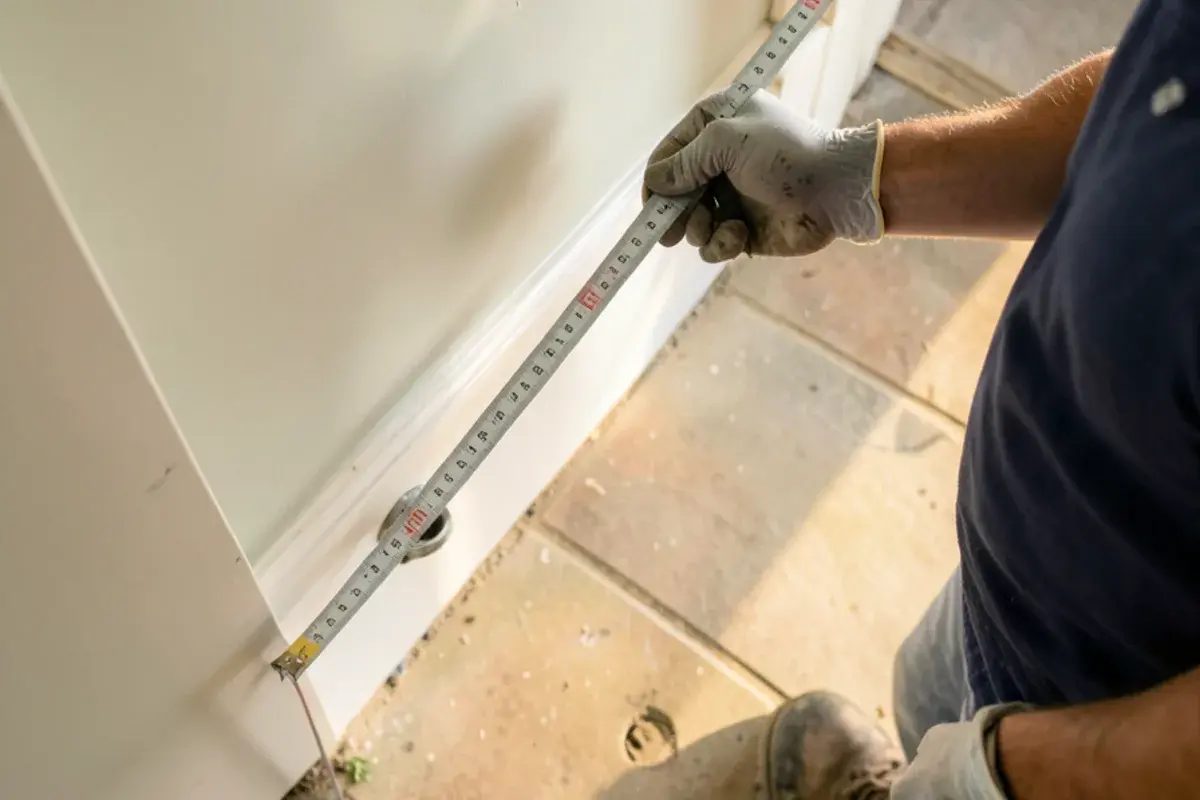
Choose by three measurements:
- Rough-in. Twelve inches is the most common; 10 and 14 exist.
- Bowl shape. Elongated is roomier, round saves space in a tight powder room.
- Height. Standard or comfort height, which is closer to a chair.
What Moves the Price of Toilet Work?
A published estimate puts plumbing services in Washington at $104 to $346 (Today's Homeowner, estimates, not government data). That is not our quote, and a toilet replacement with floor repair can sit above it. You get a clear, upfront quote before we start. The price depends on:
- Repair or replace. A flapper is a part; a new toilet is a fixture and a longer visit.
- The toilet you choose. Basic and high-efficiency models differ widely.
- Flange and floor condition. Repairing a cracked flange or soft subfloor adds work.
- Access. A tight room or a second-floor bathroom takes longer.
- The age of the bathroom. In a home near Washington's 1978 median, a flange or stop valve may never have been touched, and it can need replacing once the toilet is up.
A replacement also changes the monthly bill. Water and sewer both bill by use on the city's published rates, $3.28 and $6.01 per 1,000 gallons. Check the current rates.
Can You Replace a Toilet Yourself in Illinois?
Yes, in the single-family home you live in. Section 3 of the Illinois Plumbing License Law, 225 ILCS 320, lets an owner-occupant or tenant-occupant work on that home's plumbing, and the work must still meet the Illinois Plumbing Code. Anyone you hire to help must be a licensed plumber, so a handyman does not qualify. Ask for the license number and check it with the Illinois Department of Public Health.
The code reaches inside the tank too. Section 890.650 says a flush-tank fill valve, which the code calls a ballcock, must be an anti-siphon type with a trap refill. Ask the City of Washington whether your fixture swap needs a permit.
How Do You Prevent Toilet Problems?
- Flush only toilet paper and waste. Wipes sold as flushable do not break down like paper.
- Replace a flapper every few years, sooner in hard water, since mineral deposits stop it from sealing.
- Learn where the stop valve behind the toilet is and turn it once in a while.
- Do not use in-tank cleaning tablets, which can wear down rubber parts.
- Fix a rocking toilet right away, before the seal fails.
Why Professional Sewer & Drain for This Work
Toilet work is on the record
Roben V.'s Google review lists toilet repair among the work Monte did on the coldest, blizzard day of the year.
We explain the cause
Jason P. wrote that we explained how to keep a problem from growing into a bigger one. A toilet that keeps clogging may have a problem past the bowl.
Prompt on weekends
Anthony T. called on a Sunday, wrote that we were over in 15 minutes and had it fixed in 10. That is one customer's account, and our listed hours are the same seven days a week.
Pricing reviewers called reasonable
Seven reviewers called the price reasonable or affordable. The toilet quote comes first, in clear terms, before any work.
What Customers Say
4.8 out of 5 from 16 Google reviews, checked November 2026. Read all reviews
“I am so thankful for Monte coming out during the coldest day with blizzard conditions with same day service. He was very kind and worked quickly to rectify issues with plumbing and gave suggestion for future work that needs to occur to prevent any further issues. His services are very reasonable given the work that he did. I will always use him for any issues in the future. Thank you for all that you did for us today and so thankful that you got home safe!”
“Dropped everything late in the day on a Saturday to fix our backed up kitchen sink. Price was super reasonable for day/time/speed of arrival. Highly recommend.”
“Just a superb experience in quality and customer service and price. Called these guys at 5:30p and they were here by 6:00p and Monte did his work in the dark by flashlight! Not only did he do a fantastic job he also educated us on how to prevent these problems from becoming a much bigger and more expensive issue. I would recommend this company to anyone, they are committed to doing a professional job, ensuring it is done right and with very affordable prices.”
Toilet Repair and Installation Questions
Why does my toilet keep running after I flush?
How do I know if a leak at the base is the wax ring?
Is a clogged toilet a sign of a sewer problem?
Can a plumber install a toilet I bought myself?
How much water does an old toilet waste?
What should I do if my toilet is overflowing right now?
Toilet Repair and Installation in Washington? Call (209) 563-1400
Open 7 days, 7:15 AM to 6:15 PM. Tell us what is happening and we will give you a clear, upfront quote.
Where We Provide This Service
Toilet problems follow the age of the house. Older homes in Pekin and Creve Coeur tend to have older toilets and tired flanges, while the larger subdivisions in Morton and East Peoria often have second-floor bathrooms where a base leak drips onto a ceiling. We work from our Washington base, and our service areas page lists every town.
- Morton: Second-floor baths let a base leak reach a ceiling.
- East Peoria: A failed wax ring upstairs soon becomes a ceiling stain.
- Pekin: Older homes here often have tired flanges and old toilets.
- Creve Coeur: A 1955 median build year points to aging bathroom drains.
- Marquette Heights: Postwar homes may still have their original closet flanges.
- Germantown Hills: Newer bathrooms usually need tank parts, not flange work.
- Bartonville: With 57% of homes built by 1959, flanges deserve a look.
- Peoria Heights: Most homes predate 1960, so check the rough-in before buying.