Gas Line Repair and Installation in Washington, IL
Appliance hookups, new gas lines and repairs, each one pressure tested before it is put to use.
- 4.8 on Google, 16 reviews
- Open 7 days, 7:15 AM to 6:15 PM
- Based in Washington, IL
- Google reviews going back 10 years
Gas line repair and installation in Washington, IL covers new appliance hookups, new branch lines, and repair of damaged or corroded piping, and every job ends with a pressure test and leak check. If you smell gas right now, leave the house first and call from outside. Everything else on this page can wait until you are safe.
What Do You Do the Moment You Smell Gas?
Get out first and call from outside. That is the whole plan, and no other step matters until it is done.
- Take everyone out, pets included, and do not stop to gather things.
- Do not turn anything on or off, and do not light anything.
- Call the gas utility or 911 from a neighbor's house or the yard.
- Stay out until the utility says it is safe.
Once the house is cleared and the cause is known, a plumber can repair the piping on your side of the system. The meter and the utility's equipment belong to the utility, not to us.
What Does Gas Line Repair and Installation Cover?
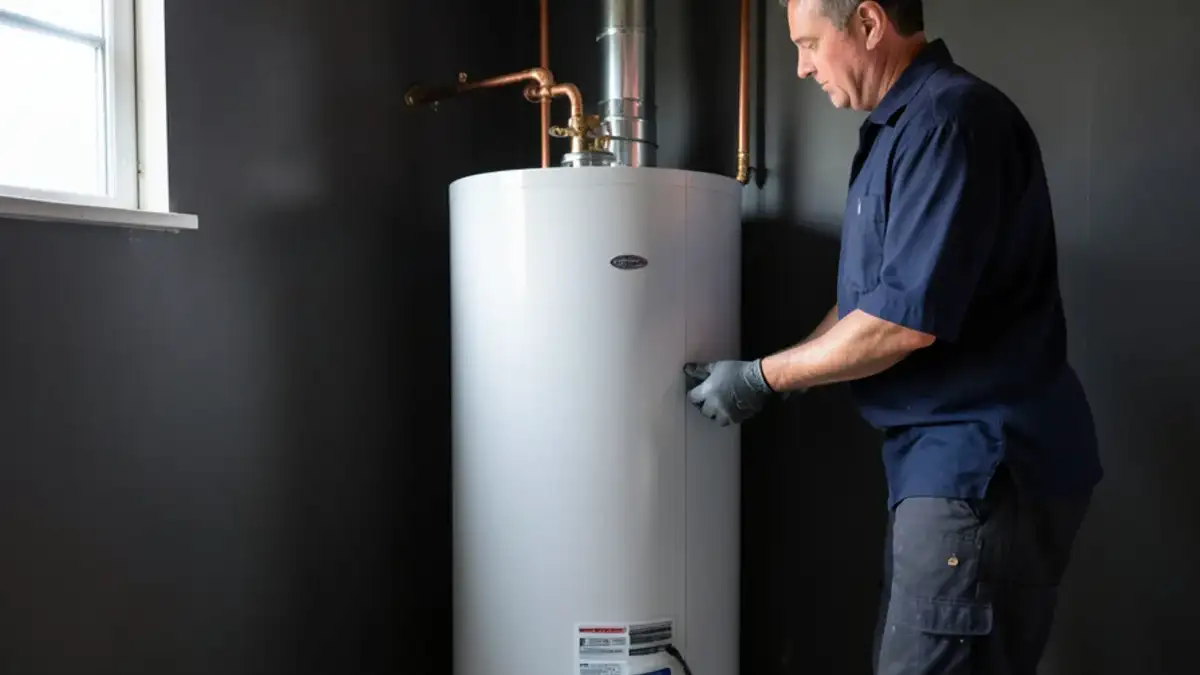
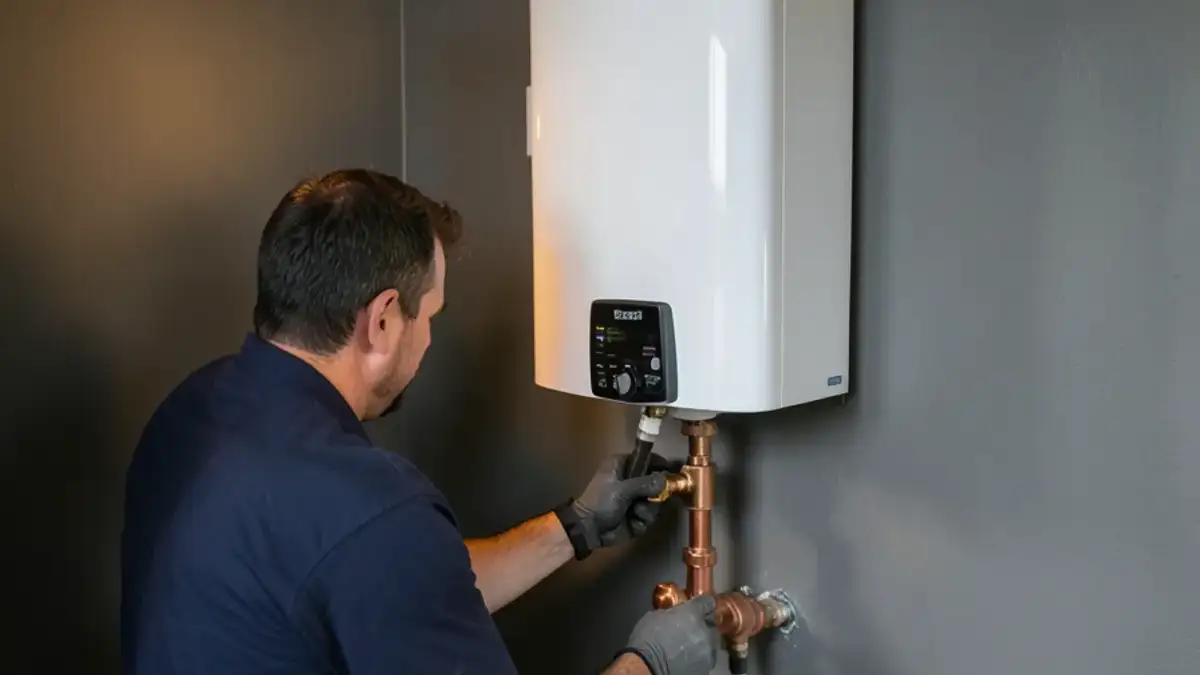
Most gas jobs are one of four things: a new appliance hookup, a new branch line, a repair, or a move. The common ones are a range, a dryer, a water heater, a furnace, a fireplace and a yard line for a grill. The work usually covers:
- Sizing the run to the appliance's load
- Running or repairing the pipe from the existing line
- Setting the shutoff valve and connector at the appliance
- Testing the line with air and a soap check
- Lighting the appliance and checking flame and venting
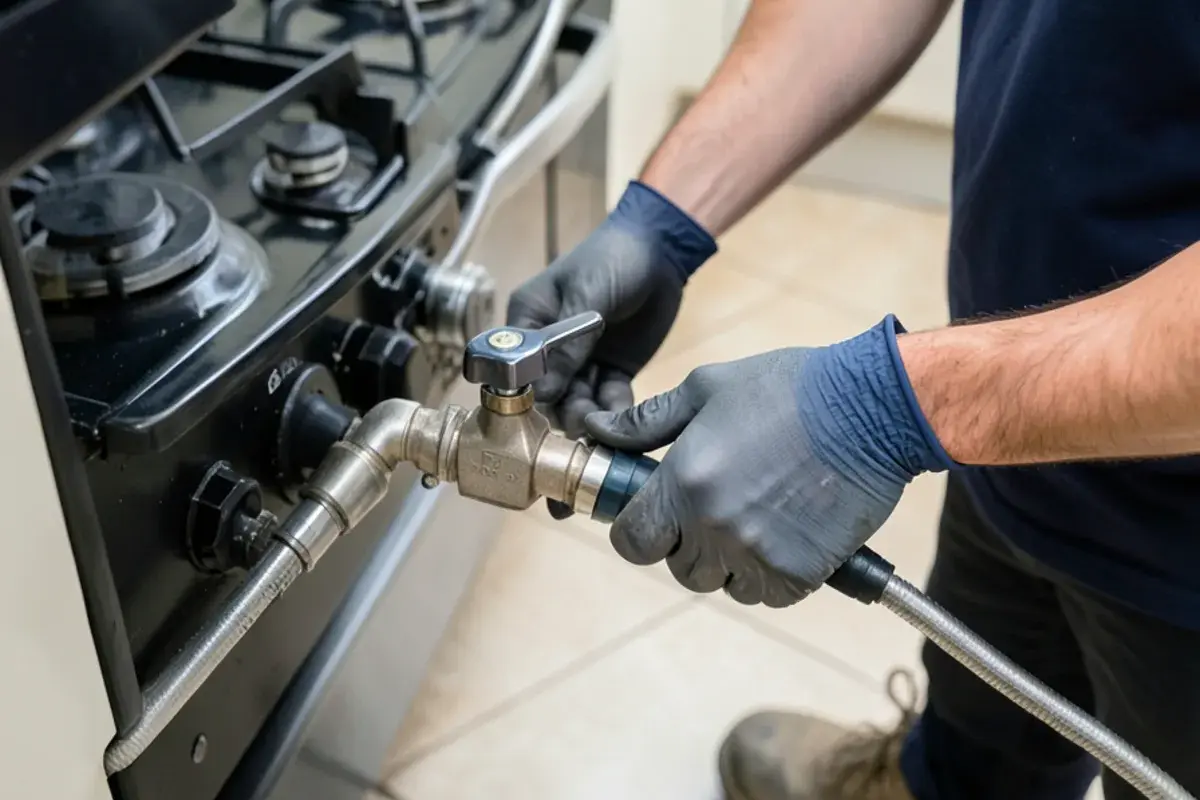
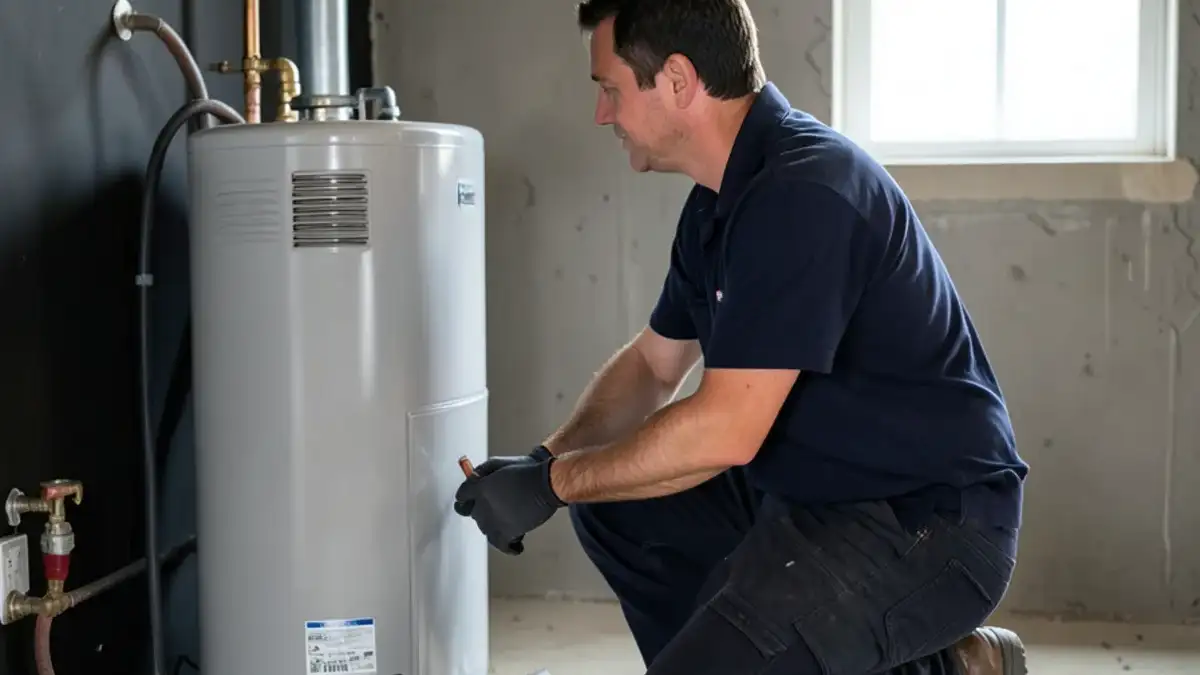
Every appliance should have its own shutoff valve within reach. A good hookup puts that valve beside the appliance, sets the connector so it does not kink, and adds a short capped drop in the line, called a sediment trap or drip leg, where code asks for it. That small drop catches dirt and moisture before they reach the burner.
A repair job starts with finding the problem the safe way, with the line isolated and tested, never by sniffing around a live leak. Corroded fittings, a nicked pipe from a past remodel, and old appliance stubs capped without a proper plug are the usual findings.
Why Does Every Gas Job End With a Pressure Test?
Because a gas leak cannot be judged by eye. A test is the only way to prove that the pipe holds.
- We close the line off from the gas supply.
- We fill it with air to a test pressure and watch the gauge for a drop.
- We check each joint with a soap solution and look for bubbles.
- We open the gas and light the appliance only after the line has passed.
- We check the flame and the venting, and we show you the shutoff.
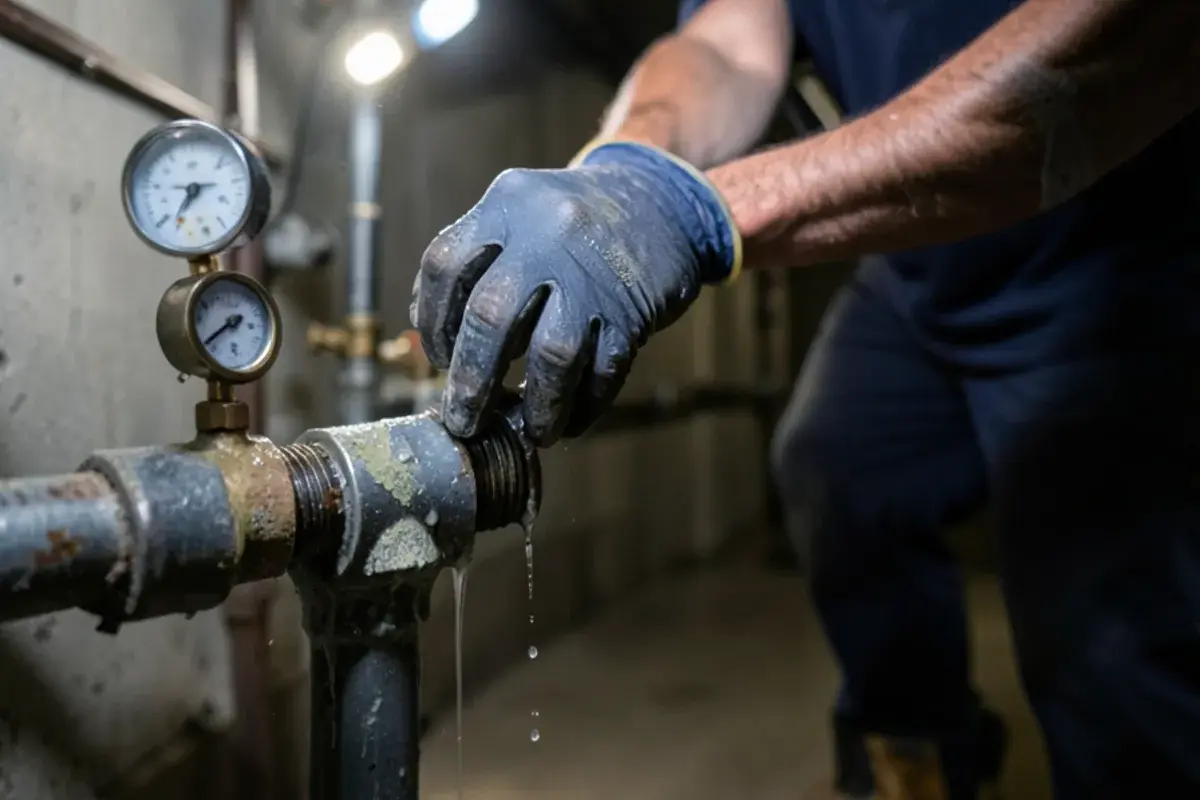
The test uses air, never gas. If the gauge drops, we find the joint, fix it and test again.
Need a gas appliance hooked up? Call (209) 563-1400
Open 7 days, 7:15 AM to 6:15 PM. Tell us what is happening and we will give you a clear, upfront quote.
Request a Quote
Water moving right now? Call first: (209) 563-1400. For anything that can wait, send the details here.
Which Pipe Fits Which Gas Job?
The right material depends on code, the gas type and the building. These are the common choices indoors.
| Material | Where it fits | Trade-off |
|---|---|---|
| Black iron pipe | Basements and exposed runs | Rigid and long proven, but slower to run through finished walls |
| Corrugated stainless tubing (CSST) | Finished houses, tight chases | Fast to route, but it needs electrical bonding and installation to the maker's instructions |
| Buried yard line | Grills, generators, fire pits | Needs pipe rated for underground gas and a shutoff at the house |
Natural gas and propane run at different pressures with different regulators, so tell us which you have. Local code and the appliance maker's instructions decide the final choice. Ask the city or whoever bids the work what is approved.
What Does Home Age Mean for Gas Piping Here?
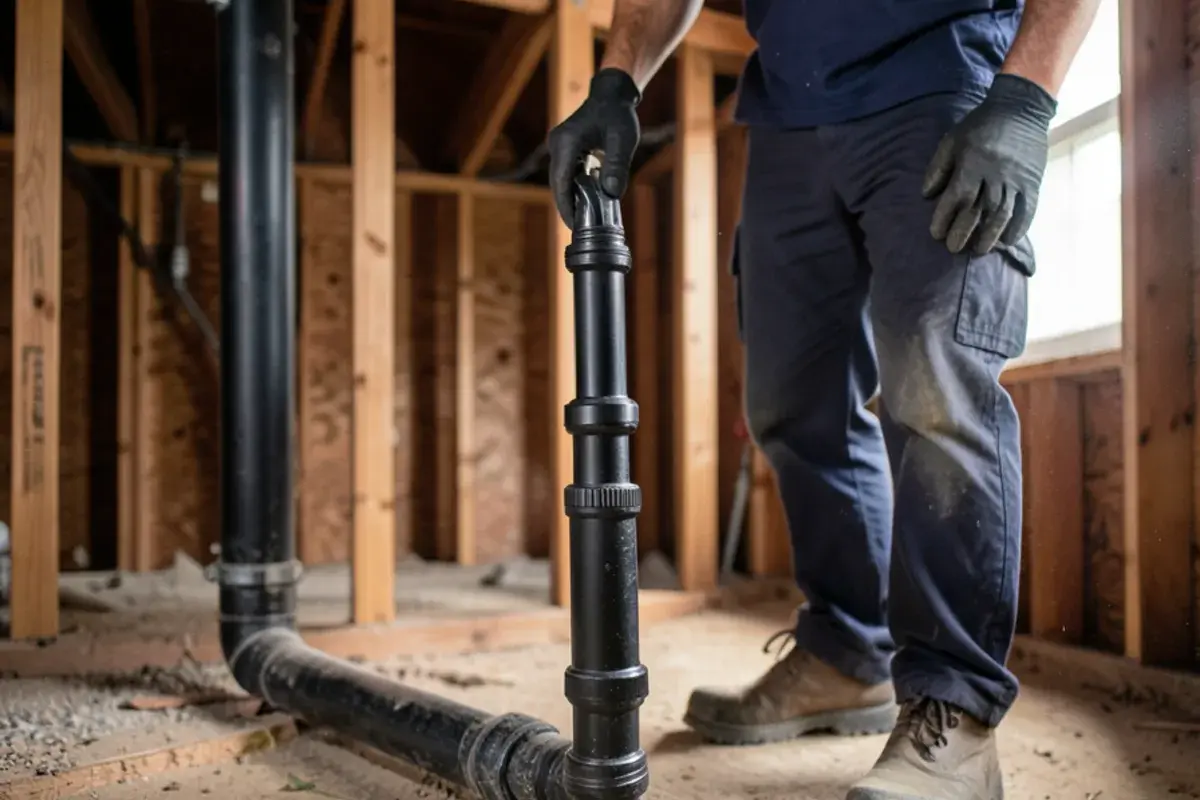
Older homes need more checking. About 13% of homes in Washington date to 1939 or earlier (Point2homes, citing Census data), and houses of that age may carry original iron piping and old stubs left from long-gone appliances. The median home was built in 1978, so a great many houses have decades-old fittings and flexible connectors.
Cold season matters too. From about December 1 to March 1, Washington averages highs under 43°F (Weather Spark), and furnaces and water heaters run hard. That is when a weak connection or a blocked vent shows up. Working carbon monoxide alarms belong in any home that burns gas.
After the 2013 tornado, many Washington homes were rebuilt from 2014 onward. A rebuilt house has newer gas piping, but a new appliance or a finished-basement addition still needs its own tested branch.
Signs worth a call, once you know the house is safe: a kinked or corroded connector, a stub with no proper plug, or soot around a burner.
What Changes the Price of Gas Line Work?
We give you a clear, upfront quote after we see the job. These are the main factors:
- Distance from the nearest gas line. A longer run means more pipe and labor.
- Access. Open joists are quick. A finished wall or ceiling takes longer.
- Number of appliances. Several outlets on one line may need larger pipe.
- Material. Black iron, tubing and a buried yard line differ in parts and labor.
- Permit and inspection. Ask whoever bids the work what is included, and confirm with the city.
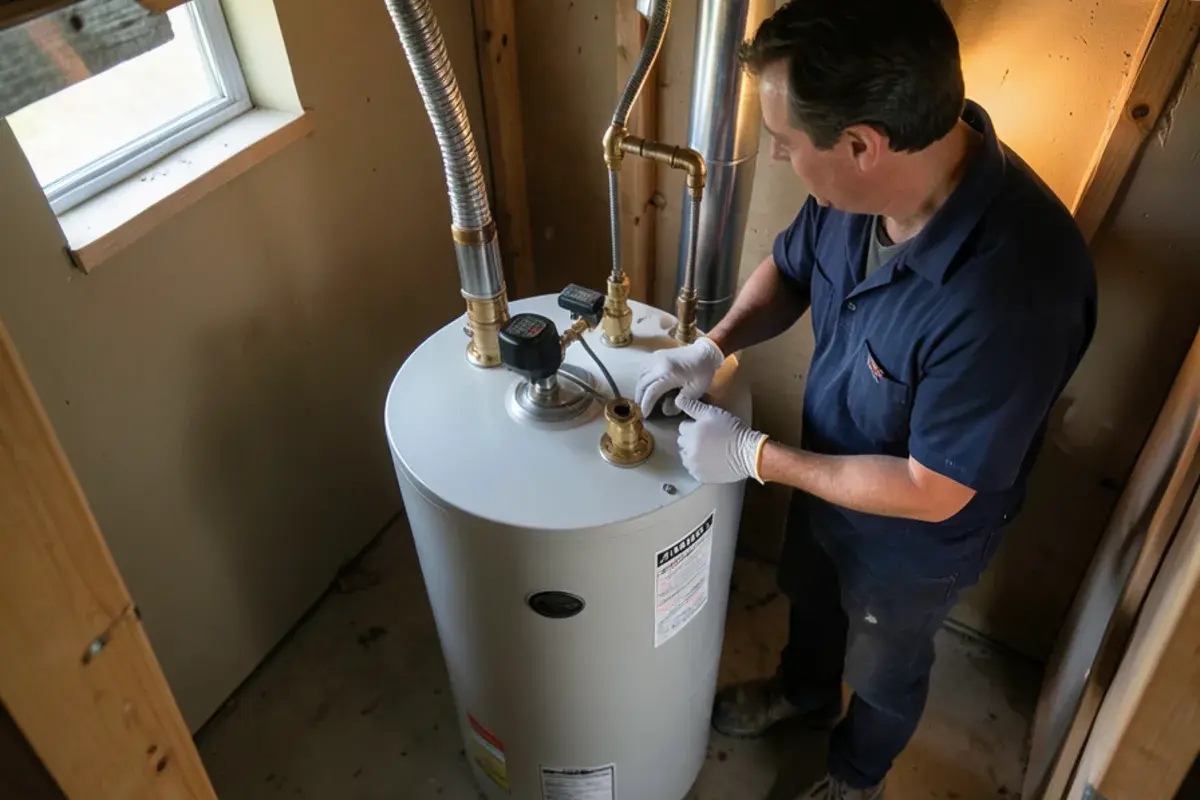
- Total load. A range, a dryer and a tankless heater on one line may outrun the pipe that is there now, so the size of the existing line matters.
The house itself moves the number in Washington. A home rebuilt after 2014, with piping you can reach, is a shorter job than a pre-1940 house where new pipe must tie into old iron. A buried yard line adds trenching and a JULIE locate before any pipe goes in.
Where Does Ameren's Pipe End and Yours Begin?
At the meter. Ameren Illinois says it owns and maintains the lines that run to your gas meter. Buried piping past it, such as a line to a grill or pool heater, belongs to the property owner. Ameren does not maintain that pipe and JULIE does not locate it, so tell anyone digging where it runs.
Anyone digging must call JULIE at 811 at least 48 hours ahead, not counting weekends or holidays.
New gas piping also goes through the City of Washington, so ask which permit applies and which license or registration the city expects for gas work.
Ask any plumber for the Illinois plumbing license number before work starts. Illinois law requires a license for anyone who installs or repairs plumbing, and the state's public lookup shows whether a number is valid.
Why Professional Sewer & Drain for This Work
Thorough before leaving
Angela S. wrote that Gary was not leaving until he was happy and confident in his work. That was a sewer job, and it is the habit you want on a gas job, where a skipped check is a risk.
Open seven days
Google lists the business as open 7:15 AM to 6:15 PM every day of the week. Gas work is scheduled and planned, and a seven-day calendar makes it easier to find a time.
Showed up when they said
Molly J. wrote that the visit started when promised and the job was right the first time.
You leave knowing what was done
Jason P. and Roben V. each said they left with advice to prevent a repeat. On a gas job that means knowing where the shutoff is and what was tested.
What Customers Say
4.8 out of 5 from 16 Google reviews, checked November 2026. Read all reviews
“Just a superb experience in quality and customer service and price. Called these guys at 5:30p and they were here by 6:00p and Monte did his work in the dark by flashlight! Not only did he do a fantastic job he also educated us on how to prevent these problems from becoming a much bigger and more expensive issue. I would recommend this company to anyone, they are committed to doing a professional job, ensuring it is done right and with very affordable prices.”
“Great experience! Called on a Sunday afternoon and they came right over. Extremely professional and knowledgeable! Very reasonable price! Will definitely call them back for maintenance.”
“Great service! Called on a Sunday was over in 15 min had it fixed in 10min. Very knowledgeable and trustworthy”
Gas Line Repair and Installation Questions
Who do I call for a gas smell, a plumber or the gas company?
Do I need a permit for a new gas line in Washington?
How is a gas line pressure tested?
Can you add a gas line for a dryer, range or fireplace?
Should the flexible connector be replaced with a new appliance?
Can I run gas to a grill or fire pit in the yard?
Gas Line Repair and Installation in Washington? Call (209) 563-1400
Open 7 days, 7:15 AM to 6:15 PM. Tell us what is happening and we will give you a clear, upfront quote.
Where We Provide This Service
We run and repair gas lines from our Washington base across Tazewell, Woodford and Peoria counties. Established neighborhoods in Morton and Peoria have older houses where an appliance move often means checking the piping behind it. East Peoria and Pekin homes use the same Ameren Illinois system, so the rule is the same everywhere: the utility handles the meter, and we handle the piping on the house side. Every town we cover is listed on the service areas page.
- Morton: Older houses often need the piping checked behind a moved appliance.
- East Peoria: On the Ameren Illinois system, with the meter as the dividing line.
- Peoria: Pre-1940 homes may still hide old iron and capped stubs.
- Pekin: A 1961 median build year makes decades-old connectors likely.
- Germantown Hills: Newer homes often want a new branch for a range or grill.
- Metamora: Old village homes and new subdivisions need different gas checks.
- Sunnyland: A few miles from our base, with the same rule at the meter.
- Dunlap: Additions in growing subdivisions each need their own tested branch.
- Eureka: Older college-town homes may carry stubs from long-gone appliances.