Frozen Pipe Thawing in Washington, IL
Frozen lines thawed with gentle heat, then checked for the split that only shows when the ice melts.
- 4.8 on Google, 16 reviews
- Open 7 days, 7:15 AM to 6:15 PM
- Based in Washington, IL
- Google reviews going back 10 years
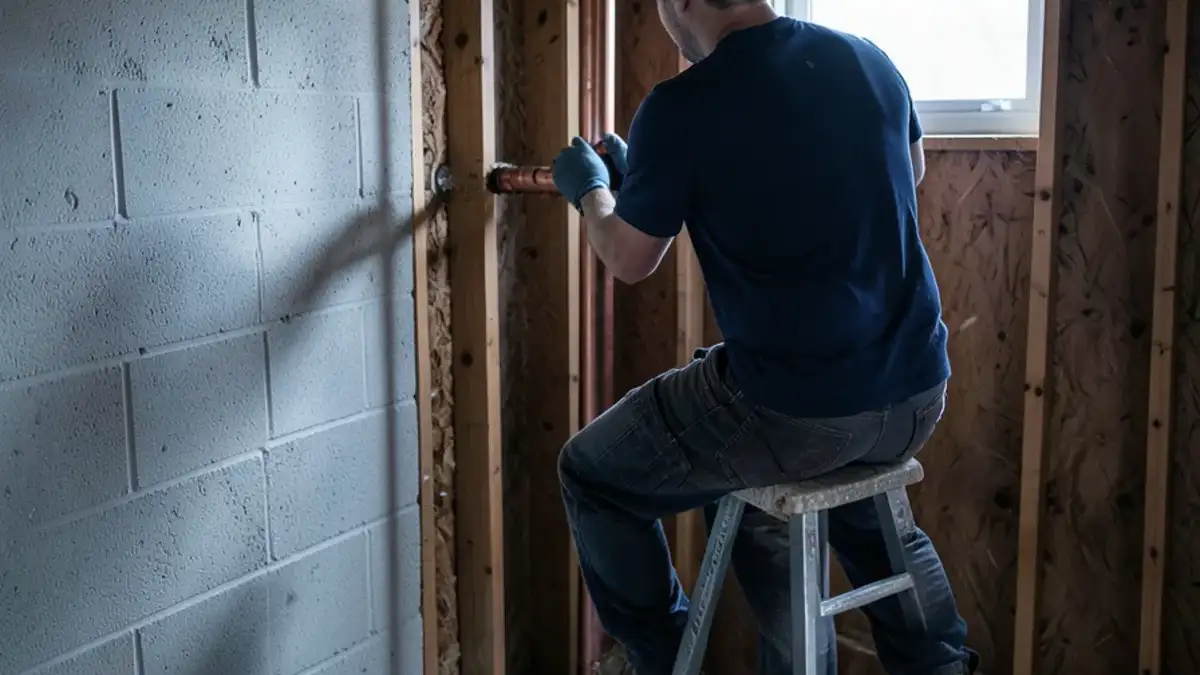
Frozen pipe thawing in Washington, IL means opening the faucet, warming the pipe slowly from the faucet end back toward the ice, and watching for leaks as the water starts to move. Never use a torch or any open flame. A frozen pipe is often a split pipe too, and the split does not leak until the ice melts.
How Can You Tell a Pipe Is Frozen?
One faucet that gives a trickle or nothing, while the rest of the house has water, usually means a frozen branch line. No water anywhere points to the main line or the service entry.
Look for these clues:
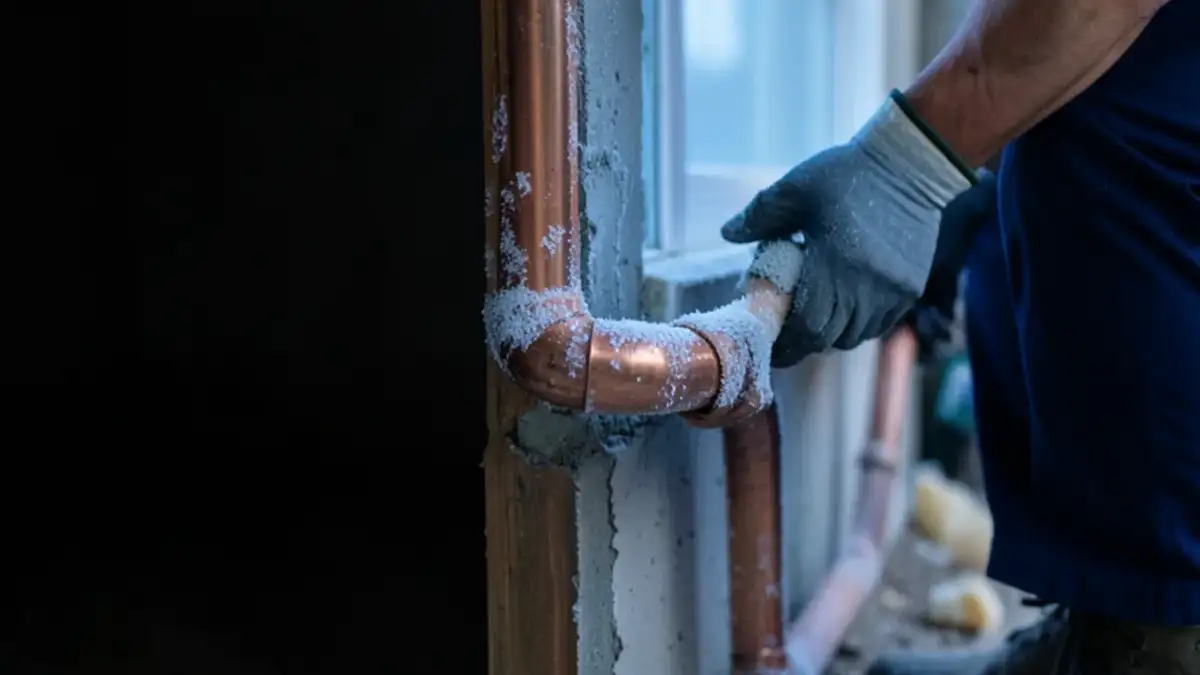
- Frost, ice or a bulge on an exposed pipe
- A faucet that hisses, spits or runs weak in cold weather
- A toilet that refills slowly
- A wall or ceiling that is cold to the touch near the plumbing
Check all the faucets before you decide where the freeze is. If one pipe has frozen, others may have too.
Why Do Pipes Freeze in Washington Homes?
The cold is long enough and deep enough. Washington's cold season runs from about December 1 to March 1, with average highs under 43°F (Weather Spark), and the January average low is 15.8°F (Plantmaps).
The freeze happens where heat does not reach:
- Supply lines in exterior walls, especially on the north side
- Crawl spaces, garages and rooms over a garage
- Pipes near a window, a vent or a gap in the rim joist
- Outdoor hose faucets with a hose left attached
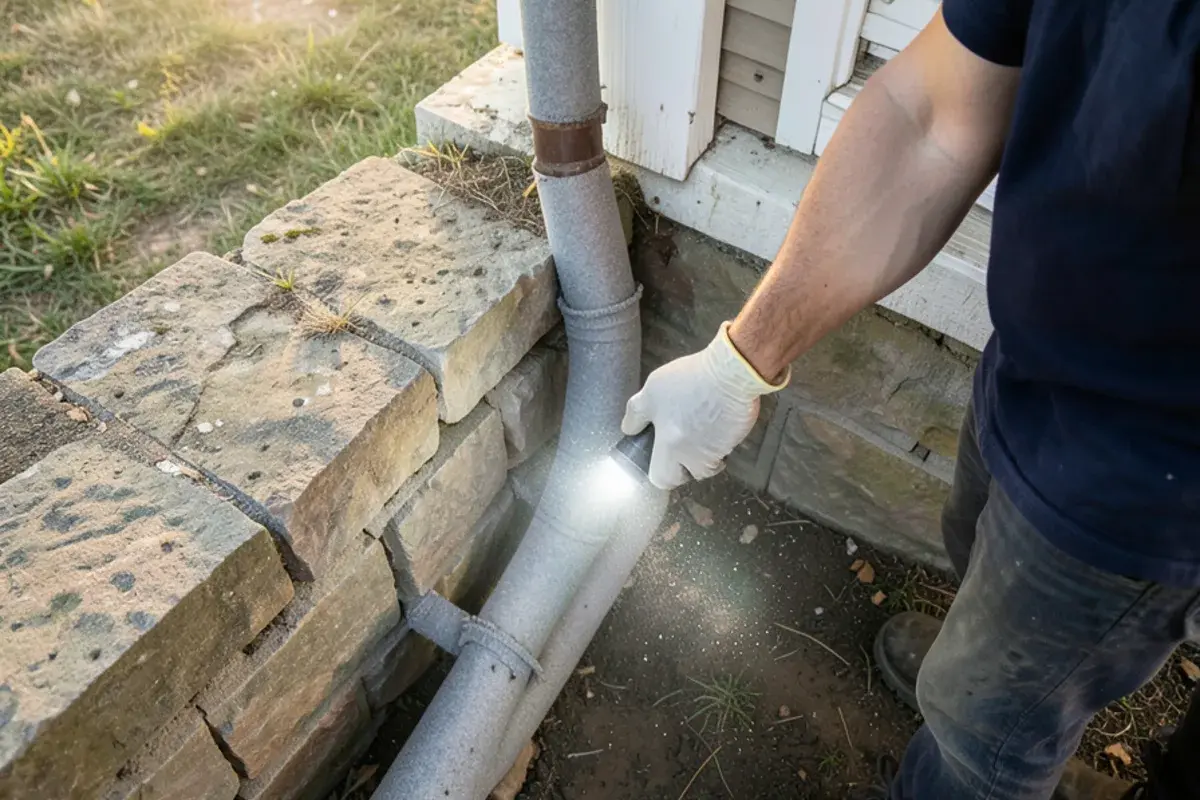
- The spot where the water service comes through the foundation
Older houses are the likeliest to have bare pipe in thin walls. About 13% of Washington's homes date to 1939 or earlier (Point2homes, citing Census data). Additions, finished basements and rebuilt rooms can hide a line in a cold cavity too.
What Is Safe to Do Before We Arrive?
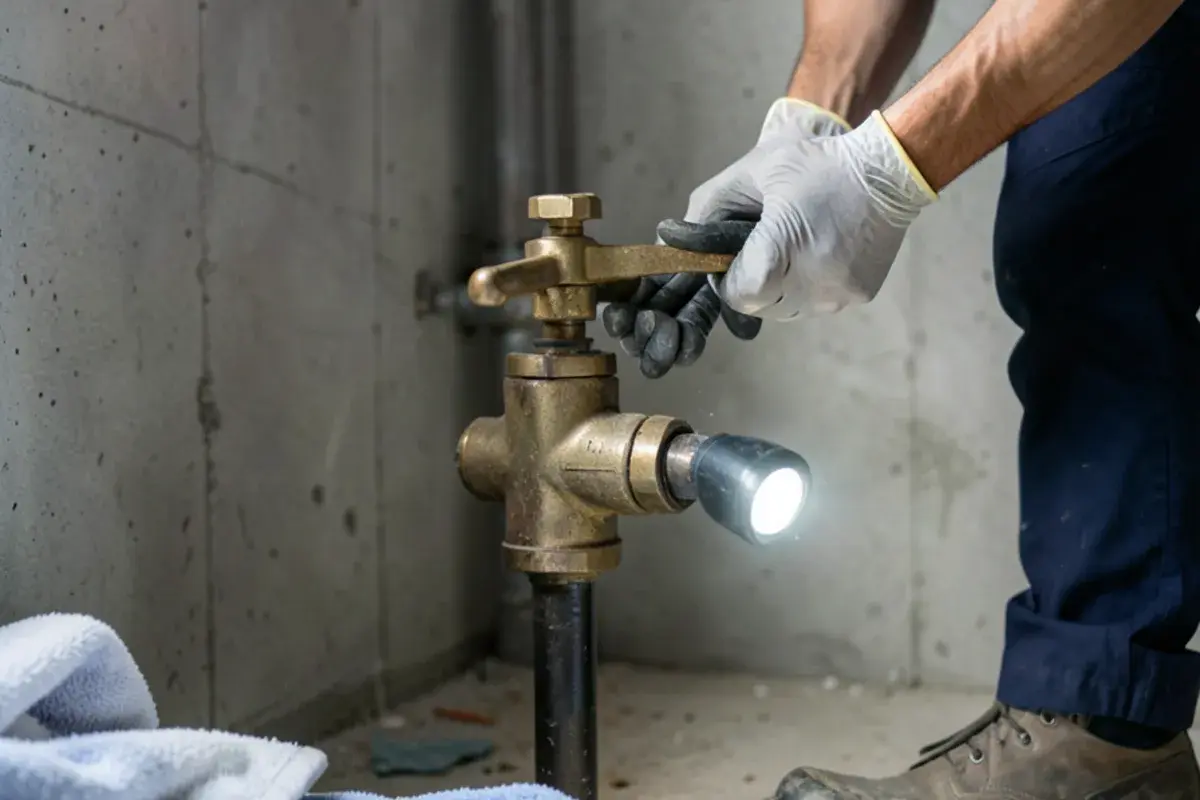
Open the faucet, warm the pipe gently, and keep the flame away. These steps follow the thawing guidance published by Moen.
- Open the faucet on the frozen line and leave it open. Melting water needs a way out.
- Find the main shutoff valve so you can close it fast.
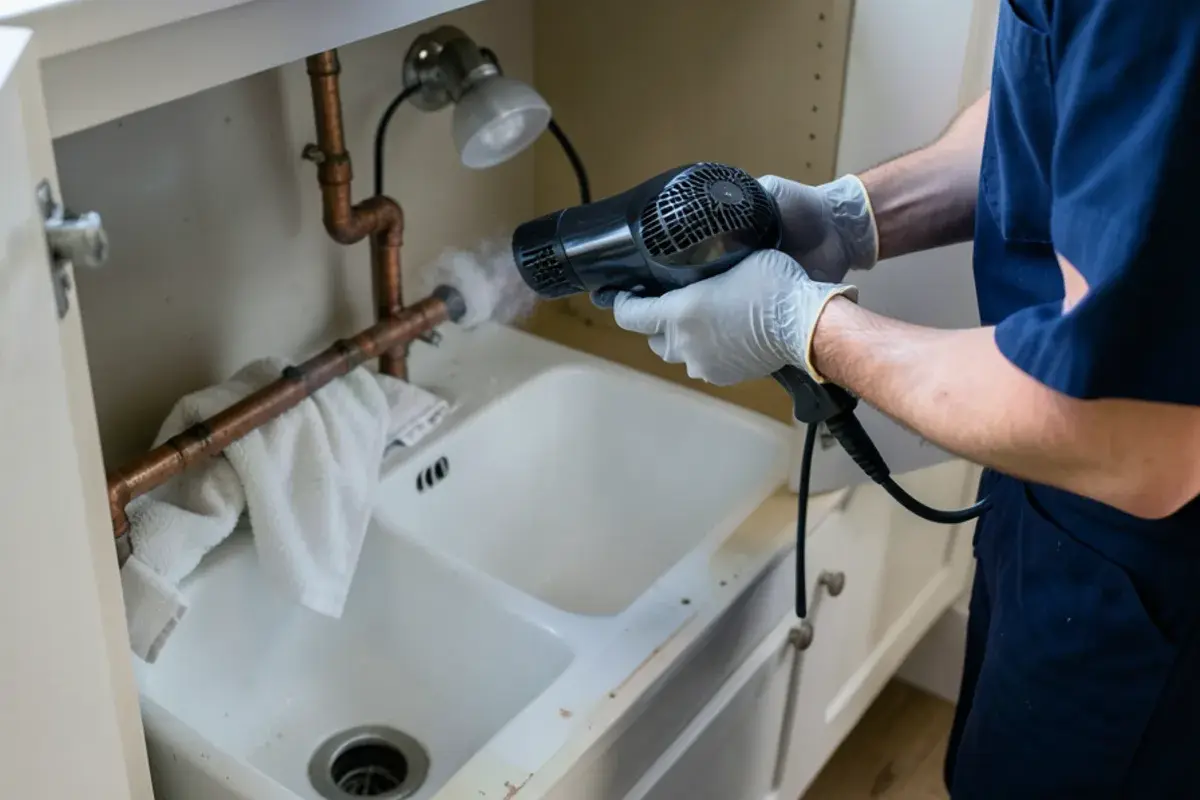
- Warm the pipe with an electric hair dryer, a heating pad or towels soaked in hot water.
- Start at the faucet end and work back toward the frozen section.
- Keep going until full pressure returns, then check every other faucet.
- If you cannot find the frozen section, or it is inside a wall, stop and call.
Do not use a blowtorch, kerosene or propane heater, charcoal stove or any other open flame. A flame can ignite framing and insulation, and it can heat one spot of pipe fast enough to split it.
Pipes frozen and no water? Call (209) 563-1400
Open 7 days, 7:15 AM to 6:15 PM. Tell us what is happening and we will give you a clear, upfront quote.
Request a Quote
Water moving right now? Call first: (209) 563-1400. For anything that can wait, send the details here.
What Does Frozen Pipe Thawing Cover?
A thawing call covers the frozen line and the leak check that follows. We do not treat water coming back as the end of the job. Most of the work is finding the ice and proving the line is tight afterward.
- Locating the ice along the dead line
- Thawing with controlled heat, never an open flame
- Checking joints and nearby walls as flow returns
- Repairing a split, or planning a reroute
- Pointing out the cold spot and what would protect it
Some calls end with a thaw and advice. Others turn into a repair or a reroute, and the quote changes before that work starts, not after. Drywall repair and larger insulation work are separate jobs. If the freeze looks like it sits at the service entry or under the yard, we tell you, and the city may need to be part of that call.
What Happens When a Frozen Pipe Leaks on Thaw?
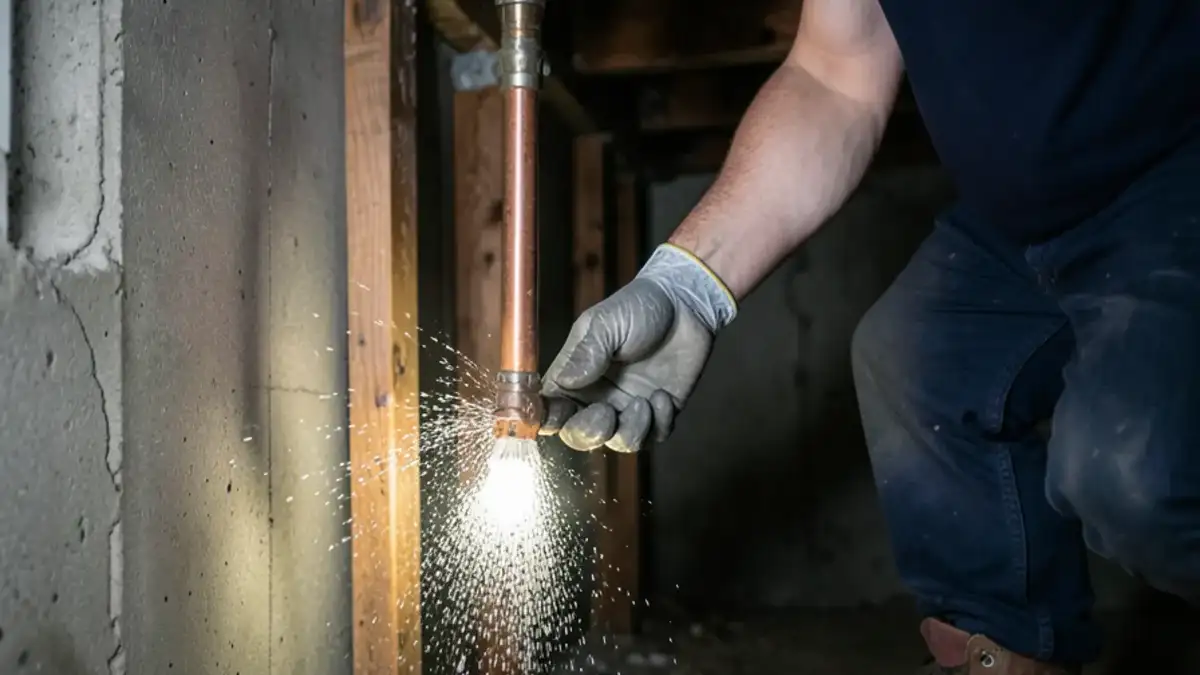
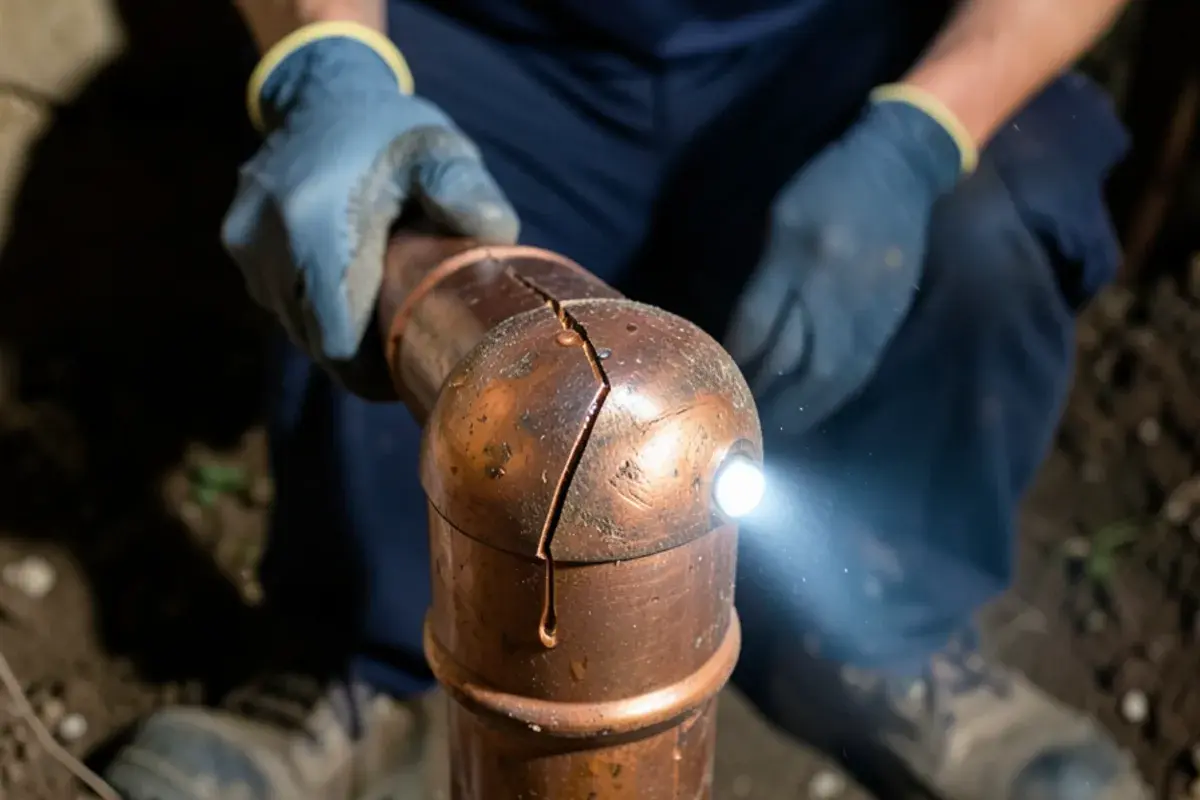
The water comes back and so does the leak. Ice in a split pipe works like a plug. As it melts, water streams through the crack, often behind a wall or above a ceiling.
That is why the main shutoff matters. If a pipe split, shut the main off the moment water appears where it should not be.
Then call. Move belongings, photograph the damage for your insurer, and keep fans running if the framing is wet. Wet drywall takes on moisture within hours, and framing that stays wet beyond 48 hours risks microbial growth.
The Google listing shows 7:15 AM to 6:15 PM daily. If a pipe splits outside those hours, close the main shutoff and call when we open.
How Do We Thaw and Check the Line?
We find the freeze before we heat anything. A thaw done blind can leave you with a leak in a wall.
- Locate the ice. We follow the line from the dead faucet back toward the source and feel for cold sections.
- Warm it in a controlled way. Heat goes on slowly, working from the open faucet back toward the ice.
- Watch for leaks. As flow returns, we look at every joint and the walls near the line.
- Test the rest. We open the other fixtures and check the main line.
- Repair if it split. A short split can be cut out and replaced. Several splits on one run change the plan.
- Show you the cause. A bare pipe, a gap in the wall or a missing insulation sleeve tells you what to fix.
Thaw, Repair or Reroute: What Are the Options?
The right fix depends on what the thaw shows.
| Finding | Likely fix | Trade-off |
|---|---|---|
| Pipe thawed and tight | Thaw only, then insulate | Cheapest, but the cold spot is still there |
| One split section | Cut out and replace that section | Needs wall or ceiling access |
| Repeat freezing in one wall | Reroute or insulate the line | More work, but it ends the cycle |
| Many bad sections | Larger replacement | See our whole house repiping page |
If the pipe split, our burst pipe repair page explains what that repair involves.
What Changes the Cost of a Frozen Pipe Call?
You get a clear, upfront quote once we know where the ice is. A clean thaw is a smaller job than a thaw plus a repair. If the pipe split, Today's Homeowner estimates burst pipe repair in Washington at $788 to $3,154. That figure is a published estimate from a third party, not our quote.
- Where the ice sits. An exposed basement line is quick. A line inside a wall or crawl space takes longer to reach.
- Whether it split. One clean cut-out differs from several splits along a run.
- How many lines froze. One kitchen branch differs from a whole north wall.
- The fix for the cold spot. A foam sleeve is a small add. A reroute is a project.
In Washington, a house from before 1940 with bare pipe in thin walls usually takes more time than a newer home with a line you can see from the basement.
What Does the Illinois Plumbing Code Say About Freeze Protection?
It says water pipe must be protected where the cold reaches it. Section 890.1210 bars distribution pipe outside a building, in an exterior wall or in an attic unless it is protected from freezing. Section 890.1150 puts the water service pipe at least 36 inches deep, or at local frost depth if that is greater.
Rerouting a line that keeps freezing is plumbing work, and the Illinois Department of Public Health requires a license for it under 225 ILCS 320. Ask for the number and check it. In Washington, new rough-in plumbing must pass inspection before the wall closes, so confirm the permit question with the city.
How Do You Keep It From Freezing Again?
Put heat and insulation where the cold reaches the pipe.
- Insulate pipes in crawl spaces, garages and exterior walls with foam sleeves.
- Seal gaps around pipes that pass through the foundation or rim joist.
- On the coldest nights, open the cabinet doors on exterior walls.
- Let a faucet drip slowly on a line that has frozen before.
- Disconnect hoses and shut off outdoor faucets before the first hard freeze.
Our guide to frozen pipes in Central Illinois covers the full checklist.
Why Professional Sewer & Drain for This Work
Worked through a blizzard
Roben V. wrote about Monte working through blizzard conditions on the coldest day, and about the suggestions he gave for future work that would prevent more trouble.
Open seven days
Google lists the business as open 7:15 AM to 6:15 PM daily, and reviewers have written about Saturday and Sunday calls.
Leaks found and fixed
Vijay K. called on a Saturday morning about a water leak behind a laundry room, and Monty came right over and fixed it.
We explain how to stop a repeat
Jason P. and Roben V. both wrote that they were told how to keep the problem from coming back.
What Customers Say
4.8 out of 5 from 16 Google reviews, checked November 2026. Read all reviews
“I am so thankful for Monte coming out during the coldest day with blizzard conditions with same day service. He was very kind and worked quickly to rectify issues with plumbing and gave suggestion for future work that needs to occur to prevent any further issues. His services are very reasonable given the work that he did. I will always use him for any issues in the future. Thank you for all that you did for us today and so thankful that you got home safe!”
“Had water leak behind laundry room. Called Monty on a Saturday morning and he came right over. He did a wonderful job to fix the issue. Very professional and knowledgeable. I highly recommend this company.”
“Just a superb experience in quality and customer service and price. Called these guys at 5:30p and they were here by 6:00p and Monte did his work in the dark by flashlight! Not only did he do a fantastic job he also educated us on how to prevent these problems from becoming a much bigger and more expensive issue. I would recommend this company to anyone, they are committed to doing a professional job, ensuring it is done right and with very affordable prices.”
Frozen Pipe Thawing Questions
How long does it take to thaw a frozen pipe?
Is it safe to use a hair dryer to thaw a pipe?
Should I shut off the water when a pipe freezes?
Does a frozen pipe always burst?
What if the frozen pipe is inside a wall?
Can I pour hot water over a frozen pipe?
Frozen Pipe Thawing in Washington? Call (209) 563-1400
Open 7 days, 7:15 AM to 6:15 PM. Tell us what is happening and we will give you a clear, upfront quote.
Where We Provide This Service
The older houses of Metamora and Eureka are the kind of houses where bare pipe in an exterior wall or crawl space is the usual weak point. Established streets in Morton and the village of Deer Creek see the same January lows. Our service areas page lists every town.
- Metamora: Older houses can have bare pipe in exterior walls.
- Eureka: Empty buildings over college breaks freeze with nobody watching.
- Morton: Established streets share Washington's January lows.
- Deer Creek: Old village homes, 28% before 1940, run cold at the walls.
- Germantown Hills: Newer homes still freeze at hose faucets and rim joists.
- Creve Coeur: Many homes here date to the 1940s and 1950s.
- Peoria Heights: With 57% of homes built by 1959, bare pipe in cold walls is plausible.
- Sunnyland: Close to our base for a dead faucet on a cold morning.