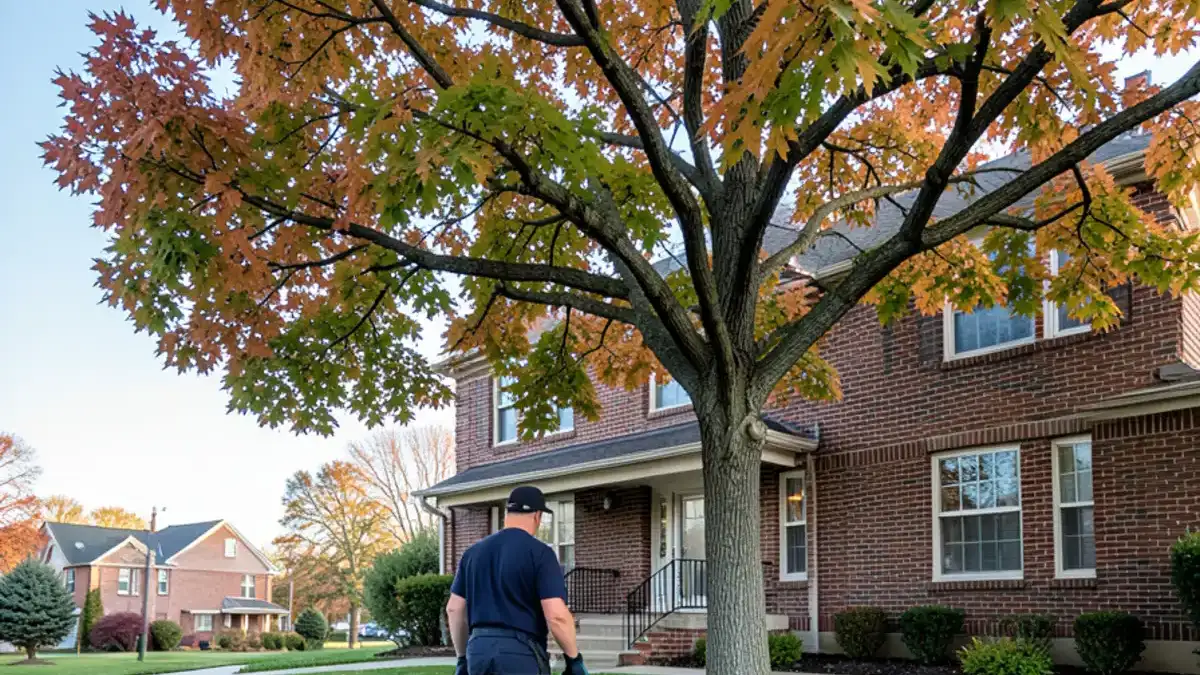
Tree Root Removal From Sewer Lines in Washington, IL
Cutting roots restores flow. Fixing the joint they came through is what keeps them out.
- 4.8 on Google, 16 reviews
- Open 7 days, 7:15 AM to 6:15 PM
- Based in Washington, IL
- Google reviews going back 10 years
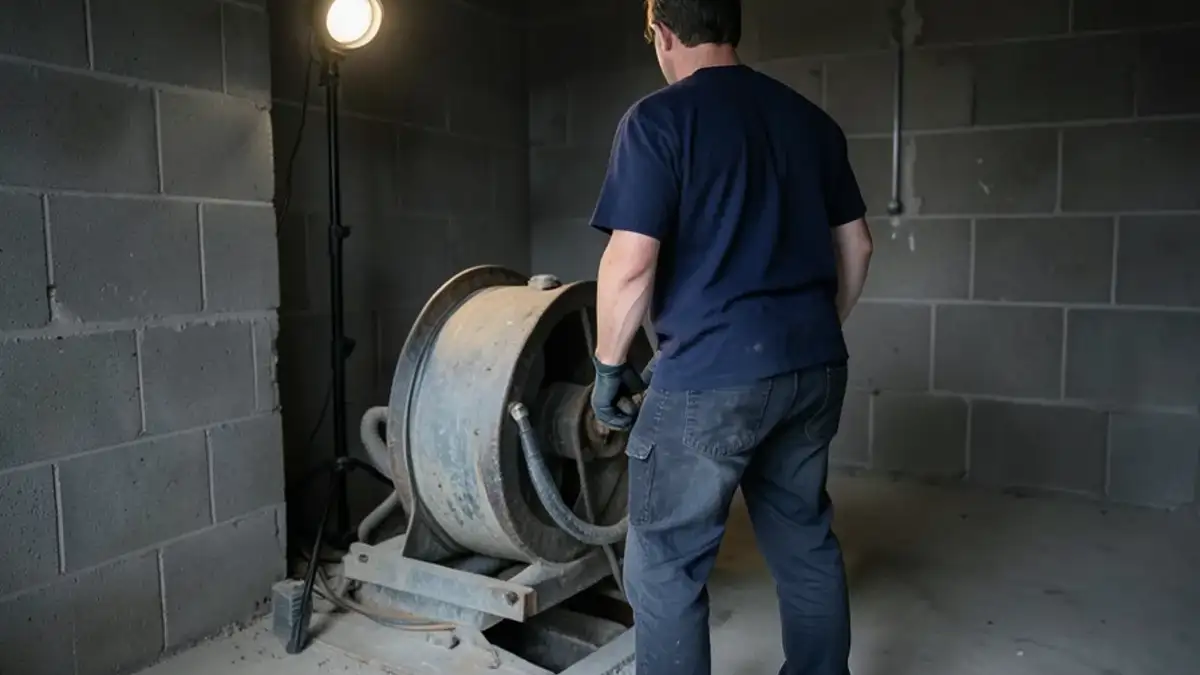
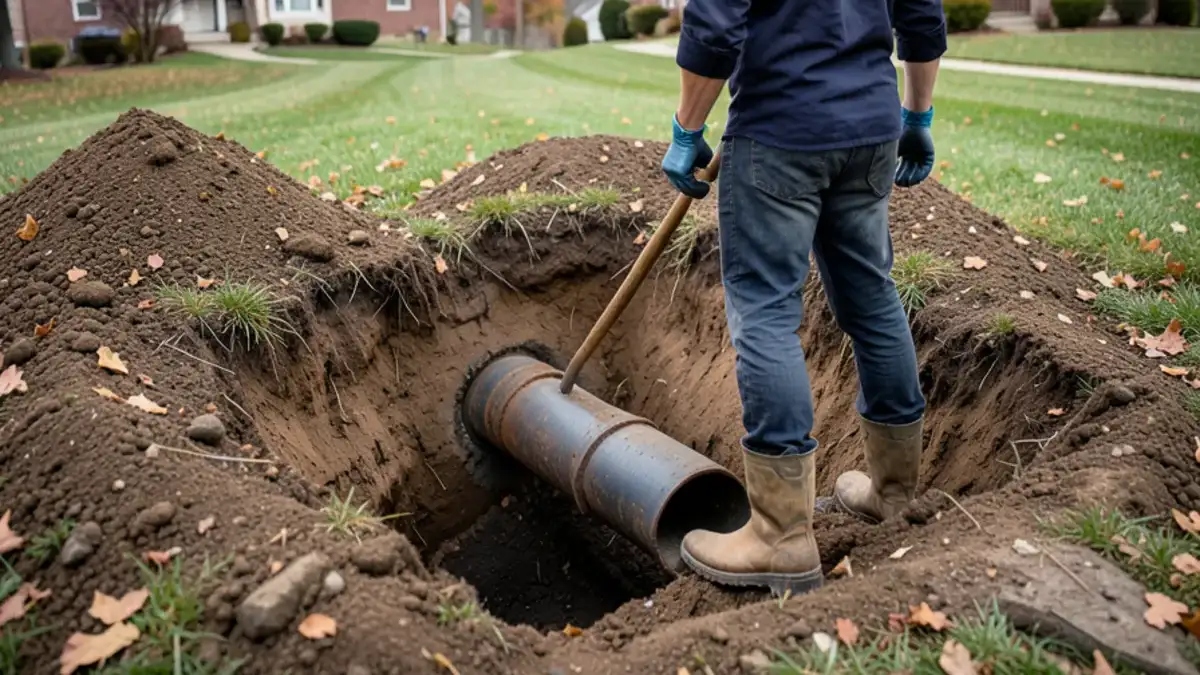
Tree root removal from sewer lines in Washington, IL means two jobs: cutting roots out of the pipe to clear a backup, and finding the crack or joint they entered so they stop coming back. Older clay lines under mature trees are the usual local trouble, and we lay out both so you choose with the facts.
Why Do Tree Roots Find a Sewer Line?
Roots find the water. A sewer joint that leaks, even slightly, releases moisture and nutrients, and roots follow that trail to the opening.
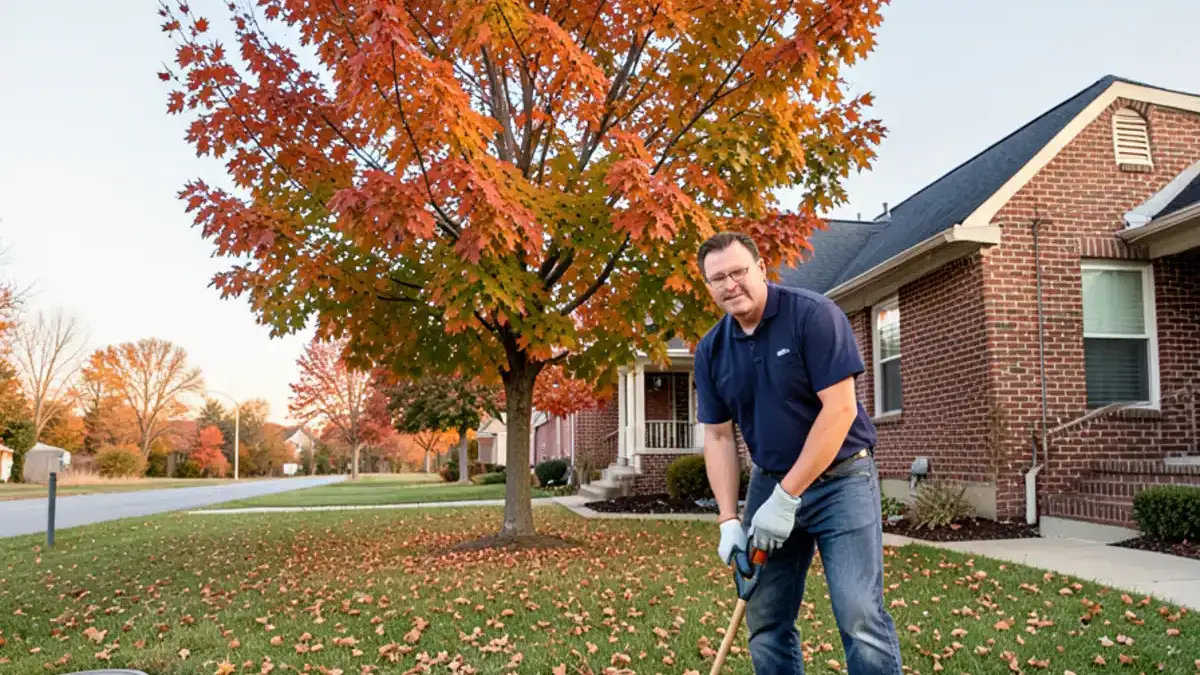
The eXtension Ask an Expert service notes that tree roots spread sideways through the top 12 to 24 inches of soil, can grow over and under sewer lines, and are drawn to what escapes from a leaking line. Over years, roots thicken and can press on a pipe until it cracks. Once a root gets in, it branches inside, because the pipe is warm, wet and full of nutrients.
That is why a sewer with roots has an entry point. Cutting removes the roots in the pipe. It leaves the entry point where it was.
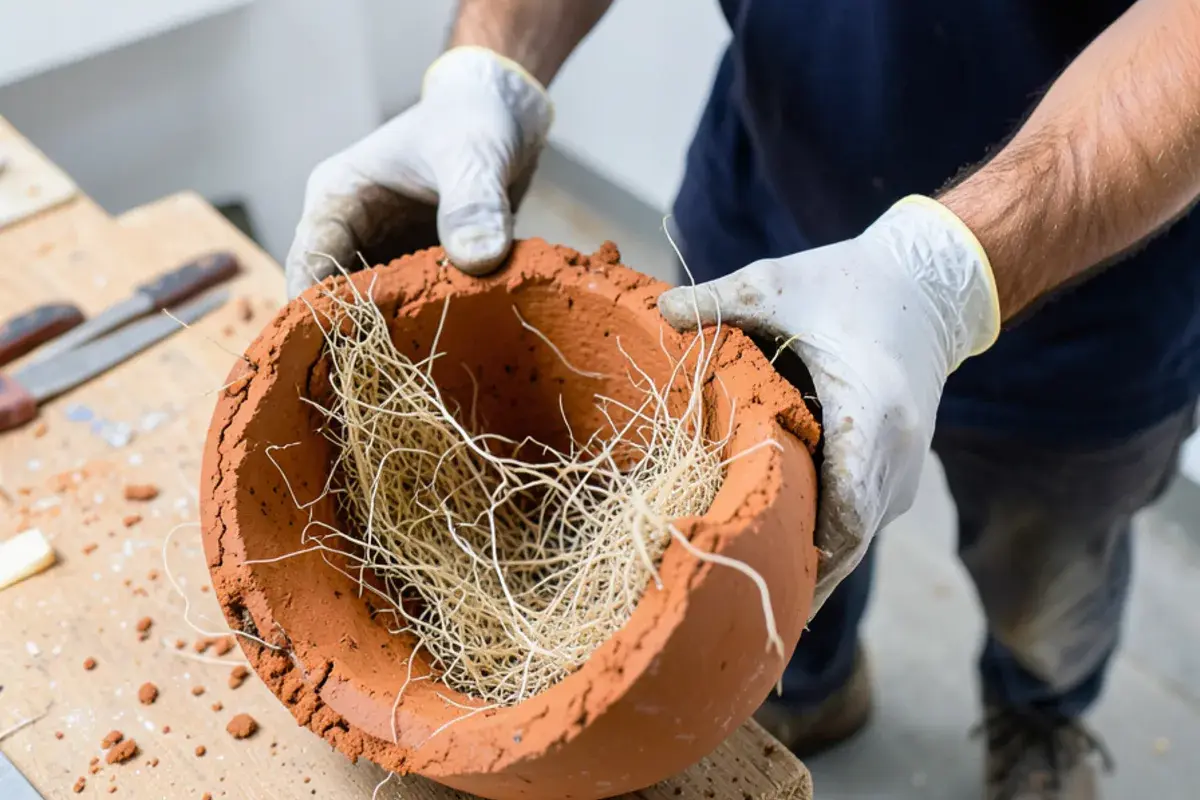
Tree Root Removal From Sewer Lines: Cut, Treat or Repair?
There are three real choices, and the best one depends on how many entry points the line has and how long you plan to stay in the house.
| Choice | What it does | Trade-off |
|---|---|---|
| Mechanical cutting | A cable with a cutter removes the roots in the pipe | Restores flow quickly, but roots regrow through the same opening |
| Root treatment | A product applied after cutting slows regrowth | Cannot open a blocked line, does not fix the opening, and must follow its label |
| Repair, liner or replacement | Closes or removes the entry point | The most work and cost up front, and the only one that aims at a permanent fix |
Cutting comes first when sewage is backing up. It is the fast answer. Our sewer line cleaning page explains that process.
Root treatment is a supplement. A product that reaches roots in the pipe can slow regrowth after cutting, but water has to carry it there, so it cannot clear a blocked line. Read the label and ask us before you use one.
Repair or replacement is the permanent answer. It makes sense when the footage shows the same joints being used again and again.
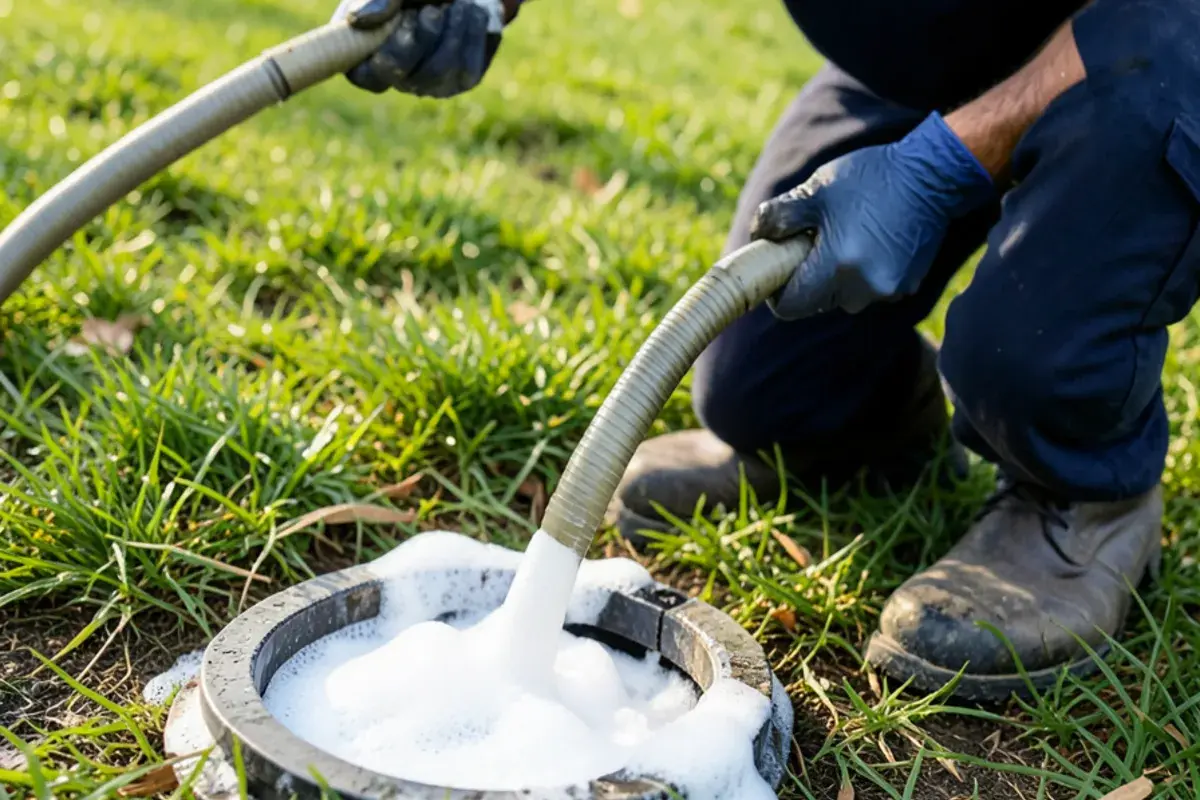
What a Root Removal Visit Covers
A root visit covers the main line from the access point to the city sewer, with cutters sized up until the pipe is open to its full diameter. Ask any company where its cable stopped and which head it used last. It includes:
- Finding access. The cleanout, or a pulled toilet where none exists.
- Cutting in stages. A small head opens a path, and a larger head scrapes the wall.
- Running to the main. The cable goes the whole way, not only to where water moves.
- A flow check. Water runs through the line at the lowest drain.
- A look at the cuttings. What came out says a lot about the tree and the pipe.
A camera pass, root treatment and any repair are quoted separately. The visit ends with a plain read on whether the roots will return and how soon. Tree removal and stump work belong to an arborist.
What Terry S. Found on a Sunday Morning
Terry S. called on a Sunday morning with a mess from a backed up sewer. His review says there were lots of roots. Monte and Hunter used two different sized cutters on a large snake, and cleaned the line all the way to the city sewer.
The sizes matter because roots in a clay pipe are not one thing. Stopping at the first opening leaves a pipe that is partly closed and clogs again soon. A line cut only partway can also hold roots near the street end.
Tree roots in your sewer line? Call (209) 563-1400
Open 7 days, 7:15 AM to 6:15 PM. Tell us what is happening and we will give you a clear, upfront quote.
Request a Quote
Water moving right now? Call first: (209) 563-1400. For anything that can wait, send the details here.
Which Trees Cause the Most Sewer Trouble?
Trees with aggressive roots or high water needs cause the most. The eXtension Ask an Expert service lists willow, silver maple, elm, cottonwood, black locust, purple robe locust, birch and mulberry as trees to avoid near sewers.
No tree is entirely safe over a pipe that leaks. If you are planting, put new trees well away from the sewer path. If you already own a large tree over the line, fixing the joints removes the reason roots arrive.
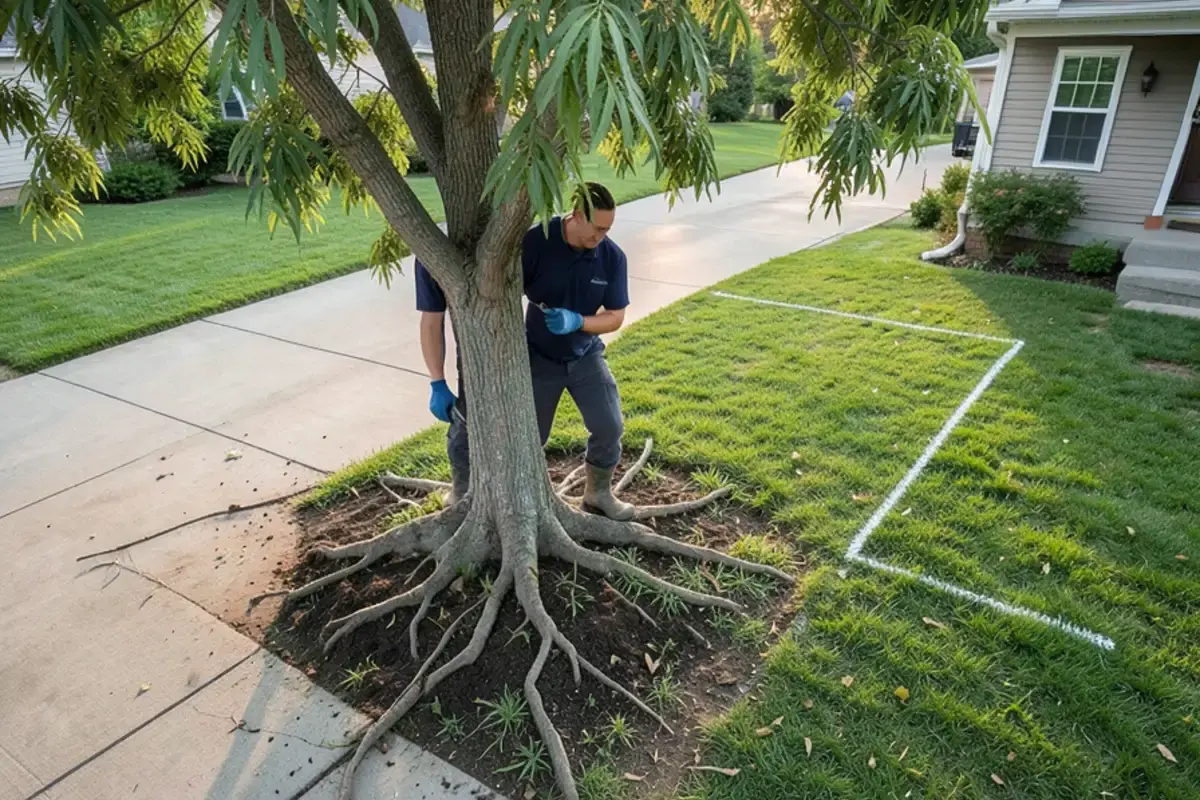
Why Clay Tile Sewers Let Roots Back In
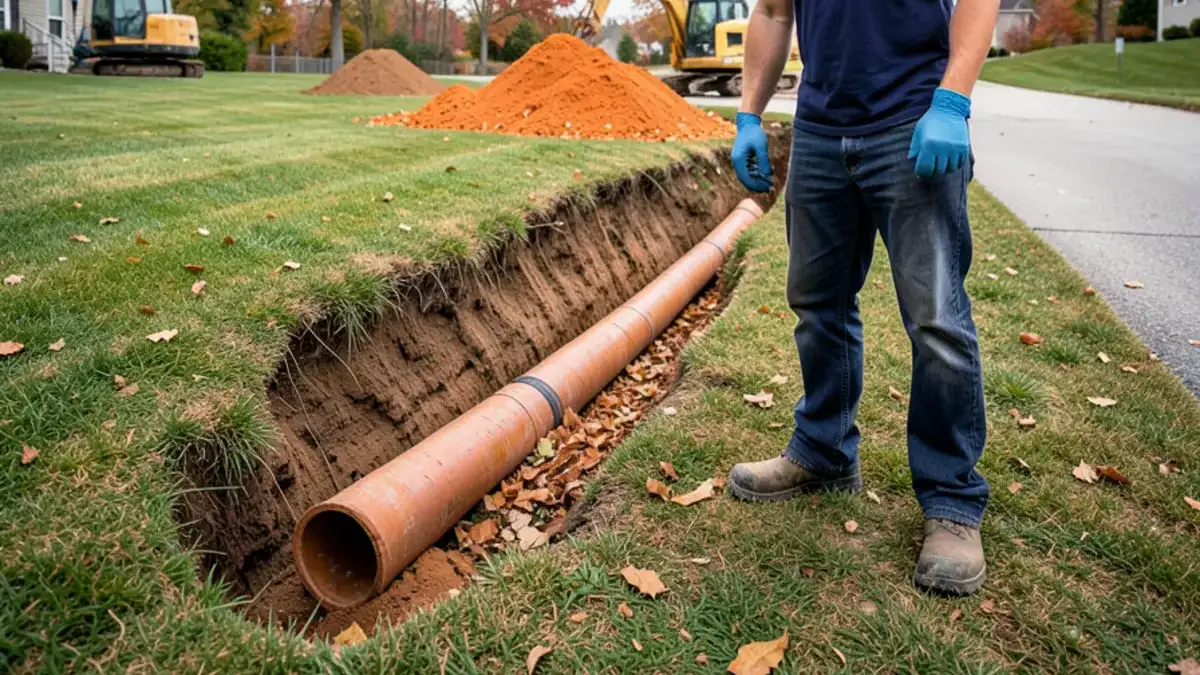
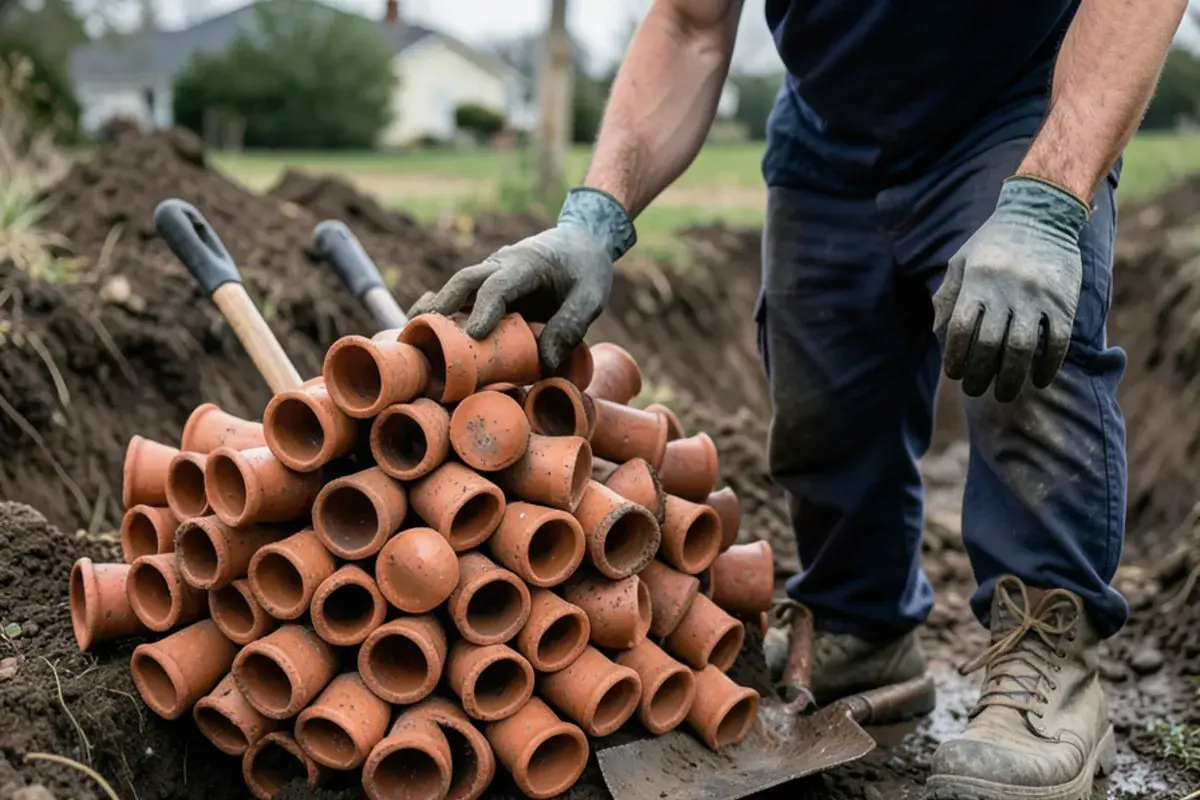
Clay tile pipe comes in short lengths, joined at a bell or collar every few feet. Each joint is a place where seals can age, shift or crack. A long run of clay has many such openings, and each one is a way in.
Washington has a real share of older homes: 13% of units date to 1939 or earlier, according to Point2homes citing Census data, and the median year built is 1978. Older houses were often piped in clay tile or cast iron, and mature trees now stand over many of those sewers. Freeze and thaw in a Central Illinois winter can shift sections and open joints further.
How Do You Get a Permanent Fix?
A permanent fix follows a set order, from the first cut to the last decision.
- Clear the line. Roots must come out first, or a camera cannot see.
- Flush it. Water carries the cuttings out and shows whether the line holds a full flow.
- Scope it. A sewer camera inspection shows how many entry points there are and where.
- Weigh the tree. If a thick structural root is involved, an arborist should see it before any cut.
- Close the openings. For one or two bad joints, a spot repair removes them. For a pipe that is still round, a liner can seal the joints from inside. For many failing joints or a collapse, replacement is the answer. See sewer line repair.
- Or set a schedule. If you choose not to repair, ask for a cutting interval based on the footage. Heavy roots may need cutting within a year or two.
What Changes the Price of Root Work?
We give a clear, upfront quote first, and these factors move it:
- How much root. Heavy roots mean larger cutters and more passes.
- Length of the run. A long lateral is more cable and more time.
- Access. A reachable cleanout is faster than pulling a toilet, and a buried one takes digging.
- Camera look. This is a separate step with its own price.
- The fix you choose. Cutting, treatment, a spot repair and replacement are four different jobs.
We do not quote numbers here, because the line decides them. Thecostin.com's 2026 average of $350 for an Illinois plumbing repair is a general figure, not a root removal price and not our quote. Weigh repeat cutting against a repair: add up a cutting every year or two over the time you plan to stay, then compare that with one quoted fix. Ask to see both options side by side before you decide.
Which Rules Apply to Root Work and Digging?
Digging brings the rules in. JULIE lists two working days' notice before excavation (811 Before You Dig), and sewer repair falls under the Illinois Plumbing Code, 77 Ill. Adm. Code 890. IDPH says anyone who repairs or maintains plumbing systems needs a license under 225 ILCS 320, though its page does not name root cutting. Ask who holds the license and check the IDPH lookup. Washington has a proposed ordinance on private laterals, so check its status with the city. If the tree stands in the strip by the street, ask public works who owns it before anyone cuts a root.
Why Professional Sewer & Drain for This Work
Roots cut out on a Sunday morning
Terry S. wrote that Monte and Hunter came out on a Sunday morning to a mess from a backed up sewer, found lots of roots, used two different sized cutters on a large snake, and cleaned the line all the way to the city sewer.
Night and day
Terry S. had paid for another sewer service a few weeks earlier. He wrote that the difference in experience was night and day and that he recommends us.
A talk about what comes next
Jason P. wrote that Monte walked his household through avoiding a bigger, costlier problem later. With roots, that talk covers both the tree and the pipe below.
What Customers Say
4.8 out of 5 from 16 Google reviews, checked November 2026. Read all reviews
“Monte and Hunter came out on a Sunday (morning no less!) to help us with a mess from a backed up sewer. Lots of roots! They used two different sized cutters with a monster snake and cleaned it out all the way to the city sewer. We'd had another "sewer service" a few weeks ago and the experience was night and day different. I definitely recommend them.”
“Gary at Professional Sewer & Drain Services successfully bailed me out of a backed up sewer multiple times. Great guy and reasonable rates - very trustworthy!”
“Just a superb experience in quality and customer service and price. Called these guys at 5:30p and they were here by 6:00p and Monte did his work in the dark by flashlight! Not only did he do a fantastic job he also educated us on how to prevent these problems from becoming a much bigger and more expensive issue. I would recommend this company to anyone, they are committed to doing a professional job, ensuring it is done right and with very affordable prices.”
Tree Root Removal From Sewer Lines Questions
How fast do roots grow back after they are cut?
Does cutting the roots in my sewer line hurt the tree?
Will removing the tree stop the roots?
Is it safe to put copper sulfate or root killer down the toilet?
How do I know if roots are the cause of my backups?
What does a permanent fix look like for roots in a clay sewer?
Tree Root Removal From Sewer Lines in Washington? Call (209) 563-1400
Open 7 days, 7:15 AM to 6:15 PM. Tell us what is happening and we will give you a clear, upfront quote.
Where We Provide This Service
We cut roots from sewer lines across Tazewell, Woodford and Peoria counties from our Washington base. Established streets with mature trees over older pipe are where root calls cluster, in Morton, Peoria and Pekin. In East Peoria, a root-restricted line can back up fast during heavy rain. Tell us your town when you call, and we will say whether we can get there.
- Morton: Morton's mature shade trees stand over older sewer laterals.
- Peoria: Old West Bluff yards pair big trees with pre-1940 sewers.
- Pekin: Older Pekin lots often put trees above clay sewer runs.
- East Peoria: A rooted East Peoria line can back up fast in rain.
- Metamora: Roots favor the old laterals around Metamora's historic core.
- Creve Coeur: 78% of Creve Coeur homes predate 1970, so old joints are likely.
- Chillicothe: Pre-1940 river-town homes here can have root-prone clay joints.
- Deer Creek: 28% of Deer Creek homes predate 1940, so check old joints.