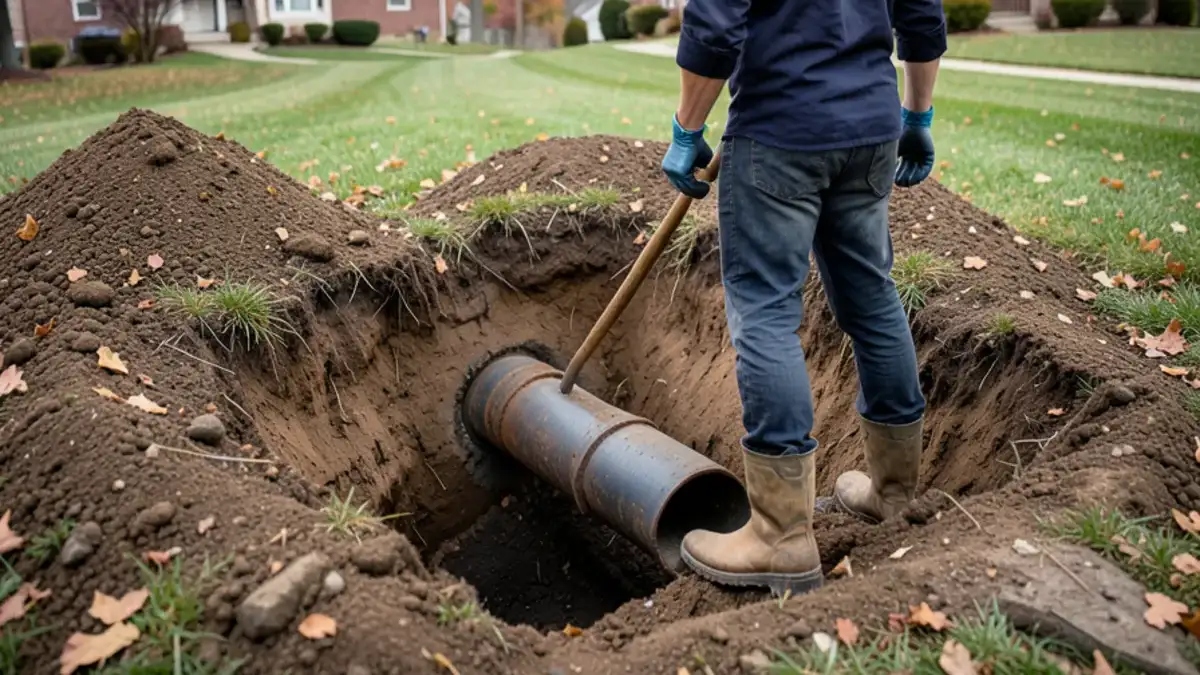
Sewer Line Repair in Washington, IL
The camera shows what is wrong, and the repair is matched to that, not to a habit.
- 4.8 on Google, 16 reviews
- Open 7 days, 7:15 AM to 6:15 PM
- Based in Washington, IL
- Google reviews going back 10 years
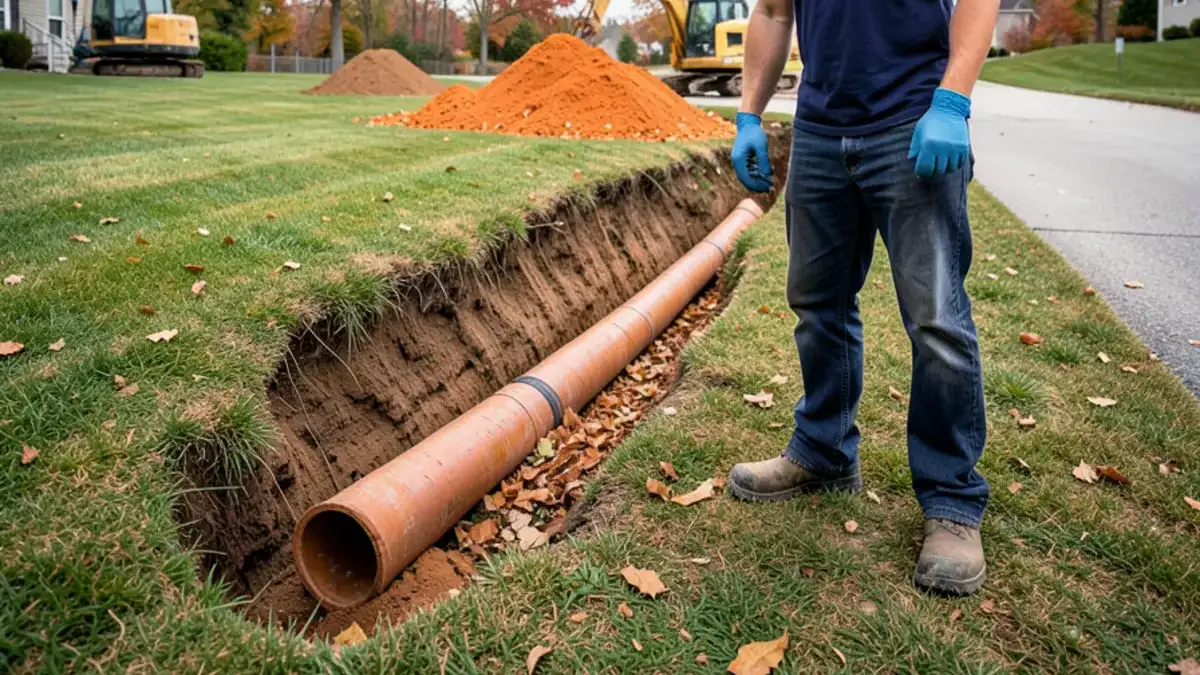
Sewer line repair in Washington, IL means fixing a cracked, offset, bellied or collapsed pipe between your house and the city sewer, often old clay tile under mature trees. A camera decides the job: a short dig for one bad joint, a liner for a pipe still round and open, or full excavation after a collapse.
Spot Repair, Lining or Replacement: Which Does Your Line Need?
The camera decides. Each repair fits a different condition of the pipe, and the wrong choice wastes money.
| Repair | Fits when | Limits |
|---|---|---|
| Spot repair (dig and replace a section) | One or two damaged joints or a cracked length, with sound pipe on both sides | The rest of an old line stays in place, so a later defect may need another dig |
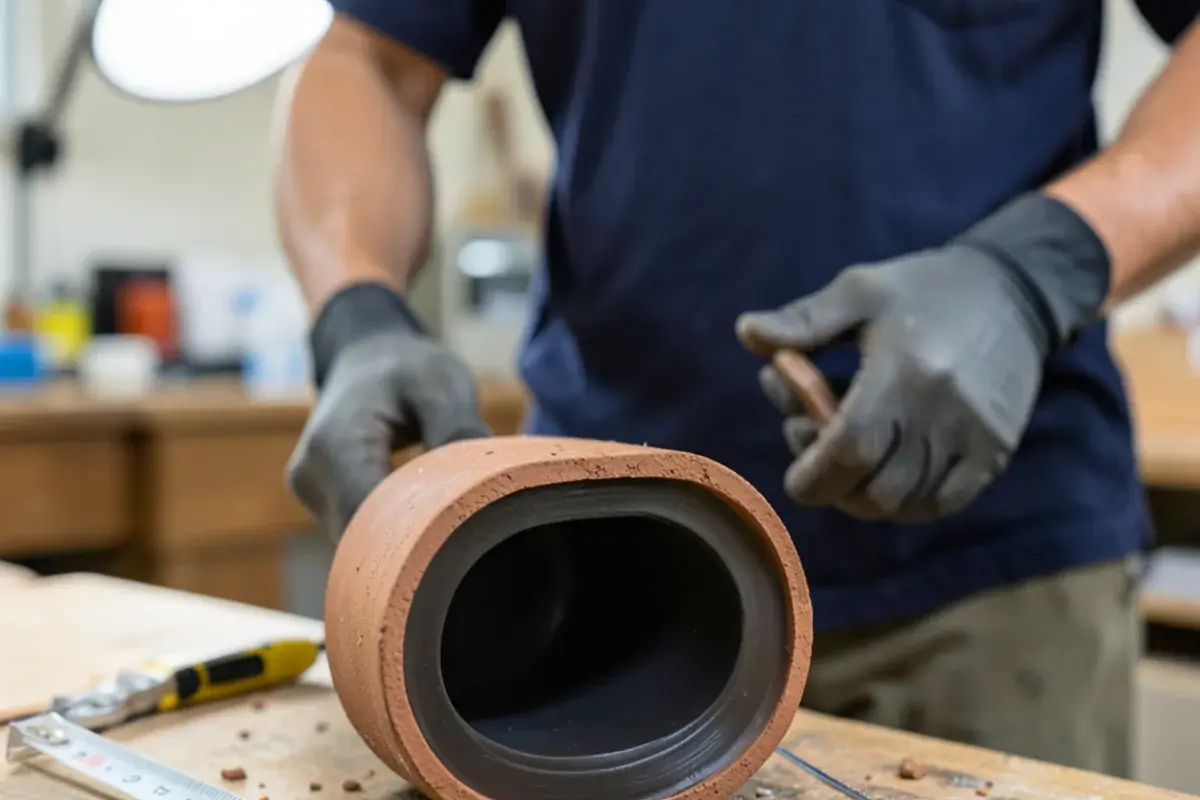
| Lining (a resin liner cured inside the old pipe) | The pipe is open, round and continuous, with cracks or leaking joints | Cannot fix a collapse, a deep belly or a badly offset joint, and it narrows the bore slightly |
| Excavation and replacement | The pipe has collapsed, sagged badly or failed along much of its length | The most disruptive option, with the yard, driveway or slab affected |
What a Sewer Repair Job Includes
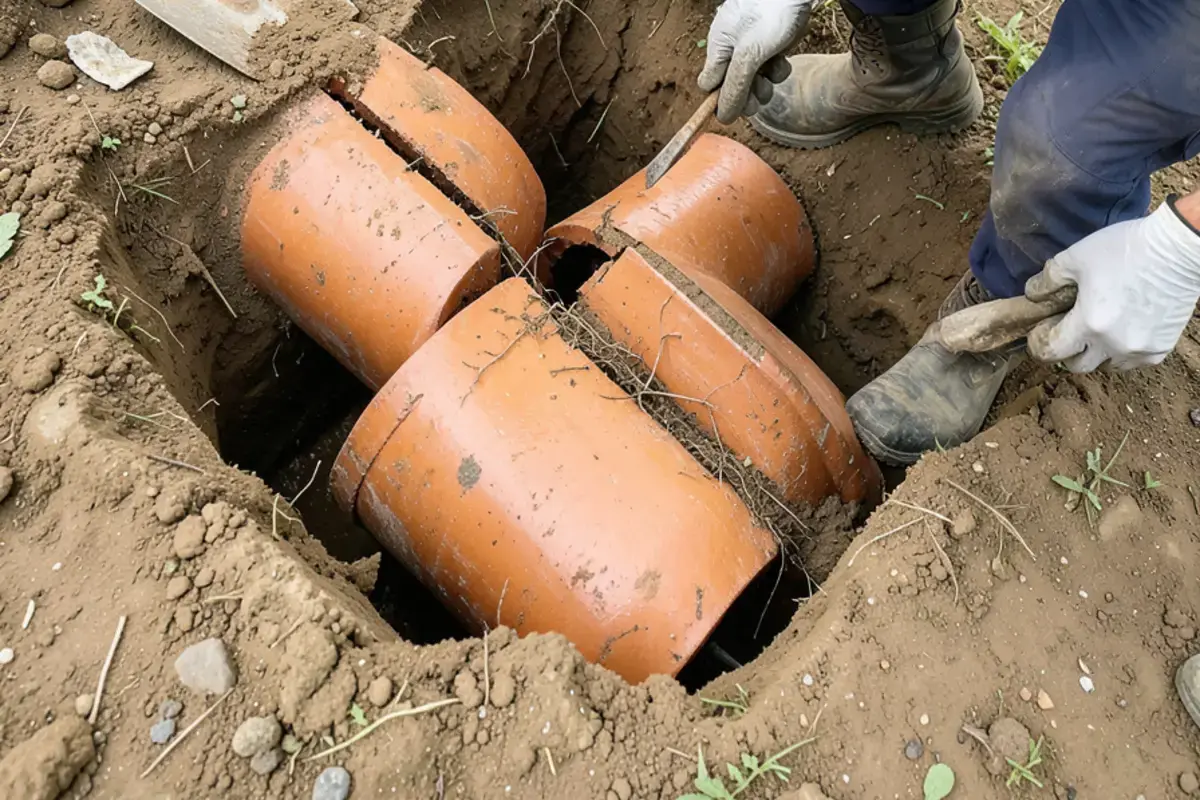
A repair covers the defect, the ground above it and the proof that it worked. The quote names each item, so nothing is left for the day of the dig.
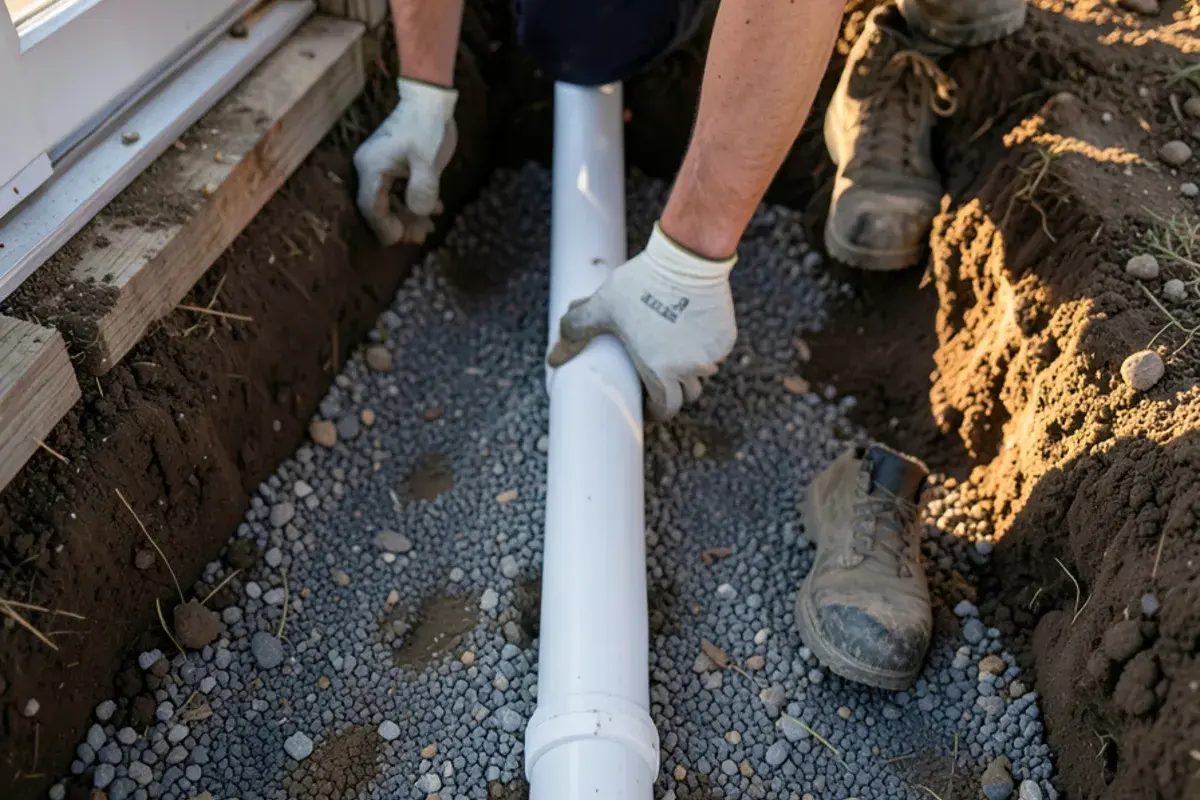
- Pipe work. We cut back to sound pipe on each side of the defect and join new pipe with proper couplings.
- Bedding and slope. New pipe sits on a firm bed and falls steadily toward the sewer.
- Locates and permits. The JULIE request, plus any city permit the job needs.
- Testing. Water through the section and a camera pass before the trench closes.
- Backfill. Soil returns in compacted layers. Sod, concrete or asphalt is scoped separately.
Lining is a repair for the pipe you already have. If the footage shows a continuous, round pipe with cracks or leaking joints, a liner can seal it without a trench along the whole run. Anything on the city's side of the connection is the city's to fix.
Why a Collapsed Pipe Means Digging
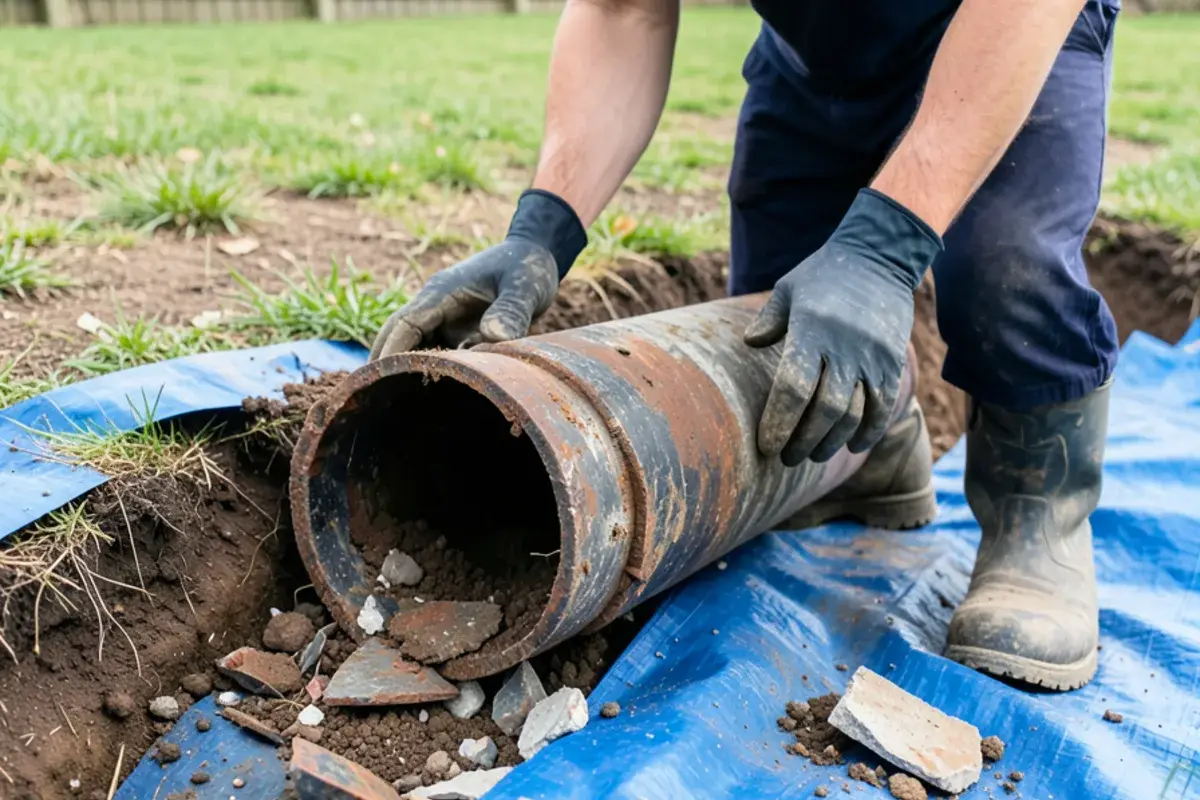
A collapsed sewer pipe has lost its shape. Clay breaks into pieces, plastic or iron can crush flat, and the passage narrows to a slot or closes.
A liner needs a host pipe that can hold it. If the host has caved in, the liner has nothing to press against and no clear route to run through. A bellied section also holds water and solids and keeps the clog coming back. Trenchless repair is an option only when the footage supports it.
Signs that point to a collapse:
- A cable stops at the same spot on each visit
- Backups that clear and return within days
- A sunken or wet patch along the sewer path in the yard
- Several fixtures draining slowly together
What the Camera Has to Show Before Lining
Before we recommend a liner, the footage must show a pipe that is open along its whole length. These are the checks:
- Continuous and round. No collapsed or crushed sections.
- No major offset. A joint pulled sideways can block the liner.
- No deep belly. Standing water in a sag cannot be lined away.
- Clear of roots and debris. Roots must be cleaned out first, and a liner cannot be pulled through a mass of them.
- Known path and depth. We need to know where the pipe runs before any work.
If the line fails any of these, the section that fails gets dug. Our sewer camera inspection page explains what the footage includes and what it cannot show.
Sewer line broken or collapsed? Call (209) 563-1400
Open 7 days, 7:15 AM to 6:15 PM. Tell us what is happening and we will give you a clear, upfront quote.
Request a Quote
Water moving right now? Call first: (209) 563-1400. For anything that can wait, send the details here.
How a Sewer Repair Goes, Step by Step
- Camera and locate. We scope the line, find the defect and mark its depth and position on the surface.
- Options and quote. You see the footage, and the quote lists each repair choice and why.
- Utilities and permit. Illinois law requires a call to JULIE (811) before any digging, and JULIE lists two working days' notice. If the job needs a city permit, it is pulled before work starts.
- Open and rebuild. We open the trench or prepare the line for lining, then set new pipe with a continuous slope so solids keep moving.
- Test and inspect. We run water through the new section and check it with the camera. Where an inspection applies, the city looks before the trench is covered.
- Close and restore. The trench is backfilled, and any surface repair follows the quote.
Permits and Licensing for Sewer Work in Washington
Illinois requires a plumbing license for anyone who plans, installs, alters or repairs plumbing under the Illinois Plumbing License Law, 225 ILCS 320, administered by the Illinois Department of Public Health. Ask any contractor for the license number and check it on the IDPH license lookup. The Illinois Plumbing Code is 77 Ill. Adm. Code 890.
The City of Washington issues plumbing permits, and its contractors register with the city. A permit lasts six months and can be renewed. To confirm what your job needs, call the city's inspection line at (309) 444-1122 on weekdays between 8:00 AM and 5:00 PM.
A proposed ordinance would amend Chapters 52 and 96 on private sewer laterals, bar sump and perimeter tile discharge into sanitary sewers, and authorize city inspection. It is unsigned as of our research, so check its status with the city.
What Moves the Price of a Sewer Line Repair?
Price depends on the repair method and what sits above the pipe, so we give a clear, upfront quote after the camera, not before.
- Length and depth. One joint is a different job from a long run, and a deeper pipe needs a wider trench.
- Surface above it. Lawn is the easiest to restore, while driveway, sidewalk, patio, tree roots or a slab cost more.
- Utilities and permit. Other buried lines and inspections add steps.
- Season. Frozen ground from about December to March makes a trench slower to open, so ask how the season affects your date and your price.
- Method. Spot repair, lining and full replacement each carry different costs.
Thecostin.com puts the Illinois average plumbing repair at $350, mostly $150 to $700 in 2026. That figure covers ordinary repairs. It is a published estimate, not our quote, and it is not a sewer-excavation price. For sewer-specific ranges, see our post on sewer line replacement cost in Illinois.
Which Washington Sewers Fail Most Often?
Age and trees drive most failures. Washington has a real range of homes: 13% of units date to 1939 or earlier, the median is 1978, and the largest building decade is 2000 to 2009 (Point2homes, citing Census data). Older homes were often piped in clay tile or cast iron, and joints in both give roots a way in.
The November 17, 2013 tornado destroyed hundreds of Washington homes, and many were rebuilt from 2014 on. A new house can still sit on an older lateral under the yard, so rebuilt homes deserve a camera check too.
If roots are the cause, read root removal before choosing a repair. If sewage is backing up now, see emergency sewer backup.
Why Professional Sewer & Drain for This Work
Cleaning only goes so far
Angela S. wrote that she had a sewage line at least 10 years past needing attention, and that Gary stayed until he was happy and confident in the work.
A repeat customer for backups
Paul M. wrote that Gary bailed him out of a backed up sewer multiple times. When a line keeps backing up, the cause is often in the pipe, and a repair is what ends the cycle.
You see the problem before you pay to dig
We start with a camera and show you the pipe. Terry S. wrote that his experience was night and day compared with another service weeks earlier.
Seven days a week
Our Google hours run from 7:15 AM to 6:15 PM on all seven days, so a failed line does not have to wait for Monday.
What Customers Say
4.8 out of 5 from 16 Google reviews, checked November 2026. Read all reviews
“Monte and Hunter came out on a Sunday (morning no less!) to help us with a mess from a backed up sewer. Lots of roots! They used two different sized cutters with a monster snake and cleaned it out all the way to the city sewer. We'd had another "sewer service" a few weeks ago and the experience was night and day different. I definitely recommend them.”
“Gary at Professional Sewer & Drain Services successfully bailed me out of a backed up sewer multiple times. Great guy and reasonable rates - very trustworthy!”
“Just a superb experience in quality and customer service and price. Called these guys at 5:30p and they were here by 6:00p and Monte did his work in the dark by flashlight! Not only did he do a fantastic job he also educated us on how to prevent these problems from becoming a much bigger and more expensive issue. I would recommend this company to anyone, they are committed to doing a professional job, ensuring it is done right and with very affordable prices.”
Sewer Line Repair Questions
Can a sewer line be repaired without digging up the yard?
How do I know if my sewer line is collapsed?
Does anyone inspect the trench before it is backfilled?
Should I replace the whole line if only one section is damaged?
How long does a sewer line repair take?
Will the repair fix the roots problem for good?
Sewer Line Repair in Washington? Call (209) 563-1400
Open 7 days, 7:15 AM to 6:15 PM. Tell us what is happening and we will give you a clear, upfront quote.
Where We Provide This Service
We repair sewer lines from our Washington base, and the pipe underground changes from town to town. Streets with older clay tile and mature trees, such as those in Peoria and Pekin, are where offset joints and root-damaged sections turn up. Morton and Metamora have the same pattern on established streets. Phone us before you plan around a date, since the drive varies by town.
- Peoria: Pre-1940 Peoria laterals joining century-old combined sewers are prime repair candidates.
- Pekin: Pekin's 2,995 pre-1940 homes mean many aging clay and iron sewers.
- Morton: Roots under Morton's mature trees often leave cracked laterals behind.
- Metamora: Homes near Metamora's old core carry the oldest sewer laterals in town.
- Creve Coeur: Creve Coeur's aging village sewer makes the pipe-owner question matter first.
- East Peoria: East Peoria's low floodplain ground adds water to any open trench.
- Peoria Heights: With 57% of homes built before 1960, Peoria Heights laterals are aging together.
- Galesburg: Cracked rail-era laterals can wait for a booked day; ask about right-of-way rules.
- Streator: A cracked section found on camera can be repaired on a booked day.
- Springfield: Lateral defects are normally the owner's, and one planned trip can cover a repair.