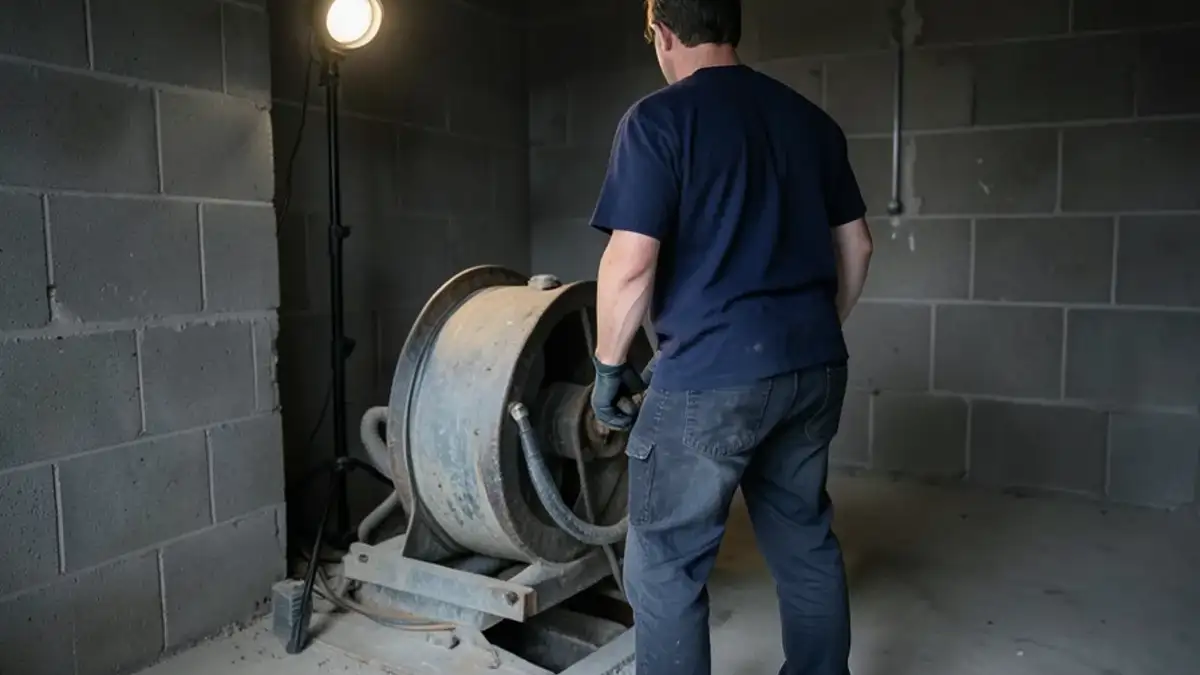
Sewer Line Cleaning in Washington, IL
Roots, grease and old clay pipe cleared from the cleanout to the city main.
- 4.8 on Google, 16 reviews
- Open 7 days, 7:15 AM to 6:15 PM
- Based in Washington, IL
- Google reviews going back 10 years
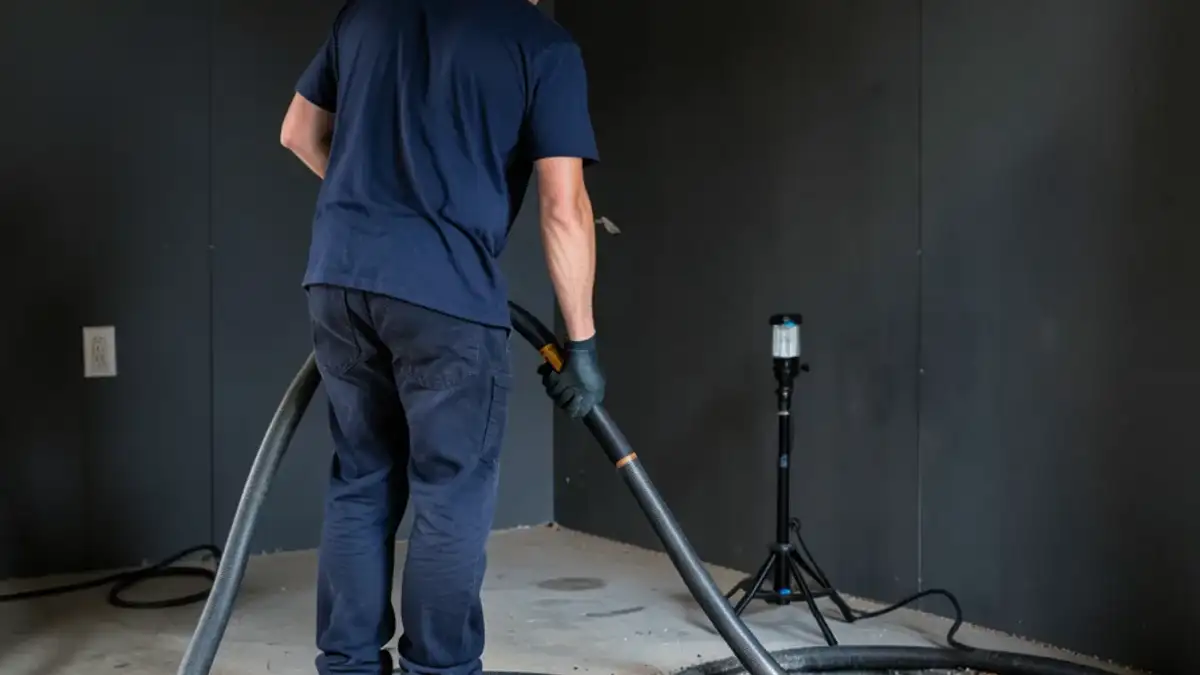
Sewer line cleaning in Washington, IL means clearing the main line from the house to the city sewer, usually with a cable machine and cutting head run through the cleanout. Tree roots in older clay pipe are the leading local cause. If more than one fixture is backing up, the problem is almost always in that line.
When Does a Sewer Line Need Cleaning?
Clean the main line when more than one fixture misbehaves at the same time. A single slow sink is a branch drain. A problem that crosses fixtures points to the line they all share.
These are the signs we hear on the phone:
- The basement floor drain gurgles or backs up when the washer empties
- The toilet bubbles when the tub drains
- Water comes up in a lower sink or tub when an upper fixture runs
- A sewage smell near the floor drain
- Several drains slow down over a few weeks
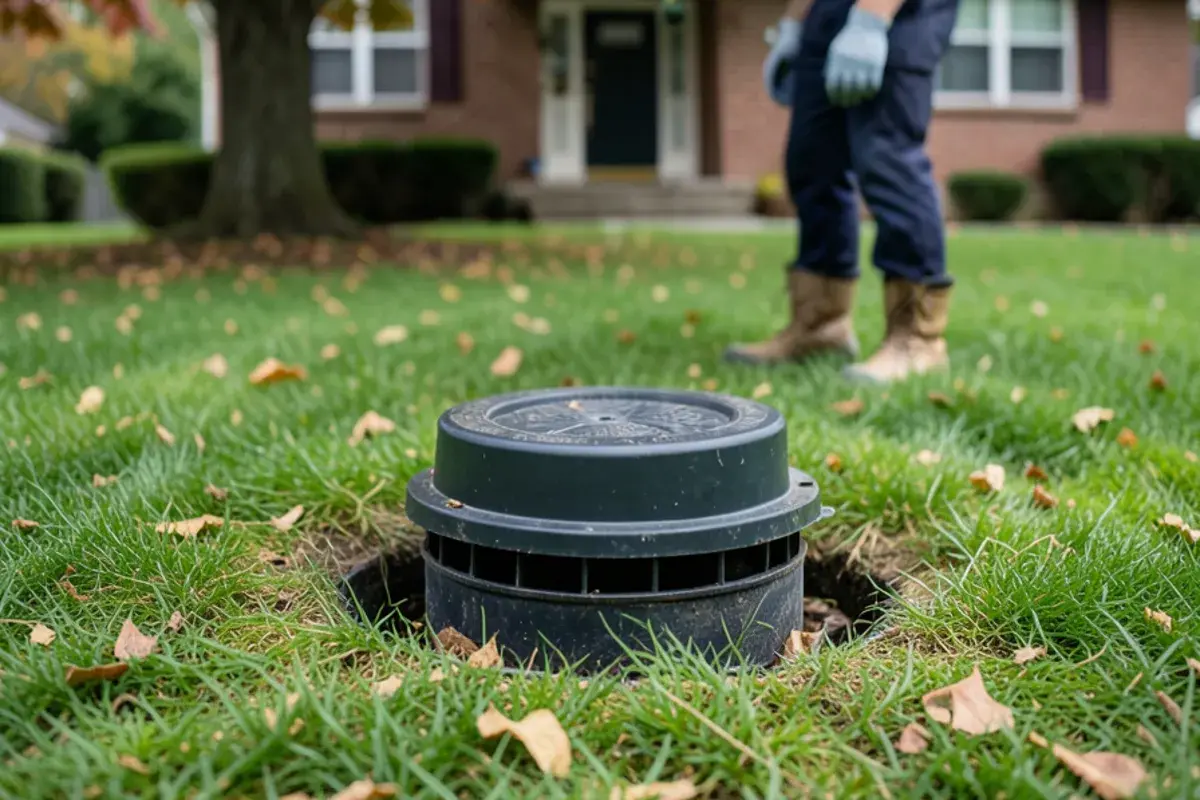
Stop using water when you see backup at the lowest drain. Every flush adds to what is coming up, and it only takes a load of laundry to flood a basement floor.
What Main Line Cleaning Covers
Main line cleaning covers the shared pipe from your access point out to the city sewer, not only the stretch that was blocked. Ask any company how far its cable went, because a line opened halfway clogs again. A cleaning usually takes in:
- The building drain. The large pipe under the basement floor or slab that every branch feeds.
- The private lateral. The run across the yard between the house and the city main.
- What is in the way. Roots, grease, wipes, scale and whatever else sits in the bore.
- A flow check. Water through the line, watched at the lowest drain.
- A plain report. What came out, and what that says about the pipe.
Cleaning does not repair a cracked pipe, straighten an offset joint or touch the city's main. A camera pass, hydro jetting and repair are separate steps, each quoted before it starts. Homes on a private septic system follow other rules, so tell us if yours is one.
What Clogs Main Lines Around Washington?
Roots are the leading cause on older streets. Washington has a real mix of housing, with about 13% of units dating to 1939 or earlier (Point2homes, citing Census data), and homes of that age were often built with clay tile sewers. Clay sections meet at joints every few feet, and tree roots find those joints because they leak vapor and moisture.
Newer houses clog too, for different reasons:
- Grease from kitchen drains cools and coats the pipe, then catches everything else.
- Wipes and paper products snag on rough spots and joints. "Flushable" wipes do not break down the way toilet paper does.
- Bellies and offsets let solids settle. Ground movement causes these, and the freeze and thaw of a Central Illinois winter does not help.
- Scale in cast iron narrows the pipe from the inside as it ages.
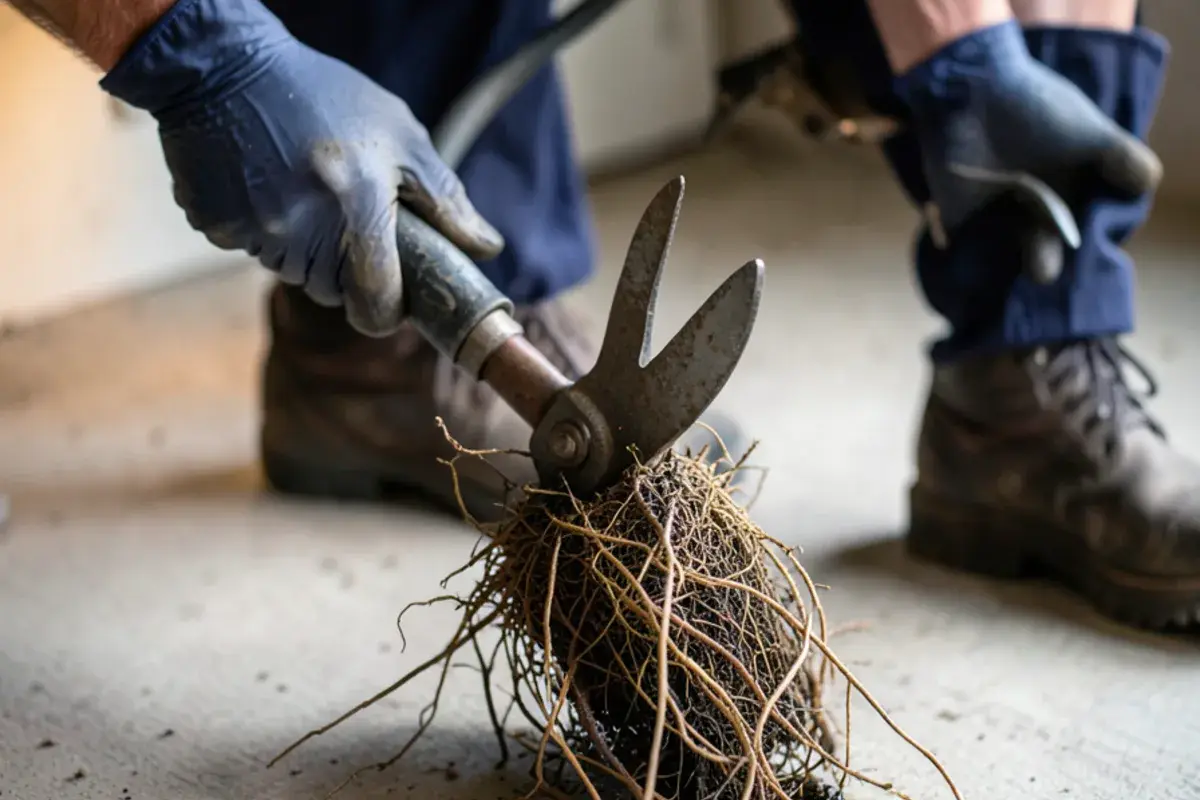
Knowing the cause matters because each one calls for a different fix. Roots need root removal, and heavy grease may call for hydro jetting.
Sewer backing up in your basement? Call (209) 563-1400
Open 7 days, 7:15 AM to 6:15 PM. Tell us what is happening and we will give you a clear, upfront quote.
Request a Quote
Water moving right now? Call first: (209) 563-1400. For anything that can wait, send the details here.
How We Clear a Sewer Line, Step by Step
The job follows the same order every time, whether it is a Sunday backup or a slow line on a Tuesday.
- Find access. We locate the cleanout. If there is none, we work through a pulled toilet or a roof vent.
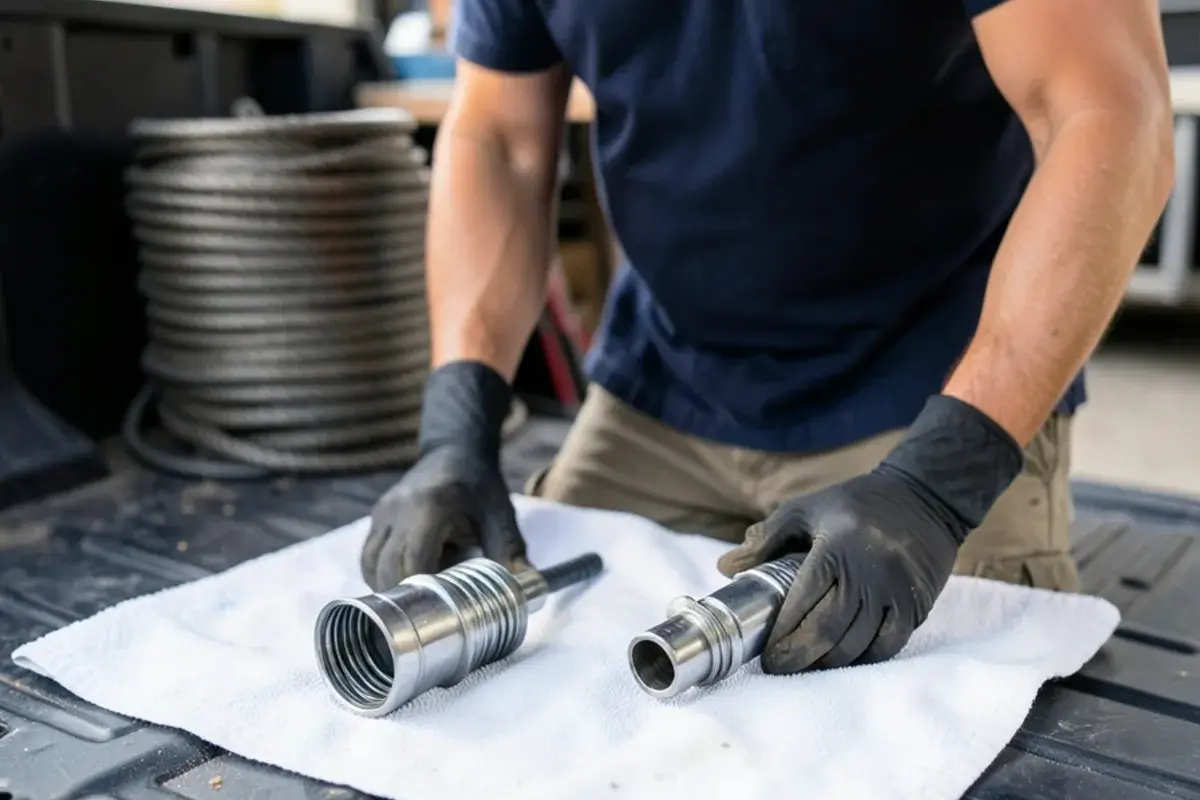
- Choose the head. A cable machine takes different cutters. We size the head to the pipe and what we expect to meet, then step up. One customer watched two sizes go down the same line.
- Run the line to the main. We work the cable out until it reaches the city sewer, not just until the water starts to move.
- Flush and confirm. Running water through the line shows whether it carries a full flow.
- Show you what came out. Roots, grease and paper all tell a story about the pipe.
- Talk through the next step. That may be nothing, a camera look, or a plan for a repair.
Cable, Jetter or Camera: Which Do You Need?
Each tool answers a different problem.
| Method | Best for | Trade-off |
|---|---|---|
| Cable machine with cutter | Roots and hard blockages | Opens the line but leaves a film on the pipe wall |
| Hydro jetting | Grease, sludge and scale | Needs sound pipe; not for a line that is failing |
| Camera inspection | Finding the cause | Shows the problem but does not clear it |
We usually start with the cable because it restores flow quickly. A sewer camera inspection afterward makes sense for a repeat clog, an older clay line or a house you are about to buy.
What Affects the Price of Sewer Cleaning?
We give you a clear, upfront quote before the cable goes down. These are the things that move it:
- Access. A clean, reachable cleanout is quicker than pulling a toilet.
- Length of the run. A deep lot means more cable and more time.
- What is in the line. Heavy roots take several passes.
- Pipe condition. Brittle clay or a known belly means slower, more careful work.
- Follow-up work. A camera inspection or a repair is a separate decision, and you make it after you see the facts.
Published numbers give only a rough frame. Thecostin.com's 2026 figures put Illinois plumbers at $75 to $130 per hour and the average plumbing repair at $350, with most between $150 and $700. Those cover plumbing in general, not main line cleaning, and none of them is our quote. A rooted line on a long lot and a quick pass through an open cleanout are very different jobs, so ask to see each step priced on its own line.
Who Owns the Line, and What Rules Apply?
Start with the boundary. The pipe across your yard is generally yours to keep open, while the main under the street belongs to the city, and the exact handoff varies by town, so ask public works where yours falls.
A proposed, unsigned Washington ordinance would change Chapters 52 and 96 on private laterals and let the city inspect them. Check its status with the city before you plan around it.
IDPH says anyone who plans, installs, repairs or maintains plumbing systems needs a license under 225 ILCS 320. Its page does not name sewer cleaning, so ask who holds the license and verify it on the IDPH lookup. If cleaning uncovers a failed pipe, the repair may need a city permit, and permits there last six months.
How Can You Keep the Line Clear?
Cleaning fixes today. These habits and checks help tomorrow:
- Keep grease out of the kitchen drain. Wipe pans and put the grease in the trash.
- Flush only toilet paper, whatever a wipes package says.
- Know where your cleanout is, and keep it uncovered.
- Think before planting trees over the sewer path.
- If roots are the cause, ask about a cleaning interval and what a permanent repair would involve.
If backups come back, the pipe itself may be the issue. Our sewer line repair page covers what happens next.
Why Professional Sewer & Drain for This Work
Cleaned to the city main
One Sunday-morning customer, Terry S., wrote that Monte and Hunter used two different sized cutters and cleaned the line all the way to the city sewer, after another company had been out a few weeks earlier.
We tell you why it clogged
Jason P. wrote that we explained how to keep the problem from turning into something bigger. You should leave knowing what is in your line, not only that it runs today.
Open seven days
Sewer lines do not wait for a weekday. We keep the same 7:15 AM to 6:15 PM hours all week on Google, and customers have reviewed Saturday and Sunday calls.
Repeat sewer customers
Paul M. wrote that Gary bailed him out of a backed up sewer multiple times and called the rates reasonable. Older lines often need more than one visit, so that trust matters.
What Customers Say
4.8 out of 5 from 16 Google reviews, checked November 2026. Read all reviews
“Monte and Hunter came out on a Sunday (morning no less!) to help us with a mess from a backed up sewer. Lots of roots! They used two different sized cutters with a monster snake and cleaned it out all the way to the city sewer. We'd had another "sewer service" a few weeks ago and the experience was night and day different. I definitely recommend them.”
“Gary at Professional Sewer & Drain Services successfully bailed me out of a backed up sewer multiple times. Great guy and reasonable rates - very trustworthy!”
“Just a superb experience in quality and customer service and price. Called these guys at 5:30p and they were here by 6:00p and Monte did his work in the dark by flashlight! Not only did he do a fantastic job he also educated us on how to prevent these problems from becoming a much bigger and more expensive issue. I would recommend this company to anyone, they are committed to doing a professional job, ensuring it is done right and with very affordable prices.”
Sewer Line Cleaning Questions
How often should a sewer line be cleaned?
Where is the sewer cleanout on my house?
Will cleaning remove tree roots for good?
Is the sewer line from my house to the street my responsibility?
How long does sewer line cleaning take?
Can I use root killer instead of having the line cleaned?
Sewer Line Cleaning in Washington? Call (209) 563-1400
Open 7 days, 7:15 AM to 6:15 PM. Tell us what is happening and we will give you a clear, upfront quote.
Where We Provide This Service
We clean sewer lines from our Washington base across Tazewell, Woodford and Peoria counties. Root trouble is most common where big trees stand over older clay pipe, which is why calls from established streets in Morton, Peoria and Pekin so often start with a slow basement floor drain. Along the river in East Peoria, heavy rain can make a partly restricted line back up fast. See every town on our service areas page.
- Morton: Mature shade trees over older Morton laterals make roots the first thing to rule out in a main line.
- East Peoria: The drop from Washington to 502 feet at the river makes a restricted East Peoria line slow to forgive heavy rain.
- Peoria: Peoria's combined sewers date to the late 1800s, and its old laterals feed straight into them.
- Pekin: With 21% of Pekin homes built before 1940, clay and iron house sewers are worth checking to the street.
- Creve Coeur: The village calls its own sewer system aging, so knowing whose pipe is blocked matters in Creve Coeur.
- Chillicothe: One in five Chillicothe homes predates 1940, so clay and iron house sewers are likely.
- Metamora: Old lots near Metamora's 1845 courthouse sit close to subdivisions whose newer lines clog differently.
- Sunnyland: Sunnyland addresses vary in who runs the sewer, so we settle the utility before planning a Route 8 visit.
- Deer Creek: Deer Creek treats wastewater in lagoon ponds, so wipes and grease kept out of the house line help everyone.