Local angles
Sewer Backups After Heavy Rain in Tazewell County
Published November 1, 2026. Updated November 1, 2026.
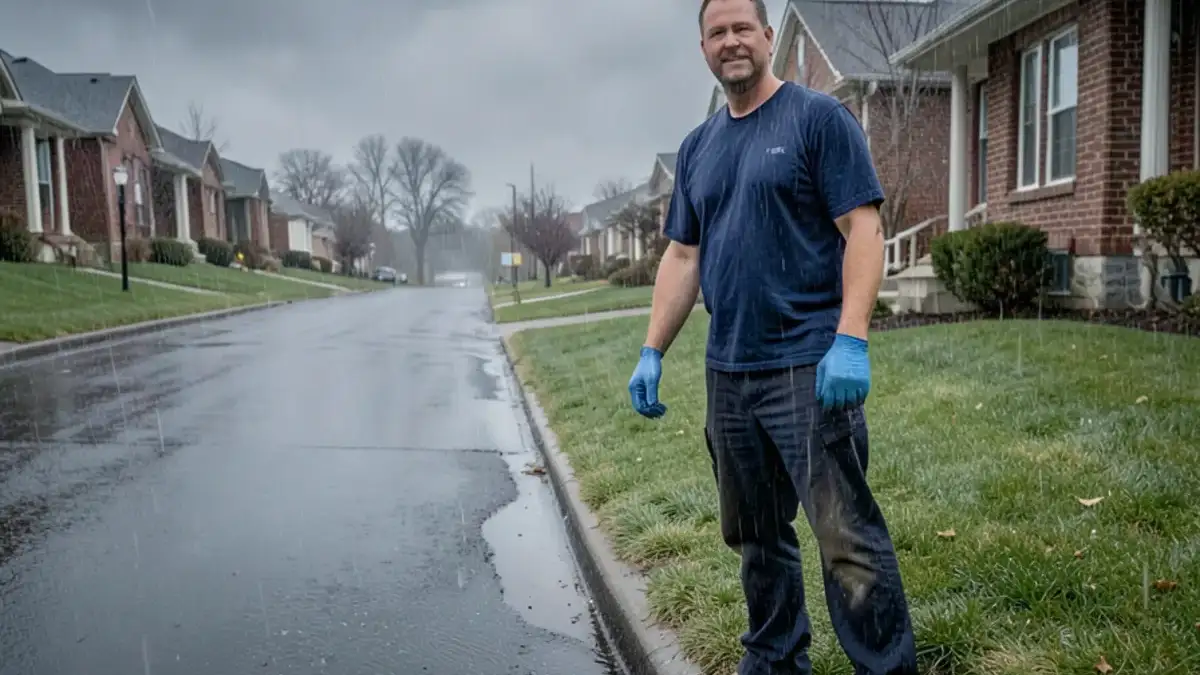
A sewer backup after heavy rain in Washington, IL means more water reached the sanitary sewer than the pipes could carry, or your own lateral was already narrowed and storm flow finished the job. The first job is working out which one it is. A cleanout check and a camera pass usually settle that in a single visit.
Why Does Heavy Rain Push Sewage Into a Basement?
Sewage reaches a basement when flow into the sewer system is greater than the pipes can carry. EPA describes sanitary sewer overflows in just those terms and says they can discharge into basements, streets and waterbodies. It names stormwater and groundwater entering the system as the primary cause.
EPA splits that extra water into two kinds:
- Inflow is rain or snowmelt that enters through a direct connection, such as roof drains, storm sewer links and basement sump pumps.
- Infiltration is water that seeps in through defects, such as leaking joints, cracked mains, root intrusion and damaged manholes.
Washington averages about 38 to 39 inches of precipitation across roughly 108 days a year (BestPlaces). A pipe that is partly restricted gets tested often here, not once in a decade. Tazewell County has also seen what saturated ground does. When storms hit East Peoria on April 17, 2013, the soil was so waterlogged that mudslides occurred, and the library basement flooded overnight.
Sewage coming up after a storm? Call (209) 563-1400
Open 7 days, 7:15 AM to 6:15 PM. Tell us what is happening and we will give you a clear, upfront quote.
Is the Problem Your Lateral or the City Main?
The lateral is the private pipe from your house to the main under the street. Responsibility for it normally sits with the owner, while the city maintains the main. Rules differ by town, so ask public works where yours ends.
This table is a rule of thumb, not a diagnosis:
| What you see | What it often points to | First move |
|---|---|---|
| Only your lowest drain backs up | Your lateral: roots, a belly or a partial blockage | Have the line cleaned and scoped |
| Backups follow hard rain but the line runs fine when dry | Storm flow overloading a narrowed lateral, or a surcharged main | Camera the lateral, then ask the city about the main |
| Several homes on the street are affected | The public main | Call the city's public works office and document the date |
| Clear water rises slowly at the floor drain | Groundwater or surface water, not sewage | Check the sump pit and the discharge line |
When the answer is your lateral, sewer line cleaning clears it and a sewer camera inspection shows why it narrowed. In river towns like Pekin, about 19 miles from our Washington base, a wet spring puts both the main and the ground under stress at once.
Who Takes the Call About the Main?
That depends on the town, so save the number before the next storm:
- Pekin. The city owns the main, and a large part of town runs on combined pipes that carry rain and household waste together, so a big storm can fill them.
- East Peoria. Public Works on East Washington Street can tell you where the city's pipe ends at your address.
- Peoria. The city says to call the Greater Peoria Sanitary District before a plumber, and the district checks the public sewer at no cost.
- Washington. We found no published backup procedure, so ask the city who answers during a storm.
Can a Sump Pump Tied to the Sewer Make It Worse?
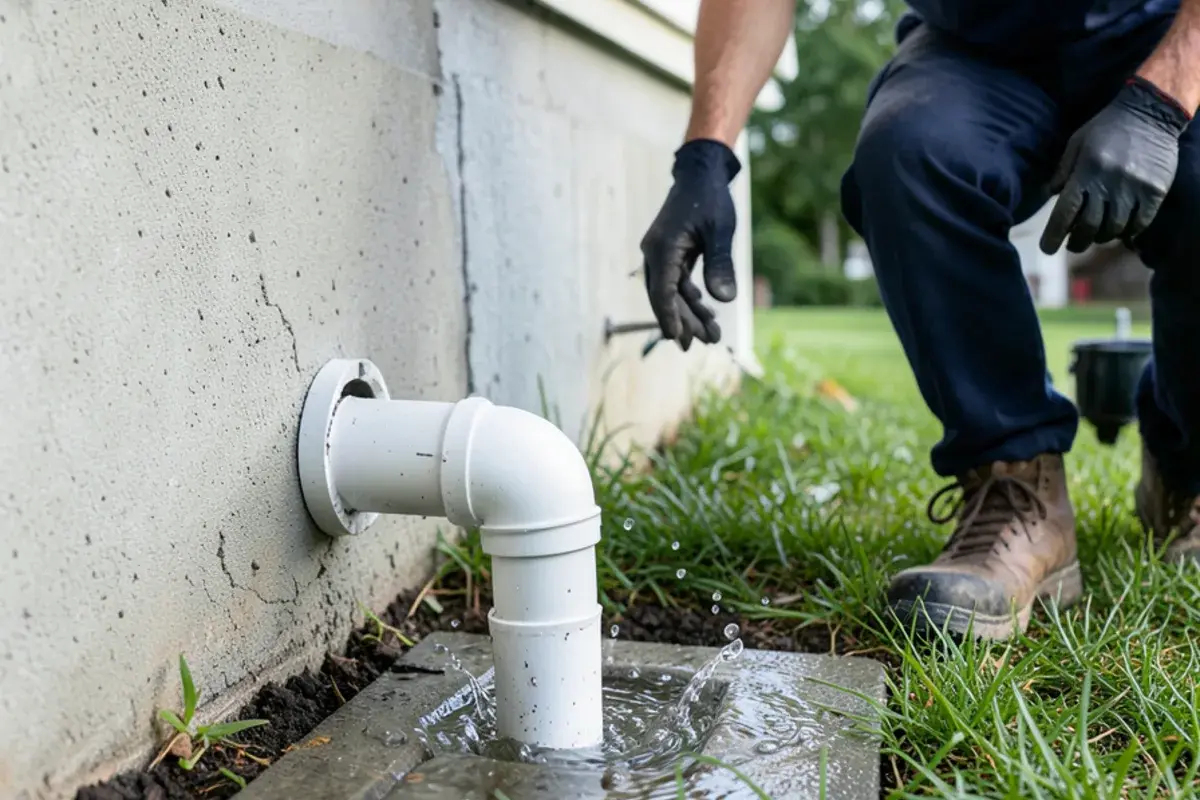
Yes, because every gallon it sends to the sanitary sewer is a gallon the main did not need to carry. EPA lists basement sump pumps among the connections that count as inflow, and clean groundwater belongs outdoors, away from the foundation.
A proposed, unsigned Washington ordinance would amend Chapters 52 and 96 on private sewer laterals, bar sump and perimeter tile discharge into sanitary sewers and authorize city inspection. It is not confirmed as law. Check its status with the city before you plan around it.
Illinois DNR adds a limit worth knowing. A sump pump handles groundwater collected by a footing drain, and it cannot keep up with surface water. A pump that is blocked, overloaded or without power can even act as a path for water to enter. Sump pump service covers rerouting a discharge, backup power and a check valve on the outfall.
Which Backup Protection Fits a Basement Here?
Illinois DNR's floodproofing guide lists four ways to keep sewer water out of a basement. The trade-offs are the useful part.
| Method | How it works | Trade-off |
|---|---|---|
| Floor drain plug | Blocks the opening where backup first appears | Cheap, but does not protect a laundry tub or basement toilet |
| Standpipe | A pipe in the floor drain holds backed-up water | Protects only up to its height, normally about three feet |
| Overhead sewer | A sump and ejector pump lift basement waste above flood level | More dependable, but needs maintenance and electricity |
| Backup valve | Floats close the valve when the sewer reverses | Needs maintenance, and older gravity types could jam on debris |
DNR says overhead sewers and backup valves need a licensed plumber and a building permit, and it gave rough prices of $2,000 to $5,000 and $3,000 to $5,000. Those figures are from an older guide and are not our quote. Ask for a written quote and confirm permit steps with the city.
The guide adds two cautions. A plug blocks flow both ways, so DNR suggests leaving it out normally and setting it when heavy rain is coming. Pressure also has to go somewhere: a loose plug can be pushed out, and older clay tile lines can break under the buildup. For that reason it recommends a standpipe only where cast iron sewer runs under the floor.
What Should You Do Before the Next Wet Spell?
Most of this is an afternoon's work in April or October:
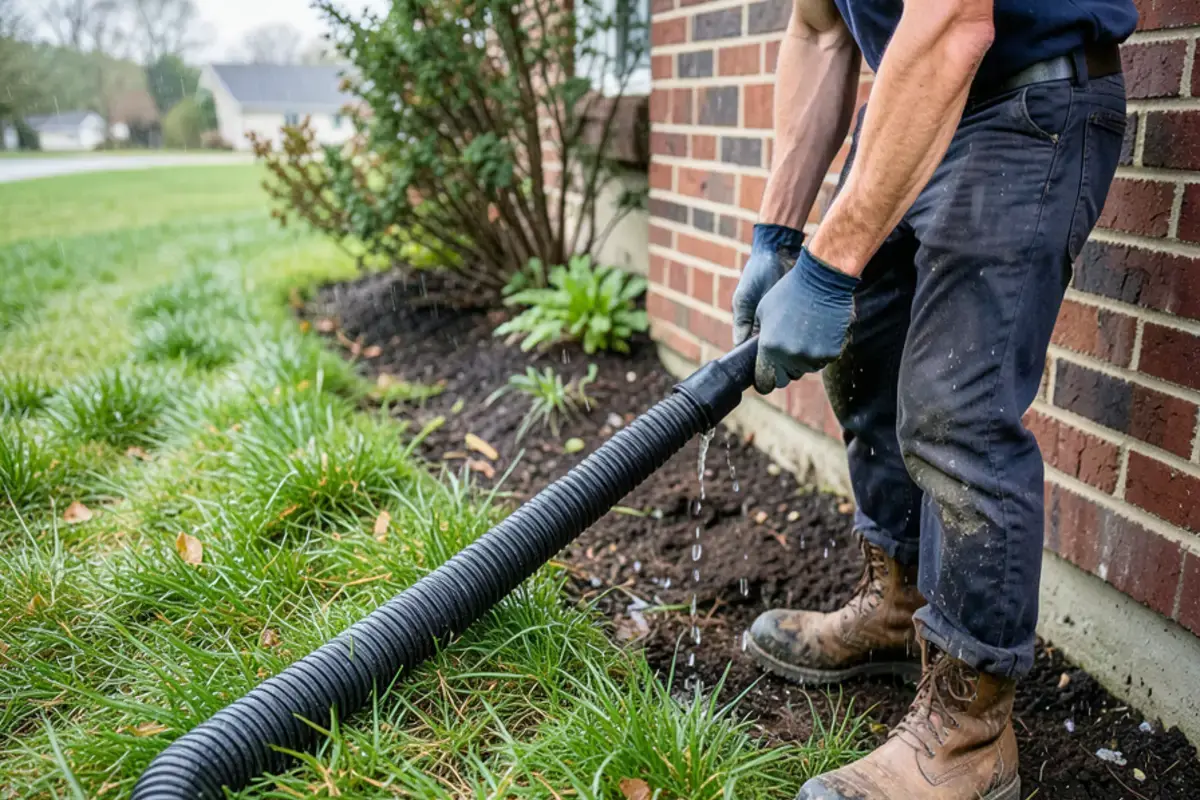
- Trace every downspout. Belleville, Illinois, calls gutters and downspouts tied into a lateral a major contributor to backups. Yours should end on the lawn.
- Find where the sump discharges, and confirm it leaves the house without touching a sewer pipe.
- Clear the cleanout so nobody has to move boxes during a backup.
- Lift what matters off the basement floor, starting near the floor drain.
- Ease off during a storm. Hold laundry and long showers until the rain stops, because every gallon has to pass the same restriction.
- Keep a storm log. Note the date, which drain came up, whether the water was clear or foul, and what the neighbors saw. Two entries tell public works and your plumber far more than one memory.
What We Read From a Wet Cleanout
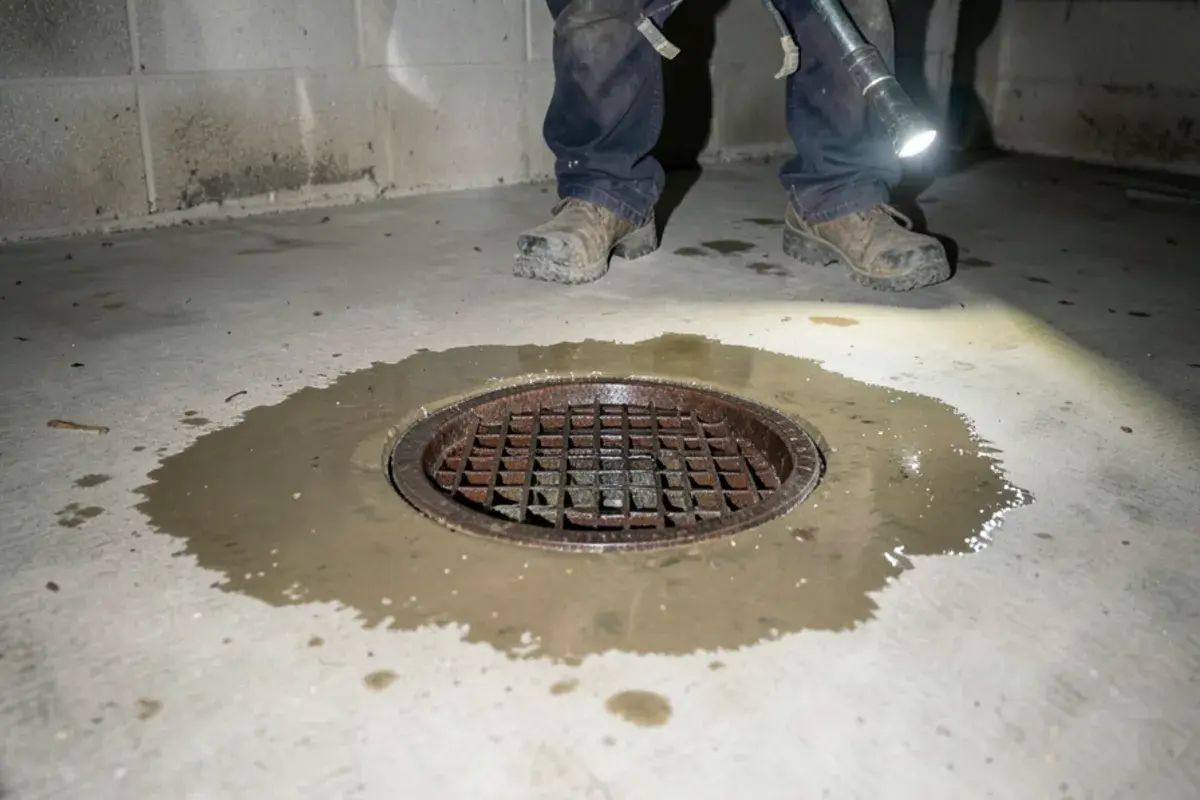
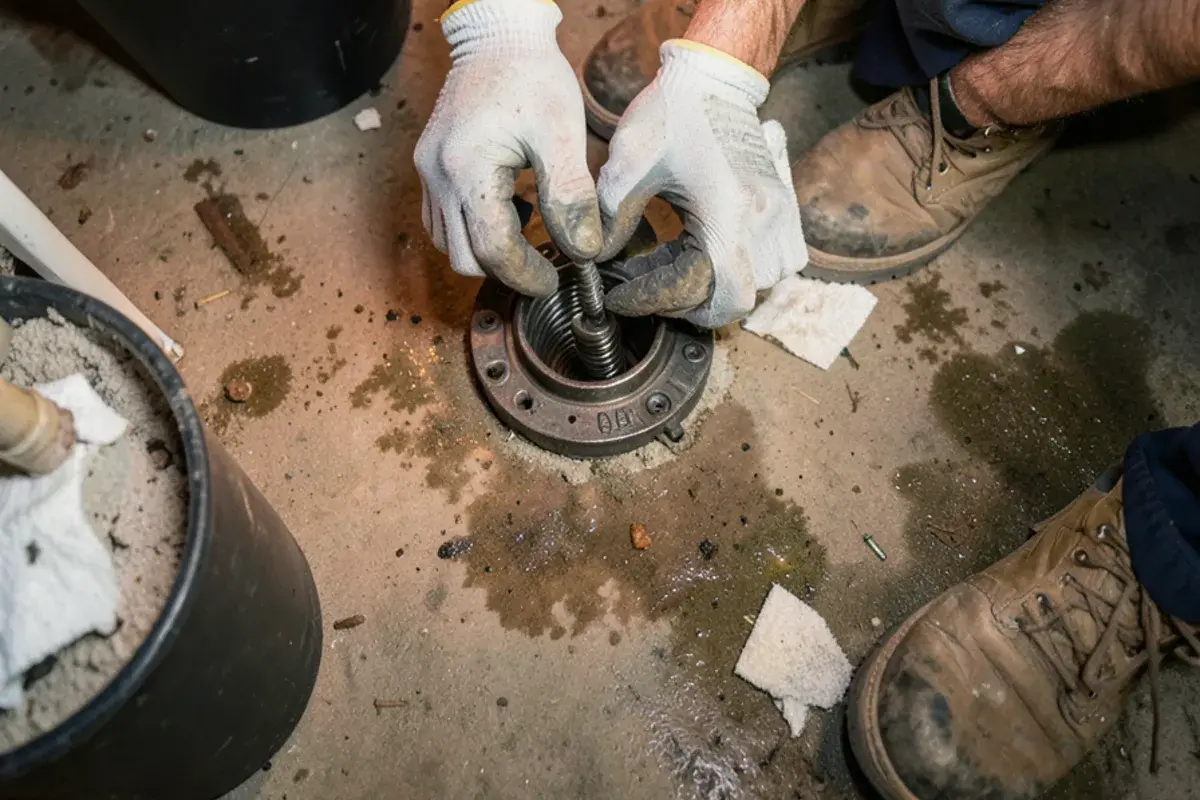
Our first look is at the cleanout. If water stands in it, the blockage is past that point. We note how high the water sits, whether it is clear or foul, and whether it falls when a fixture is off.
The steps that follow are plain:
- Open the cleanout cap slowly, with a bucket and towels ready.
- Run a cable machine and cutter down the line until it reaches the city sewer, not just until the water drops.
- Flush water through to confirm full flow.
- Ask where the sump and downspouts discharge.
- Run a camera if the backup has come back more than once.
A line half full of roots carries a dry-weather flow without complaint and fails when storm flow arrives. That follows from the pipe having less room, and it is reasoned, not a statistic. One Sunday-morning customer, Terry S., wrote that Monte and Hunter cut a root-choked line with two different sized cutters and cleaned it all the way to the city sewer.
Order matters when you spend money here. Cleaning and a camera come first because they fix or rule out the part you own. A backup valve or overhead sewer defends against the part you do not own, and buying one before you know which side is failing can leave the real problem in place. The other side of that trade-off is plain: cleaning will not help when the main itself is surcharged, meaning full and pushing back. A house that takes water from the street in every big storm may need a valve however clean its lateral is.
Find Out Which Problem You Have Before It Rains Again
A storm backup leaves clues for a few days, and the fresher they are, the easier the answer. Call (209) 563-1400, tell us when it rained, which drain came up and what the water looked like, and we will start at the cleanout. You get a clear, upfront quote, and a straight answer on whether the trouble is your pipe or the city's.
If sewage is already in the house, start with our guide on what to do when sewage backs up, and read how insurance treats sewer backups before any cleanup.
Sources

Written by the Professional Sewer & Drain Services team
A plumbing and sewer company based in Washington, IL. About us