Tankless Water Heaters in Washington, IL
Tankless can work well here if the sizing, gas line and venting are done right.
- 4.8 on Google, 16 reviews
- Open 7 days, 7:15 AM to 6:15 PM
- Based in Washington, IL
- Google reviews going back 10 years
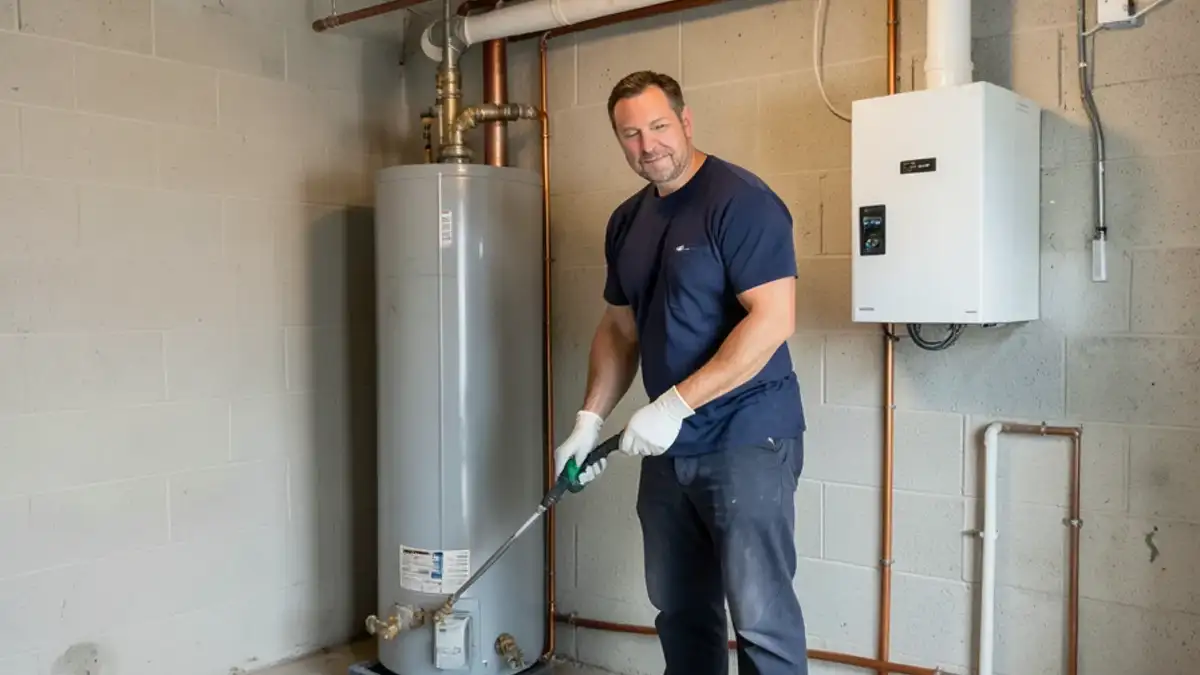
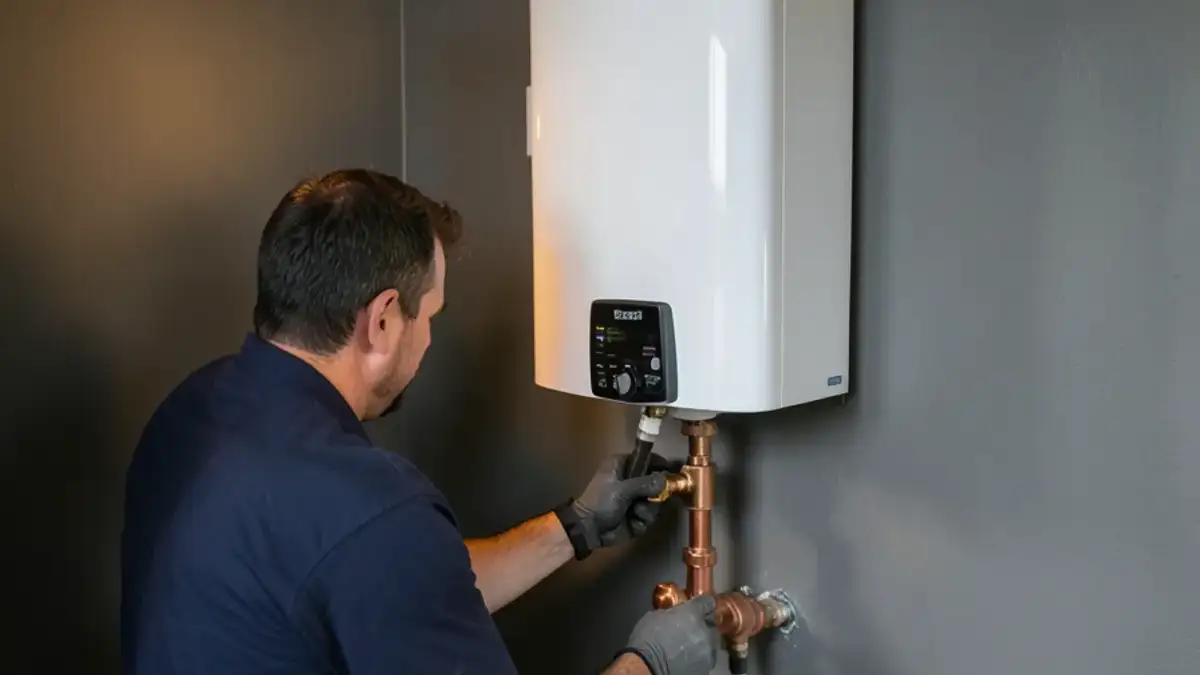
Tankless water heaters in Washington, IL heat water only when you open a tap, so they never run out the way a tank can. They take more planning: cold winter water, flow rate, a larger gas line, venting and a condensate drain. We size the unit to your house and say plainly if a tank suits you better.
Are Tankless Water Heaters Worth It in Illinois?
Tankless water heaters are worth it when your household wants a supply that does not run out, and you can meet the gas, venting and sizing requirements. They are not always worth it on cost alone.
| Tank | Tankless | |
|---|---|---|
| Hot water supply | A fixed amount, then recovery time | Continuous, limited by flow rate |
| Standby heat loss | Heats stored water all day | None, heats on demand |
| Install complexity | Lower | Higher: gas line, vent, condensate drain |
| Power outage | Gas pilot units can still heat | Most need electricity |
| Winter performance | Recovery slows | Flow drops as the water gets colder |
The U.S. Department of Energy's Energy Saver page says demand-type heaters can be 24 to 34 percent more efficient than storage tanks for homes that use 41 gallons or less of hot water a day. Efficiency savings on the gas bill must also cover the extra install cost, and that can take years.
How Do Tankless Water Heaters Handle Illinois Winters?
They work, but the numbers shift. A tankless unit is rated by how many gallons per minute it can heat at a given temperature rise. Supply water runs through cold ground, so in January it enters the house much colder than in July. The unit has to add more heat, and the flow it delivers drops.
For a house in Washington, where the cold season runs about December 1 to March 1 (Weather Spark), size to winter, not to summer. A unit that handles two showers in August may struggle with one and a dishwasher in January. Ask for the flow rate at a winter temperature rise, not the headline number.
How Do You Size a Tankless Water Heater?
Add up the fixtures that can run at the same time. ENERGY STAR lists these average flow rates:
| Fixture | Flow |
|---|---|
| Shower or tub | 2.5 gallons per minute |
| Clothes washer | 3.3 gallons per minute |
| Kitchen or bathroom sink | 2.2 gallons per minute |
| Dishwasher | 1.3 gallons per minute |
Two showers and a dishwasher together draw 6.3 gallons per minute. If your unit cannot heat that much in January, one fixture goes lukewarm when another opens. Then you choose: a larger unit, two smaller units, or habits that stagger use. Count the real overlap in your house, not the possible one.
Planning a tankless water heater? Call (209) 563-1400
Open 7 days, 7:15 AM to 6:15 PM. Tell us what is happening and we will give you a clear, upfront quote.
Request a Quote
Water moving right now? Call first: (209) 563-1400. For anything that can wait, send the details here.
What Does a Tankless Install Include?
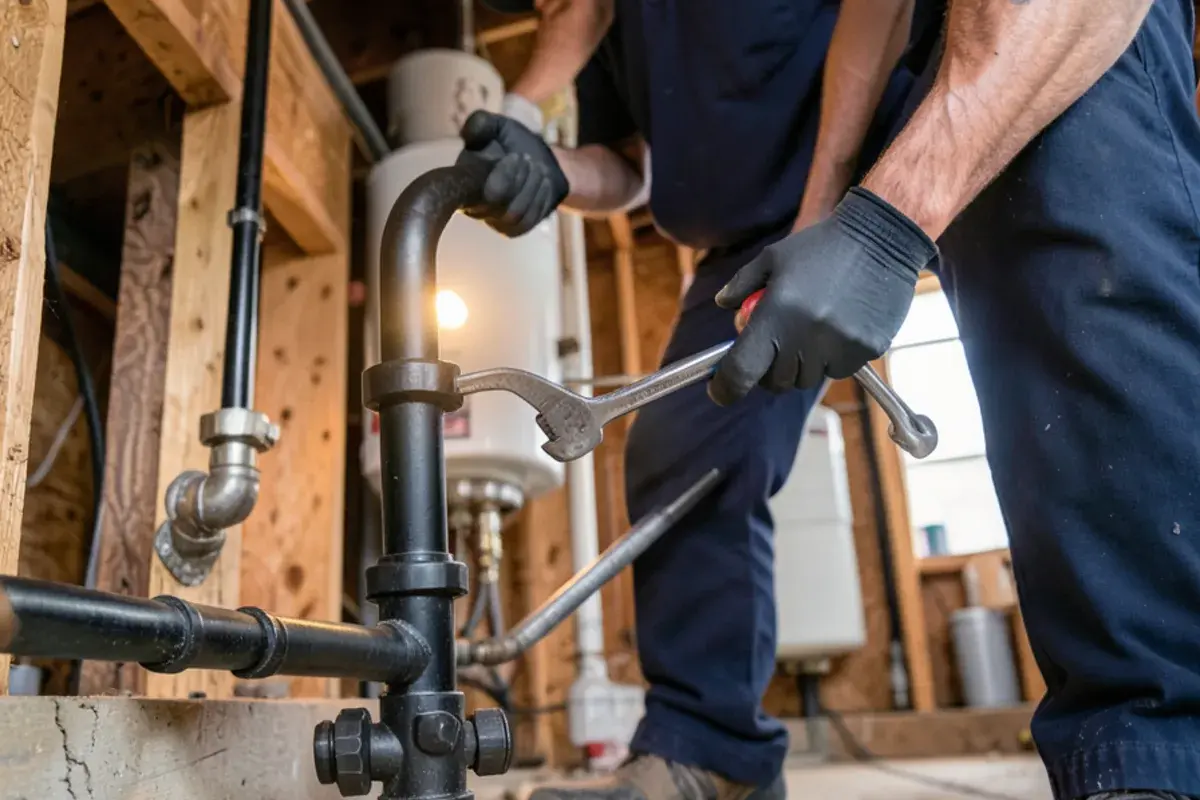
Plan on gas and venting work on top of the unit itself. ENERGY STAR tells installers to determine whether the existing natural gas line is sufficient, and to identify how the combustion gases will be vented. A tankless burner draws far more gas at full fire than a tank burner, so an old half-inch run may be too small. We size the pipe from the meter to the unit and finish with a gas pressure test and leak check. The meter itself belongs to the utility.
- Venting. The unit needs a sealed path to the outdoors, through a wall or the roof. Old tank flues are rarely right for a tankless unit.
- Power. Most gas units need an outlet nearby for the fan and controls. That means no hot water in an outage.
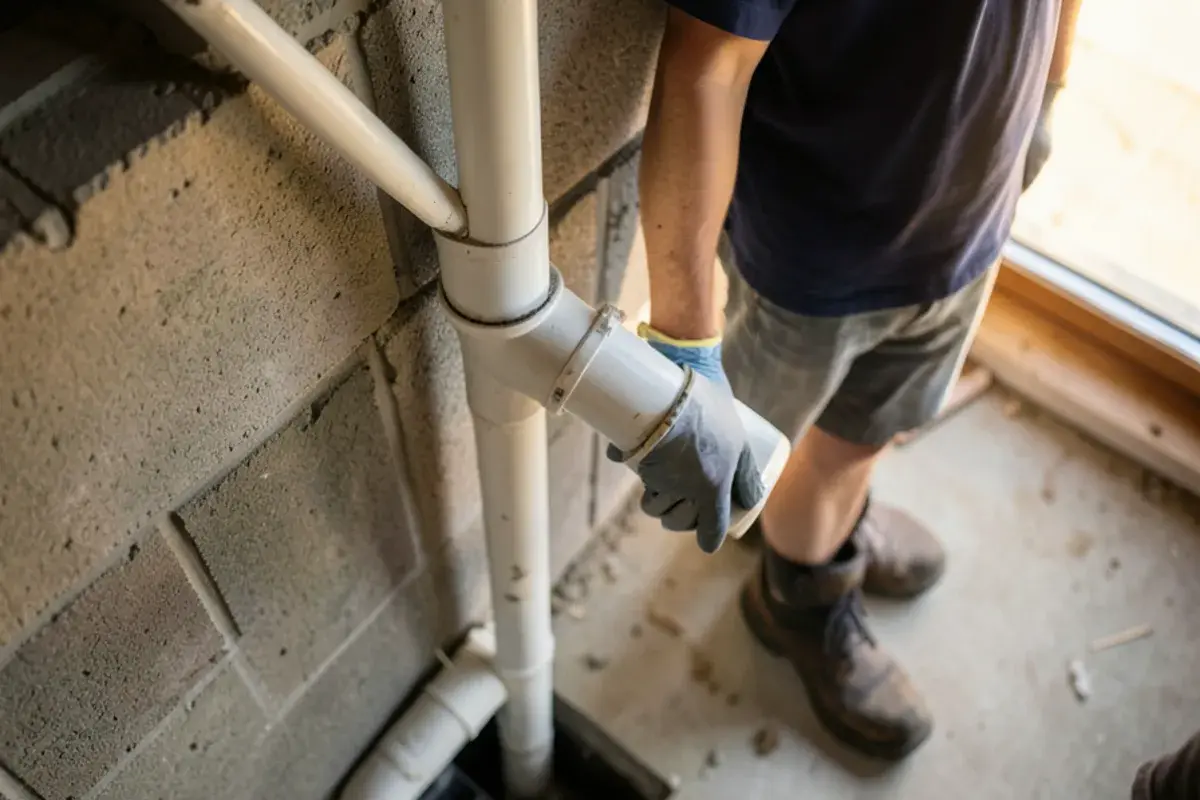
- Condensate. High-efficiency models drip acidic condensate that needs a drain, such as a floor drain or a pump.
- Service valves. They let the unit be flushed without cutting pipe.
If you smell gas near any appliance, leave the house, then call Ameren Illinois or 911 from outside.
How a Tankless Installation Goes
The order matters, because gas and vent decisions come before the unit is chosen.
- Count the overlap. We list the fixtures that run together and work out flow at a winter temperature rise.
- Walk the route. Gas pipe from the meter, vent path, outlet and condensate drain.
- Quote each part. Unit, gas, vent and drain work appear as separate lines.
- Mount and pipe. The unit goes on the wall, with water lines and service valves.
- Run gas and vent. Gas work gets a pressure test and leak check before the burner fires.
- Fire it and measure. We confirm temperature at the tap and show you the flush routine.
What Rules Apply to a Tankless Install?
ENERGY STAR notes a local permit may be required. In Washington, permits last six months, contractors register with the city, and the city's inspection line is (309) 444-1122, weekdays 8:00 AM to 5:00 PM. Confirm with the city, or the village hall if you live elsewhere.
This job touches three trades' rules. Water piping falls under the Illinois Plumbing License Law, 225 ILCS 320, so ask for the number and check the IDPH lookup. Gas piping needs a pressure test and leak check, and Ameren Illinois handles its meter. Any new circuit is electrical work, so ask who does it.
Does a Tankless Water Heater Need Flushing?
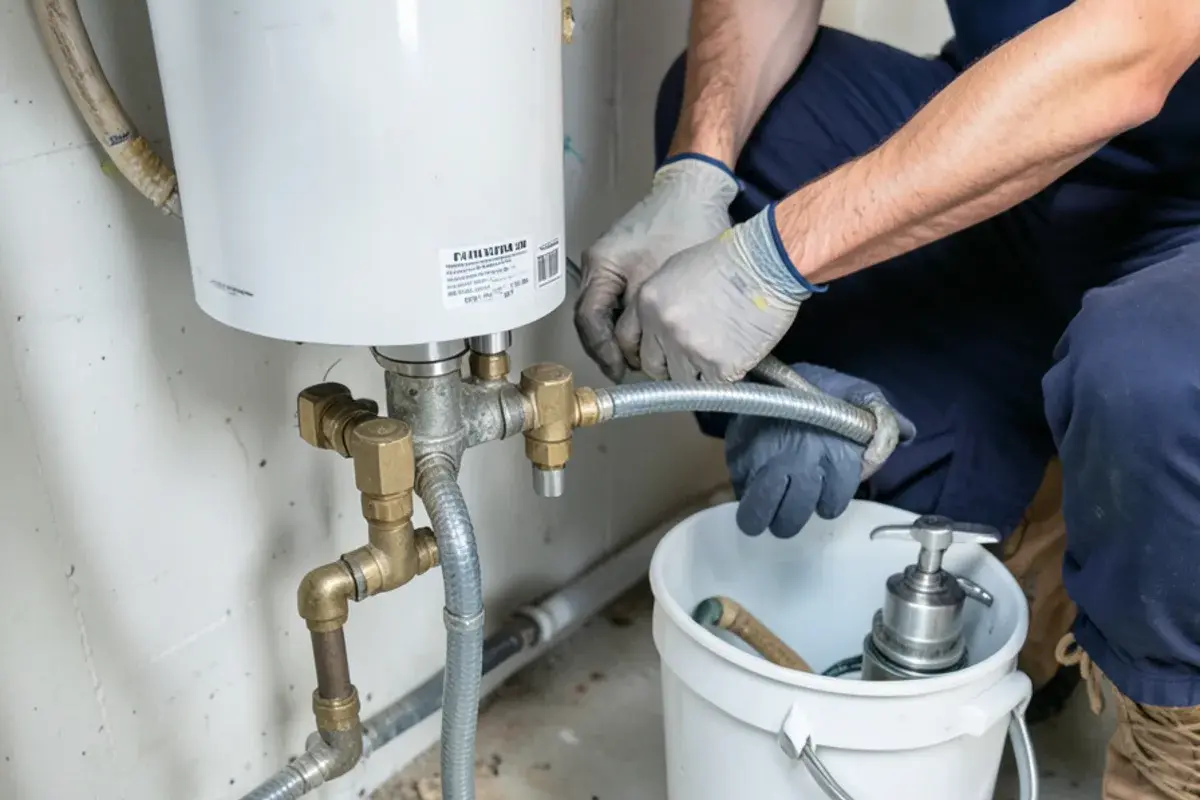
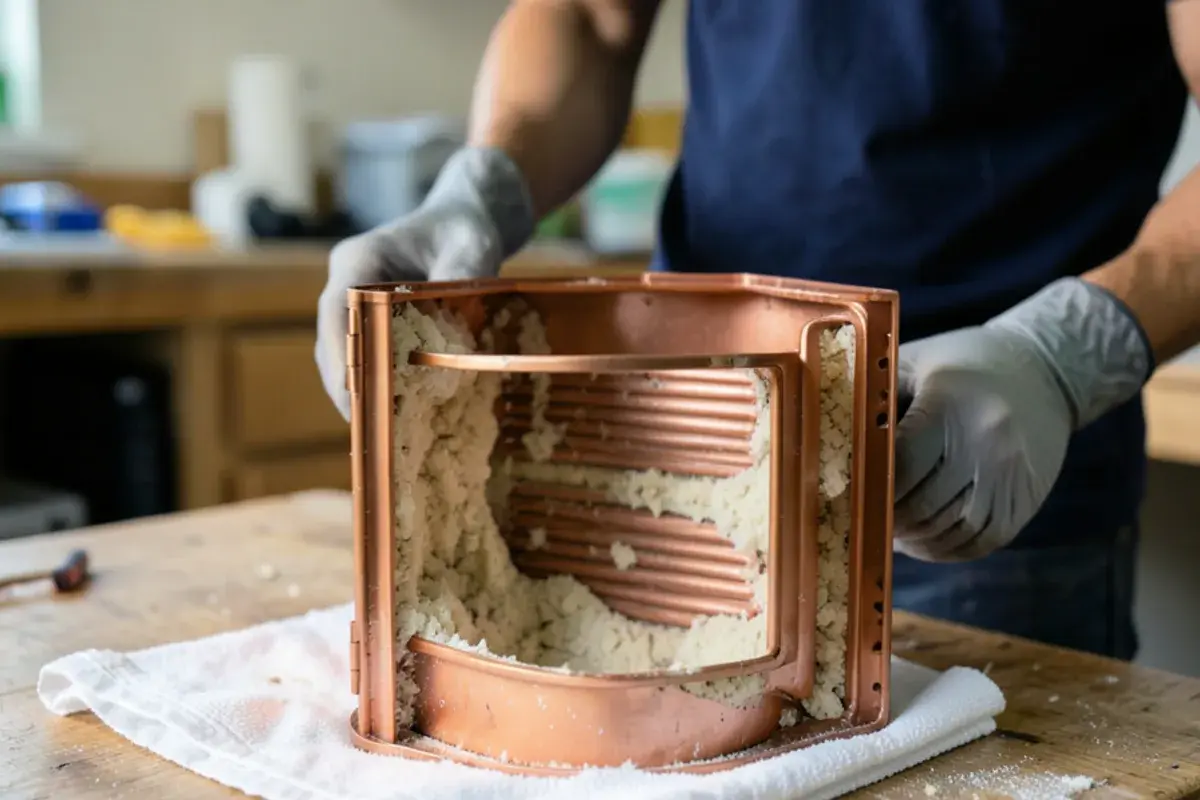
Yes, and it matters more with hard water. Minerals form scale inside the heat exchanger, the narrow passages that carry water past the burner. Scale restricts flow, hurts efficiency and trips error codes. A flush circulates a descaling solution through the unit using the service valves, then rinses it clean.
How often depends on your water hardness, which varies by supply, and a test settles it. Follow the manufacturer's manual. A water softener helps protect a tankless unit if your water is hard.
What Goes Wrong With Tankless Heaters?
Most problems trace to scale, gas supply or airflow.
- Error codes and shutdowns. Scale, a dirty flame sensor, a blocked vent or condensate drain are common causes.
- Lukewarm water. The unit is undersized for the flow, or scale limits heat transfer.
- No ignition. Low gas supply, a closed valve or a failed igniter.
Repair is possible on a sound unit. We start with a flush and a vent and gas check before replacing parts. Our water heater repair page covers tank units in the same detail.
What Does a Tankless Installation Cost?
A Today's Homeowner estimate of $772 to $1,931 covers water heater installation in general. It is not specific to tankless and it is not our quote. Gas pipe sizing, venting and condensate drain work are the usual reasons a tankless job costs more than a tank swap.
These are the things that move a tankless quote most:
- Unit size. A winter-sized unit costs more than one sized for July.
- Gas pipe. A long or undersized run from the meter adds the most.
- Vent route. A short wall exit is simpler than a long roof run.
- Condensate and power. A drain or a new outlet adds labor.
Ameren Illinois lists a $50 rebate on a new ENERGY STAR gas tankless water heater, one per household, bought by December 31 and claimed within 60 days (as of 2026). Confirm before you buy. The federal 25C and 25D credits expired on December 31, 2025.
When Is a Tank the Better Choice?
A tank wins if your gas line and vent would need a lot of work, if your budget is tight, or if your use is light. It also wins if outages are a concern, since many tanks with pilot lights keep heating without power. For those cases, read about water heater installation for tanks.
Tankless wins for larger households that want continuous hot water, homes with space for a wall-mounted unit and an easy vent route, and owners who will flush it on schedule. Our water heaters overview explains how to decide between repair and replacement first.
Why Professional Sewer & Drain for This Work
Sizing before selling
A unit that is too small gives lukewarm showers when two fixtures run. We work out your winter demand first, then quote the unit that fits.
You hear the trade-offs
Jason P. wrote that Monte educated them on preventing bigger, more expensive problems. On a tankless job, that includes what flushing, venting and gas work will cost over time.
Open seven days
Google lists us as open 7:15 AM to 6:15 PM daily, so you can call any day to talk it through.
A clear, upfront quote
Seven Google reviews call the pricing reasonable or affordable. Gas piping, venting and condensate drain work go into the quote as separate lines, so you see why a tankless job costs what it does.
What Customers Say
4.8 out of 5 from 16 Google reviews, checked November 2026. Read all reviews
“Just a superb experience in quality and customer service and price. Called these guys at 5:30p and they were here by 6:00p and Monte did his work in the dark by flashlight! Not only did he do a fantastic job he also educated us on how to prevent these problems from becoming a much bigger and more expensive issue. I would recommend this company to anyone, they are committed to doing a professional job, ensuring it is done right and with very affordable prices.”
“I am so thankful for Monte coming out during the coldest day with blizzard conditions with same day service. He was very kind and worked quickly to rectify issues with plumbing and gave suggestion for future work that needs to occur to prevent any further issues. His services are very reasonable given the work that he did. I will always use him for any issues in the future. Thank you for all that you did for us today and so thankful that you got home safe!”
“Had water leak behind laundry room. Called Monty on a Saturday morning and he came right over. He did a wonderful job to fix the issue. Very professional and knowledgeable. I highly recommend this company.”
Tankless Water Heaters Questions
Is a tankless water heater worth it in Illinois?
How many gallons per minute do I need?
Do I need a bigger gas line for tankless?
Does a tankless water heater work in a power outage?
How often should a tankless water heater be flushed?
What is the cold water sandwich?
Tankless Water Heaters in Washington? Call (209) 563-1400
Open 7 days, 7:15 AM to 6:15 PM. Tell us what is happening and we will give you a clear, upfront quote.
Where We Provide This Service
We install and service tankless units from our Washington base across Tazewell, Woodford and Peoria counties. Newer subdivisions in Germantown Hills and Morton often have gas service and space for a wall-mounted unit and its vent. Homes in East Peoria and older houses elsewhere may need more gas pipe and a new vent path. The service areas page lists every town.
- Germantown Hills: Newer homes here often have space for a wall unit and vent.
- Morton: Morton subdivisions suit tankless better than its oldest streets.
- East Peoria: Older East Peoria houses may need more gas pipe and a new vent.
- Dunlap: Dunlap's newer housing leaves room for a wall-mounted unit.
- Metamora: Village well water may run hard, so plan on regular flushing.
- Goodfield: Recent Goodfield homes tend to offer an easier vent route.
- Eureka: Well-sourced city water here means asking about scale first.
- Chillicothe: Town wells raise the scale question for any heat exchanger.