Whole House Repiping in Washington, IL
Aging galvanized, polybutylene and leaking supply pipe replaced with new lines, inspected before the walls close.
- 4.8 on Google, 16 reviews
- Open 7 days, 7:15 AM to 6:15 PM
- Based in Washington, IL
- Google reviews going back 10 years
Whole house repiping in Washington, IL means replacing the pipes that carry water through the home, most often because galvanized steel has rusted shut, polybutylene is nearing the end of its life, or repeated leaks have made spot repairs a losing bet. Home age is the first clue, and the pipe at the water heater is the second.
Which Pipes Mean a House Needs Repiping?
Three kinds of supply pipe lead to most repipe jobs: galvanized steel, polybutylene, and copper that has started to leak. Look at the pipes near the water heater and the meter. That is where the material is easiest to see.
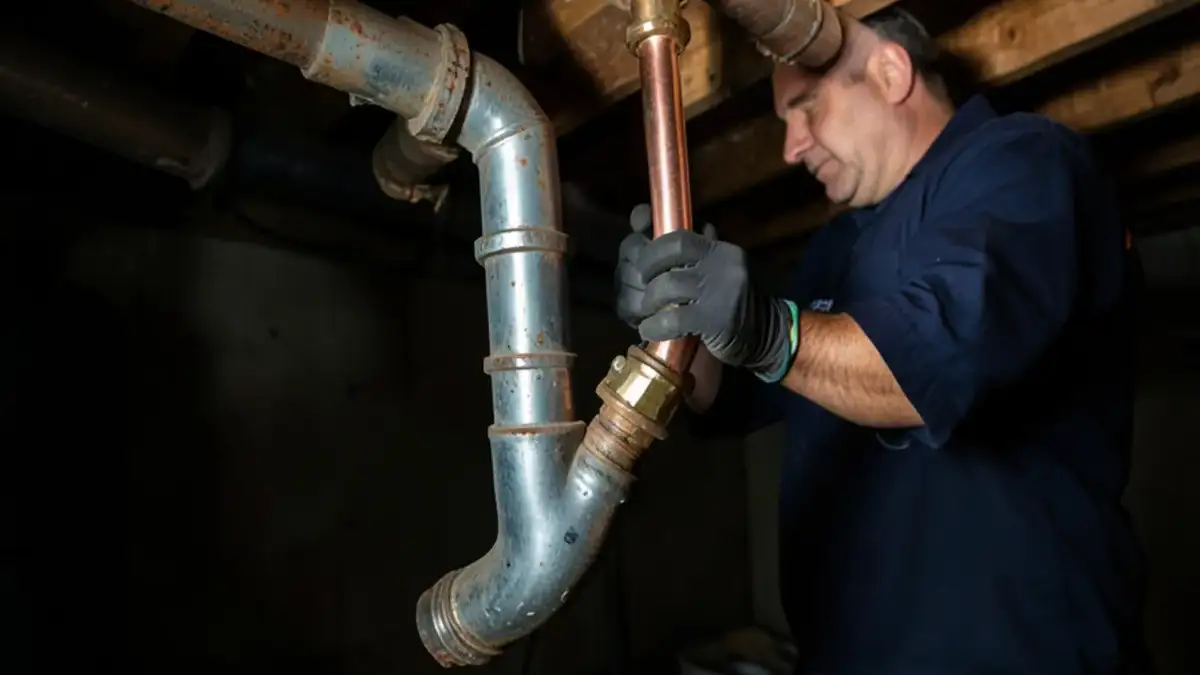
- Galvanized steel. Dull gray metal with threaded fittings, and a magnet will stick to it. The zinc coating wears away and rust builds inside, so flow drops and water can come out brown.
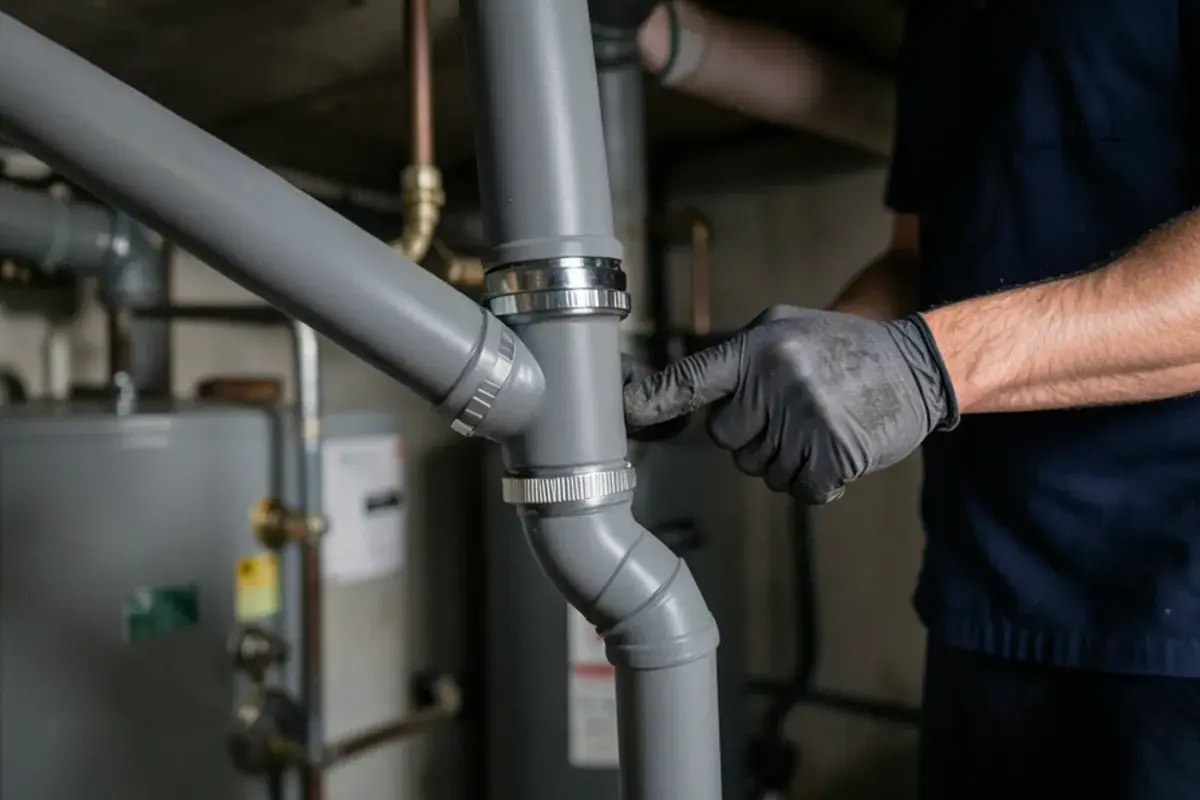
- Polybutylene. Gray, blue or black plastic, usually with metal crimp rings at the joints. It was installed in homes from roughly 1978 to 1995. Its failures start inside the pipe, so it can look fine until it leaks.
- Copper with pinholes. Small green or white crusting at a spot, or a tiny leak in the middle of a straight run, means the wall has thinned.
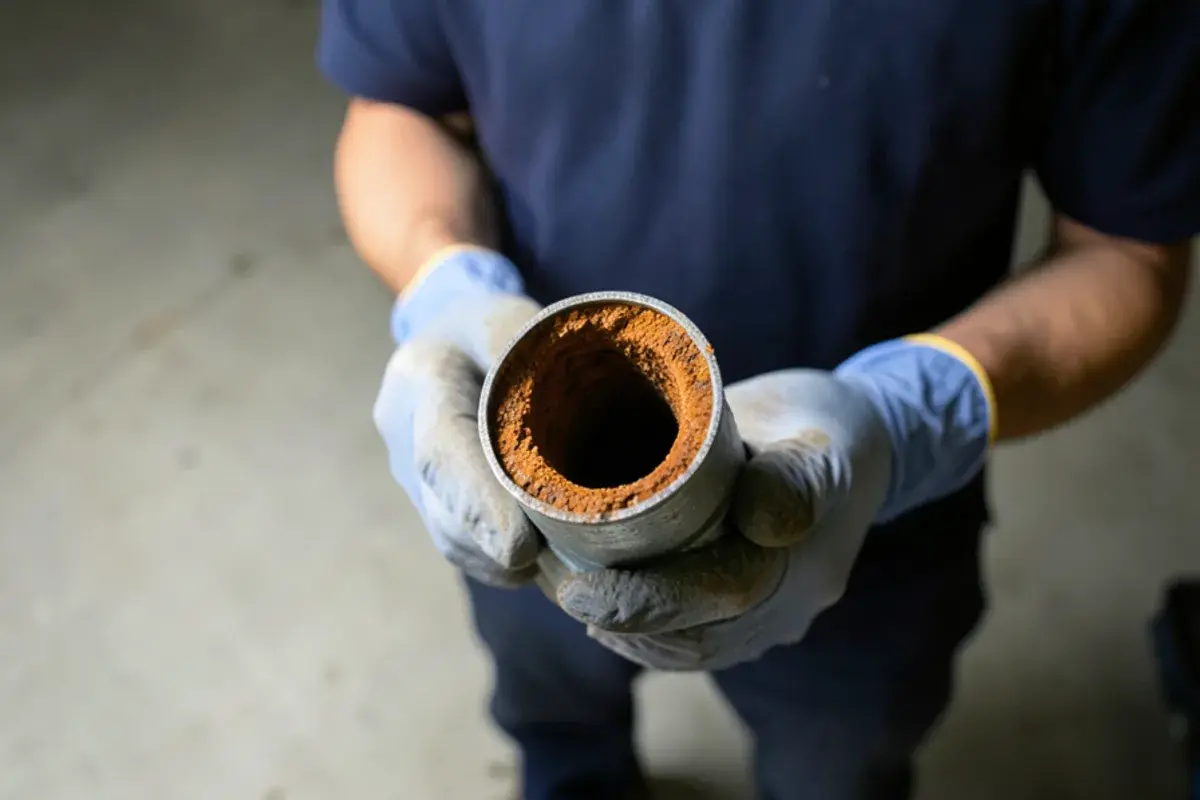
One failed fitting is a repair. The same kind of leak turning up in different rooms is a sign the whole system is aging, and that is when a repipe starts to make sense.
What Does the Age of a Washington Home Tell You?
It points at the pipe. About 13% of Washington homes, 823 units, date to 1939 or earlier (Point2homes, citing Census data), and houses of that age are the likeliest to still have galvanized lines. The line from the street to the meter may be an older material than the pipes inside, so ask the city what yours is.
The median home was built in 1978, which puts a lot of houses inside the polybutylene window. A house from the 1980s deserves a look at its supply lines, not because it must have the plastic, but because the era is the one where it was used.
Homes from 2000 to 2009, the largest decade in town at 21%, and those rebuilt after the 2013 tornado, generally have PEX or copper that is a long way from needing replacement.
PEX or Copper: Which Should Replace It?
Both work. The choice comes down to the house, the water and the budget.
| PEX | Copper | |
|---|---|---|
| Installation | Flexible, fewer joints, easier to fish through finished walls | Rigid, soldered at every joint, more labor |
| Cold weather | Stretches as water freezes, so it often survives a freeze that splits rigid pipe | Splits when water freezes inside |
| Water chemistry | Plastic does not corrode the way metal does | Can pit and develop pinholes in some water |
| Where it should not go | In direct sunlight or in the open outdoors | Almost anywhere indoors |
The cost of the material is only part of the price. Labor often decides which one is cheaper for your house. If your water comes from a private well, have it tested first, since the water chemistry affects copper.
Old pipes leaking in your house? Call (209) 563-1400
Open 7 days, 7:15 AM to 6:15 PM. Tell us what is happening and we will give you a clear, upfront quote.
Request a Quote
Water moving right now? Call first: (209) 563-1400. For anything that can wait, send the details here.
What Does a Whole House Repipe Include?
A repipe replaces the hot and cold water supply piping, from where the water enters the house to each fixture. Drains and the sewer are separate systems, and they are not part of it.
- Mapping the house: every line, fixture and shutoff
- New hot and cold supply lines in PEX or copper
- New stop valves at sinks and toilets where the old ones will not hold
- Connections at the water heater and the main shutoff valve
- Testing and inspection before the walls close, so the new pipe stays visible until it passes
Several things sit outside the job unless your quote says otherwise. Drywall, paint and tile are finish work. A new water heater is its own decision. The service line from the street to the house can be a separate question too, so ask the city who owns it before you assume it is included.
How Does a Repipe Go, Step by Step?
The order protects your walls and your water.
- Walk the house. We locate the main shutoff valve, trace every line and mark each fixture.
- Plan the route. New lines follow the old path where they can, and avoid exterior walls where freezing is a risk.
- Open access points. We cut small openings in drywall, usually in closets, behind fixtures and in the basement ceiling.
- Run the new lines. The water is shut off while the lines are cut over to the new pipe, and restored once connections are made.
- Pressure test. The Illinois Plumbing Code, Section 890.1930, sets this at 1.5 times system pressure, at least 100 psi, held 15 minutes, before anything is covered.
- Rough-in inspection, then close up. The city inspects the piping while it is still visible. Drywall patching is a separate trade, so we agree on who does it before the first cut.
What Do Permits and Rough-In Inspection Mean for a Repipe?
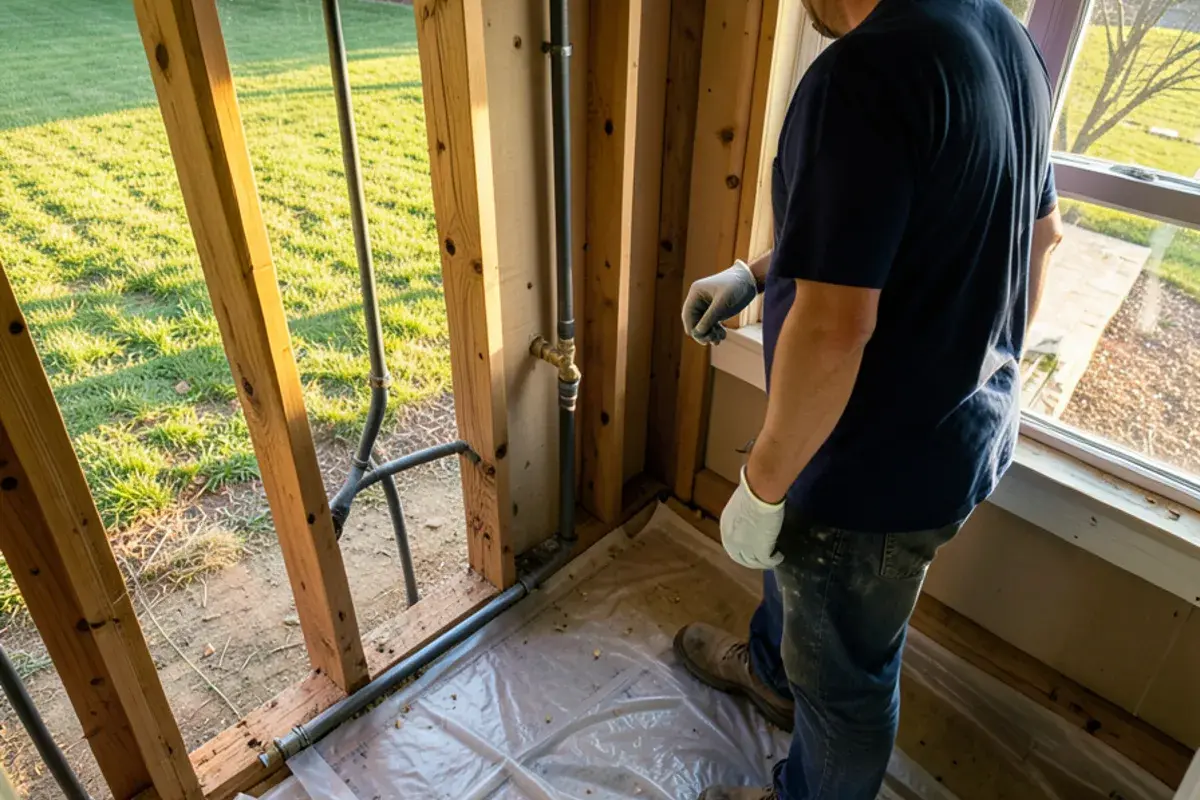
Plan on a permit for a repipe, and confirm the details with the City of Washington. As described by the city and a 2026 contractor guide, permits last six months and can be renewed, contractors register with the city, and rough-in plumbing must pass inspection before the walls close. For permit and inspection questions, the city's own line is (309) 444-1122, open Monday to Friday, 8:00 AM to 5:00 PM. It is not our number.
Illinois also requires a license for anyone who plans, installs, alters or repairs plumbing. Ask for the license number and look it up on the Illinois Department of Public Health's public lookup. The work should follow the Illinois Plumbing Code, 77 Ill. Adm. Code 890.
If your service line may be lead, Illinois' Lead Service Line Replacement and Notification Act, 415 ILCS 5/17.12, sets a replacement timeline. Ask the city what yours is made of.
Repipe or Spot Repair: How Do You Decide?
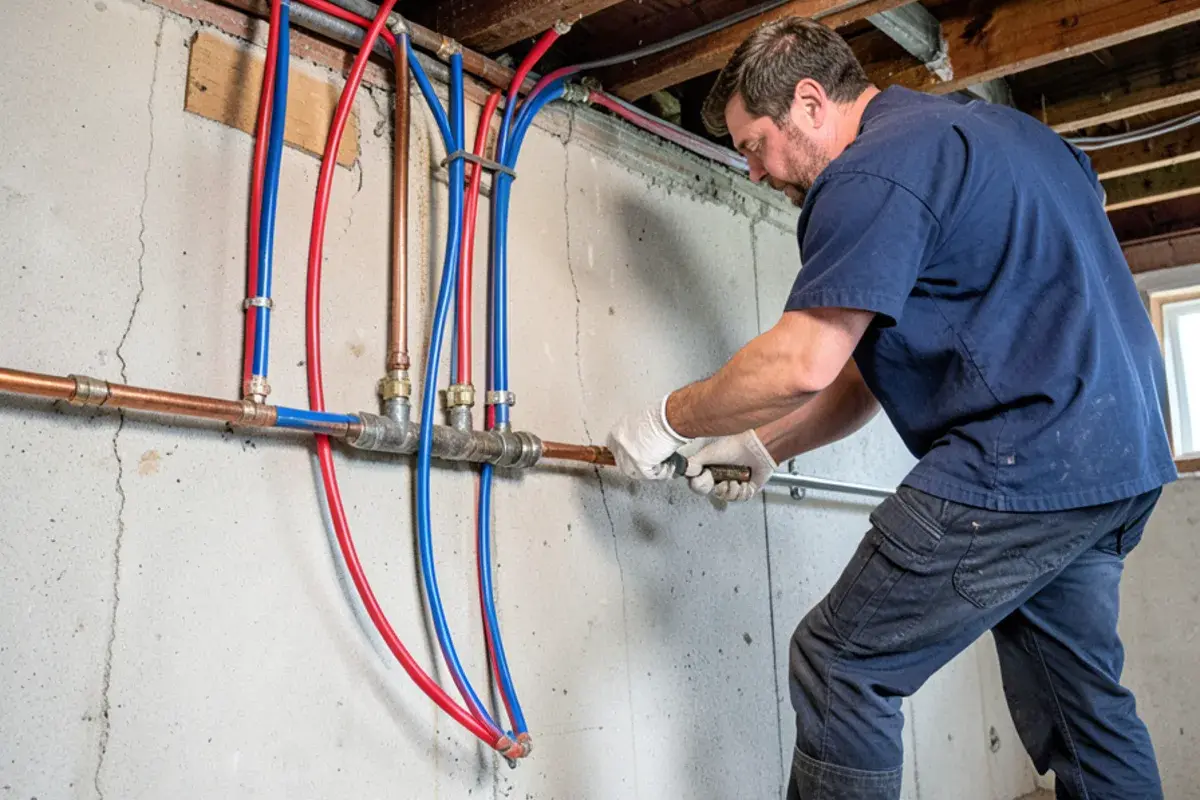
Spot repair when the pipe is sound and the leak is a single event. Repipe when the pipe is the problem. The questions to ask are these:
- Has the same kind of leak appeared in more than one place?
- Is the pipe galvanized, polybutylene or thin old copper?
- Is water brown at the first draw, or weak at the farthest fixture?
- Are you about to remodel, open walls or sell?
If you answer yes to the first two, a repipe is likely cheaper than a string of repairs. Our guide on how to decide between a repipe and a spot repair walks through it. A leak detection visit can find where water is going first.
What Moves the Price of a Repipe?
We give you a clear, upfront quote after we see the house. These factors move it:
- Size. More fixtures and more feet of pipe mean more labor.
- Material. PEX and copper differ in cost and in how long the install takes.
- Access. An open basement ceiling is quick. Finished walls and a second floor take longer.
- Wall repair. Patching drywall and paint are priced and scheduled apart from the plumbing.
- Permit and inspection. Confirm what the quote includes and who schedules the inspection.
Washington's housing stretches that range. A 1978 ranch with an open basement ceiling and one bathroom group is a different job from a pre-1940 two-story with plaster walls and old galvanized in every wall. A home from the polybutylene years may have easy access but plenty of fittings to replace, and a partial repipe prices differently from the whole house. A second-floor bath adds its own run.
Why Professional Sewer & Drain for This Work
Advice on what comes next
Roben V. wrote that Monte worked quickly to fix the plumbing issues and gave suggestions for future work to prevent more of them.
Leaks found and fixed
Vijay K. called on a Saturday morning about a water leak behind a laundry room and wrote that it was fixed and done well. Finding where water is going is the first step of any repipe decision.
Open seven days
The Google profile shows the business open every day from 7:15 AM to 6:15 PM, so a walk-through can happen on a weekend if the weekday does not work.
Showed up when they said
Molly J. wrote that the crew was there when they said and got the job done right on the first visit.
What Customers Say
4.8 out of 5 from 16 Google reviews, checked November 2026. Read all reviews
“Had water leak behind laundry room. Called Monty on a Saturday morning and he came right over. He did a wonderful job to fix the issue. Very professional and knowledgeable. I highly recommend this company.”
“I am so thankful for Monte coming out during the coldest day with blizzard conditions with same day service. He was very kind and worked quickly to rectify issues with plumbing and gave suggestion for future work that needs to occur to prevent any further issues. His services are very reasonable given the work that he did. I will always use him for any issues in the future. Thank you for all that you did for us today and so thankful that you got home safe!”
“Great experience! Called on a Sunday afternoon and they came right over. Extremely professional and knowledgeable! Very reasonable price! Will definitely call them back for maintenance.”
Whole House Repiping Questions
How long does a whole house repipe take?
Is polybutylene pipe illegal to have in my house?
Do I have to repipe galvanized pipe if the water pressure seems fine?
Can I repipe only part of the house?
Does PEX burst if it freezes?
Can I stay in the house during a repipe?
Whole House Repiping in Washington? Call (209) 563-1400
Open 7 days, 7:15 AM to 6:15 PM. Tell us what is happening and we will give you a clear, upfront quote.
Where We Provide This Service
We repipe homes from our Washington base across Tazewell, Woodford and Peoria counties. The oldest water piping is in places like Peoria, with older homes on the bluff, and Peoria Heights, where century-old houses sit on tight lots. Pekin and the historic village of Metamora also have houses old enough to still carry galvanized lines. You can find every town we cover on the service areas page.
- Peoria: A fifth of homes predate 1940, the era of galvanized lines.
- Peoria Heights: A 1957 median home can still carry original galvanized supply.
- Pekin: With 21% of homes before 1940, galvanized stays in play.
- Metamora: Historic village houses may be old enough for galvanized lines.
- Creve Coeur: Most homes predate 1970, so aging supply pipe is a fair question.
- Bartonville: The 1950s are the largest build decade, at 27% of homes.
- Deer Creek: With 28% of homes before 1940, old lines deserve a check.
- Marquette Heights: A quarter of homes date to the 1970s, near the polybutylene years.