Problem solving
Why Your Drains Keep Clogging
Published November 1, 2026. Updated November 1, 2026.
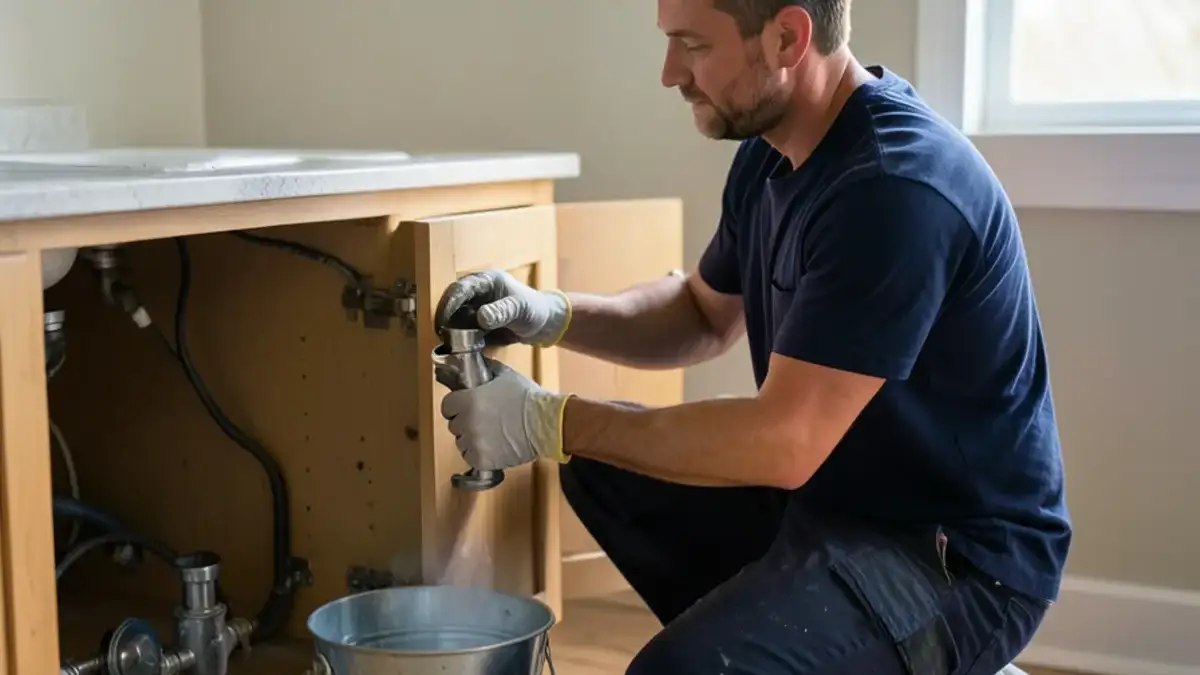
Why do my drains keep clogging? Because clearing a clog and removing its cause are two different jobs. A drain that backs up every few weeks has something left behind: a film on the pipe wall, a flaw in the line, or a problem past the fixture. Which fixtures clog, and when, points to the cause.
Which Drains Are Clogging? Start With the Pattern
Look at which fixtures slow down and when. The pattern tells you whether the problem is in one pipe, in a shared branch or in the main line.
| What you notice | Likely cause | What it means |
|---|---|---|
| One sink or tub drains slowly | Hair, soap or grease in that fixture's own pipe | A local clog, usually the easiest to clear |
| Kitchen sink slows, then returns within weeks | Grease film left on the pipe wall | The clog was opened but the pipe was not cleaned |
| Toilet is slow and the tub gurgles | Shared branch or the main line | More than one fixture is involved |
| Basement floor drain gurgles or backs up | Main sewer line | Stop using water until it is checked |
| Every drain gurgles, even after a cleaning | Vent or a failing line | Needs a look, not another round with the plunger |
Write down which fixture goes first. That one detail saves time on the phone and on site.
Drains clogging again? Call (209) 563-1400
Open 7 days, 7:15 AM to 6:15 PM. Tell us what is happening and we will give you a clear, upfront quote.
Why Do My Drains Keep Clogging After Every Cleaning?
The usual answer is that the pipe was opened but not cleaned. A plunger or short snake punches a hole through the middle of a clog. Whatever coated the wall stays there, and the next soap film, hair or grease sticks to it.
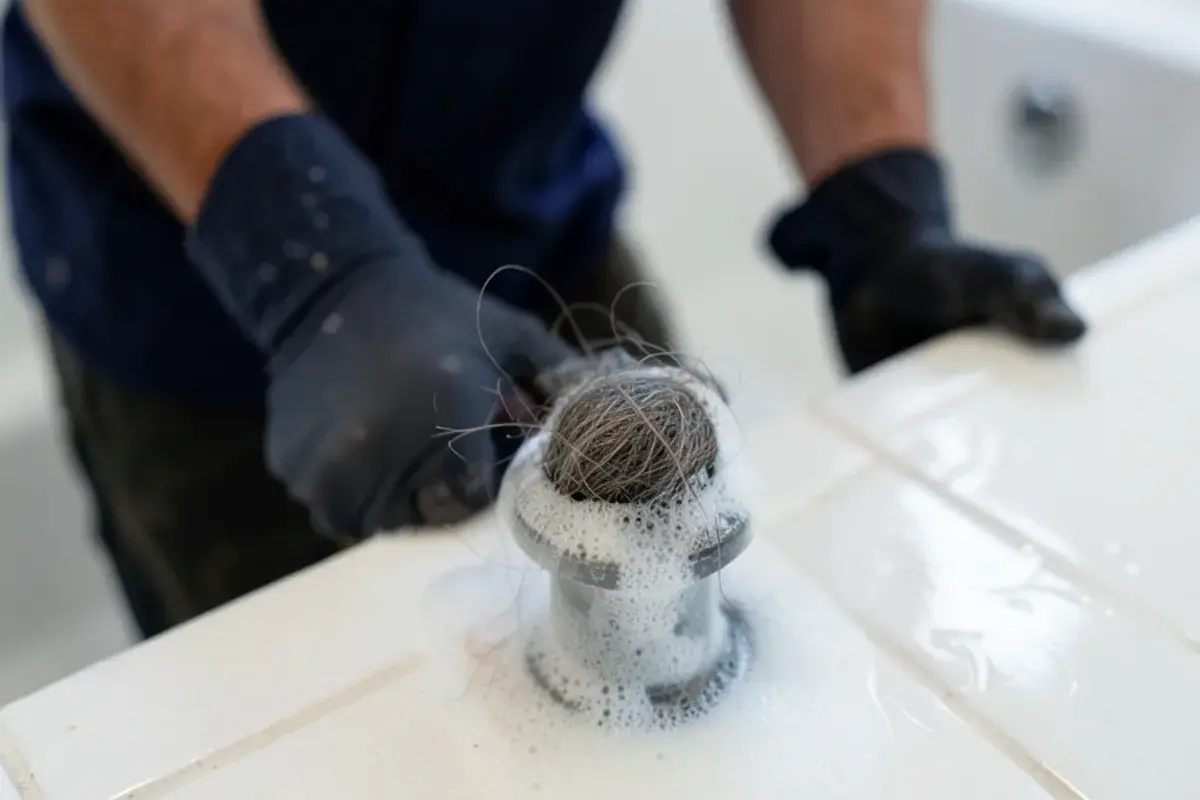
These are the repeat offenders:
- Hair and soap in bath drains. Hair binds with soap scum into a mat. Hard water makes it worse, since the City of St. Charles, citing a University of Illinois Extension chart, notes that almost all of Illinois has hard or very hard water and that hard water leaves soap residue that is hard to rinse.
- Grease in kitchen lines. The Village of Bensenville notes that fats, oils and grease stick to sewer lines and build up over time. In a kitchen branch that means a narrowing tube of fat that catches food scraps.
- Wipes in toilet lines. The same village reports that wipes do not break down like toilet paper, even when the package says flushable.
- Roots and cracks. The City of Bismarck explains that in most cases a sewer line has a defect to begin with, and roots enter it. Cutting roots without fixing the defect is a temporary solution that must be repeated.
How Soon Did the Clog Come Back?
The gap between clogs is the best clue you have. Keep a note of the date each time a drain slows, and read it this way:
| It came back in | What that usually means | The next move |
|---|---|---|
| Days | The tool never reached the real blockage | Clean farther down, and check the lowest drain |
| A few weeks | Film left on the pipe wall, or a steady supply of grease or hair | Clean the wall, then change what goes down |
| Several months | A rough spot, a sag or roots catching debris | Look at the pipe with a camera |
| Years | Ordinary buildup | A routine cleaning is fine |
What Is Wrong With a Pipe That Keeps Catching Things?
Usually its shape or its surface. Drain pipes run on gravity, so they need steady fall to carry solids along with the water.
Too Little Fall
The Illinois Plumbing Code calls for horizontal drainage pipe to run at a uniform grade: at least 1/4 inch per foot for pipe 3 inches or smaller, and at least 1/8 inch per foot above 3 inches and under 8. The fall is modest. A 30-foot run of 4-inch pipe at the minimum drops only 3.75 inches end to end, so a little settling can flatten part of it.
A Low Spot in the Run
A sag, also called a belly, breaks that uniform grade. Water sits in the low spot, and paper and grease settle out there. A cable opens the line, but the low spot stays, so the same place fills again. Cleaning cannot fix this one. The pipe has to be reset.
A Rough Inside Wall
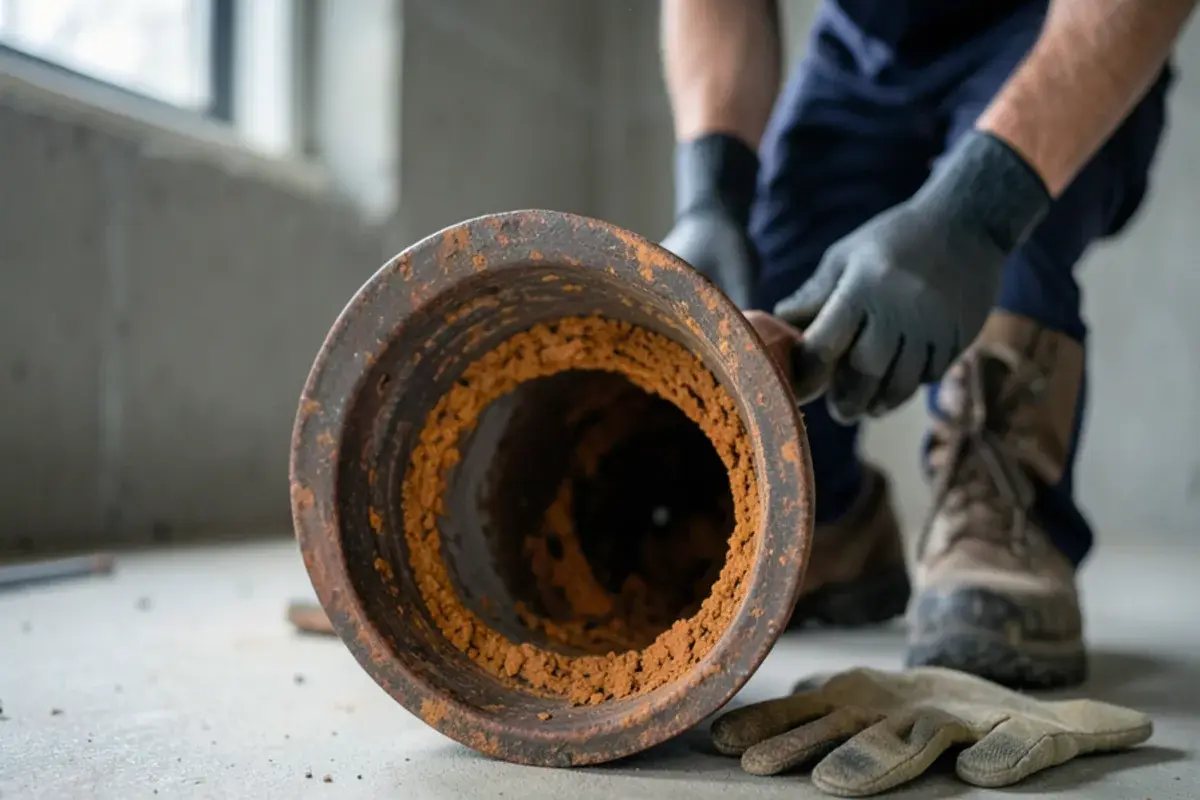
Old cast iron and joints that have shifted give paper and grease something to hang on to. Cleaning helps longer here than it does with a sag, but the surface keeps catching.
Could the Kitchen Disposal Be Feeding the Clog?
Yes, because a disposal grinds food and sends it on, and it does nothing about what happens next. The Village of Bensenville says plainly that a disposal does not remove grease. Bob Vila's guide adds a few repeat offenders:
- Coffee grounds, which build up into sludge.
- Pasta and rice, which keep absorbing water after they go down.
- Stringy food such as celery, corn husks and onion skins, which tangles around the blades.
Wipe pans with a dry paper towel before washing them. Bensenville suggests collecting used grease in a sealable container for the trash. If a kitchen line clogs often, try a month of that before you pay for another cleaning.
Do Chemical Drain Cleaners Make It Worse?
They can, and they leave the wall film in place. One HVAC and plumbing company's guide warns that caustic cleaners can damage PVC, galvanized, copper and iron pipe, and advises against using them on a fully blocked drain, where the chemical just sits in the line. It also warns never to mix cleaners, since that can release toxic gas.
If you poured something in and it did not work, tell us before anyone opens the trap or runs a cable. That water can burn skin and eyes, and it changes how we handle the job.
What Changes in Older and Newer Homes Around Washington?
Pipe age sets which problems you meet. Washington's median home was built in 1978, and about 13% of units date to 1939 or earlier (Point2homes, citing Census data). Homes from that early group often have cast iron or clay below the floor. Cast iron grows rough scale inside as it ages, and the rough surface snags paper and grease.
The largest group of homes here, about 21%, went up between 2000 and 2009. Those usually have plastic drains, which stay smooth but sag if the trench settled. A sag holds water, and solids settle in it. Newer subdivisions in places like Germantown Hills can show this pattern after the ground shifts.
What We Look For When a Drain Clogs Again
On a repeat call we ask three questions before touching a cable: which fixture clogs first, how long since the last cleaning, and what came out last time. A clog that returns in weeks is a different problem than one that returns in years.
Then we look at what the cable brings back. Hair means a fixture problem. Fabric strands point to wipes. A slime of fat means grease. Fine roots mean the line outside the house is open somewhere. If the same drain has been cleared more than once, a sewer camera inspection shows the pipe instead of leaving us to guess. For a plain stubborn clog, our drain cleaning page covers how we work it.
The trade-off is cost against certainty. A camera on a first clog is money you do not need to spend, so we would rather clean the drain and see how long it holds. On the third clog in a year, more cleaning is the expensive choice, because you are paying to treat a symptom. Our comparison of snaking and hydro jetting explains which tool suits which pipe, and neither one cures a sag or a broken joint.
How Do You Stop Clogs From Coming Back?
Remove the cause, not only the clog. These habits matter most:
- Scrape pans and put grease in the trash, not down the kitchen drain.
- Fit a hair catcher in the tub and shower and empty it.
- Bin wipes, even those labeled flushable.
- Know where your cleanout is and keep it reachable. Our sewer line cleaning page explains what it is.
- If a drain returns inside a few months, ask for the pipe wall to be cleaned or for a camera look at the line.
When Should You Stop Clearing It Yourself?
Stop when the same drain has come back twice, when a second fixture joins in, or when the floor drain gurgles. Those are signs the problem sits past anything a plunger or hand snake can reach.
Call (209) 563-1400 and tell us which fixture slows first, when it was last cleared and what came out. We are based in Washington and work across Tazewell, Woodford and Peoria counties, including Germantown Hills. You will get a clear, upfront quote before we start, and a plain answer on whether the pipe needs cleaning or something more.
Sources
- Village of Bensenville: Protect the Environment (wipes, grease and sewer backups)
- City of Bismarck: Tree Roots in Your Line
- City of St. Charles: Water Hardness (University of Illinois Extension chart)
- Illinois Plumbing Code: Section 890.1320, Drainage System Installation (Cornell LII)
- Bob Vila: What Not to Put in a Garbage Disposal

Written by the Professional Sewer & Drain Services team
A plumbing and sewer company based in Washington, IL. About us