Local angles
Hard Water in Central Illinois: What It Costs You
Published November 1, 2026. Updated November 1, 2026.
Hard water in Central Illinois is the rule, not the exception: a statewide compilation of utility reports puts the median Illinois supply in the hard range. It costs you extra soap, scale inside pipes and heaters, and staining. How much depends on your supply, so test yours before you buy anything.
How Hard Is Hard Water in Central Illinois?
Most Illinois water is hard, and the cause is geology. Tap Water Data, which compiles utility-reported figures, lists an Illinois median of 157.0 mg/L, or 9.2 grains per gallon, across 160 measured cities. Cities ranged from 14 to 610 mg/L. Of those 160, it counts 117 as hard or very hard on the USGS scale.
The reason is calcium and magnesium picked up from glacial drift and carbonate bedrock. Cities that draw from Great Lakes surface water tend to be somewhat softer than groundwater cities. That is a statewide pattern. We do not quote a figure for any single town, because we have no reliable one.
The word "hard" also depends on whose scale you read:
| Class | USGS (mg/L) | IDPH pamphlet (mg/L) |
|---|---|---|
| Soft | 0 to 60 | 0 to 100 |
| Moderate | 61 to 120 | 100 to 200 |
| Hard | 121 to 180 | 200 to 300 |
| Very hard | above 180 | 300 to 500 |
A 9-grain supply is hard by USGS and moderate by IDPH. Always check the scale before you compare two reports.
Scale building up on faucets and your water heater? Call (209) 563-1400
Open 7 days, 7:15 AM to 6:15 PM. Tell us what is happening and we will give you a clear, upfront quote.
What Does Hard Water Cost You Day to Day?
Hard water costs you in four ways, and none of them needs a lab to notice.
- Soap and detergent. USGS says hard water requires more soap and detergent to get the same result. IDPH lists heavy detergent use for a lather as a sign softening may help.
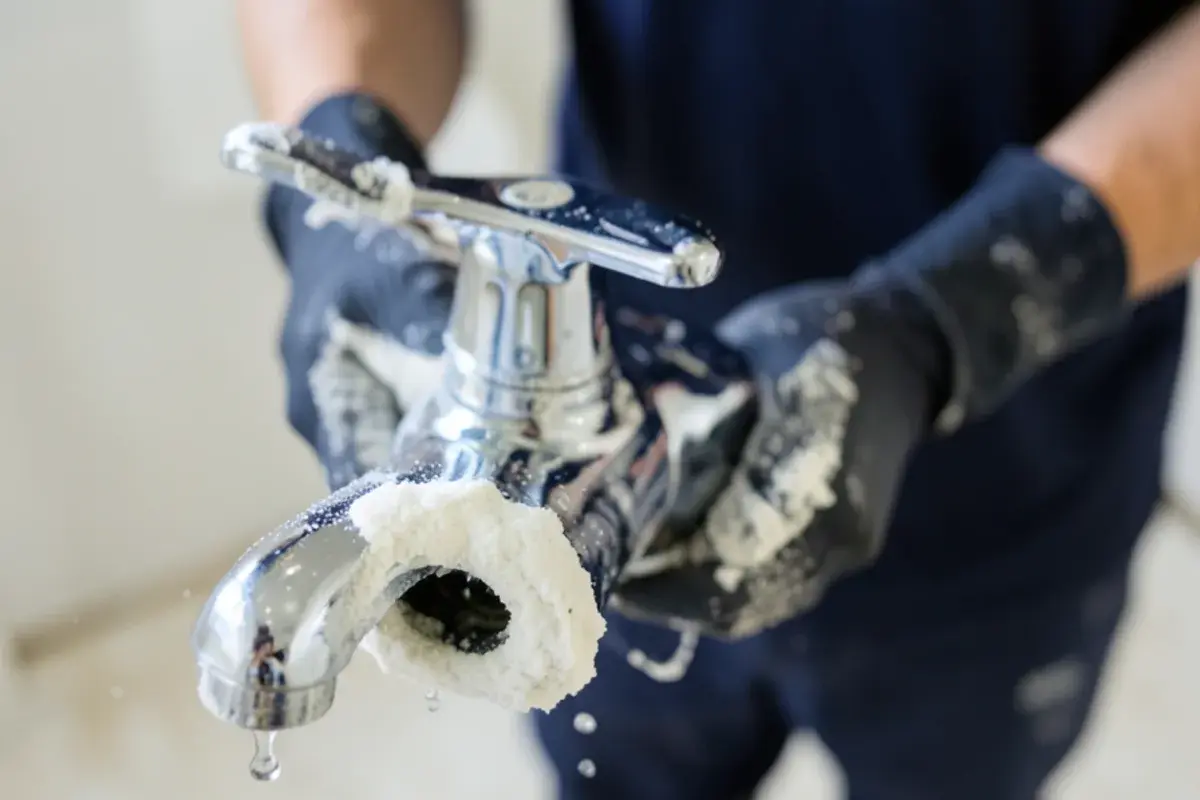
- Scale in plumbing. IDPH points to scale inside piping, water tanks, laundry sinks and cooking utensils.
- Heating costs. IDPH notes that scale in hot water systems reduces heat transfer to the water, which raises power consumption. A heater full of sediment works harder.
- Staining. Water above 200 mg/L, or 12 grains, may cause plumbing and laundry staining.
The National Board advises draining a tank water heater more often in hard-water areas. Replacing one is a larger bill, and a published estimate from Today's Homeowner puts installation at $772 to $1,931, not our quote. Our guide on what hard water does to your plumbing covers the damage in more detail.
How Do You Find Your Own Number?
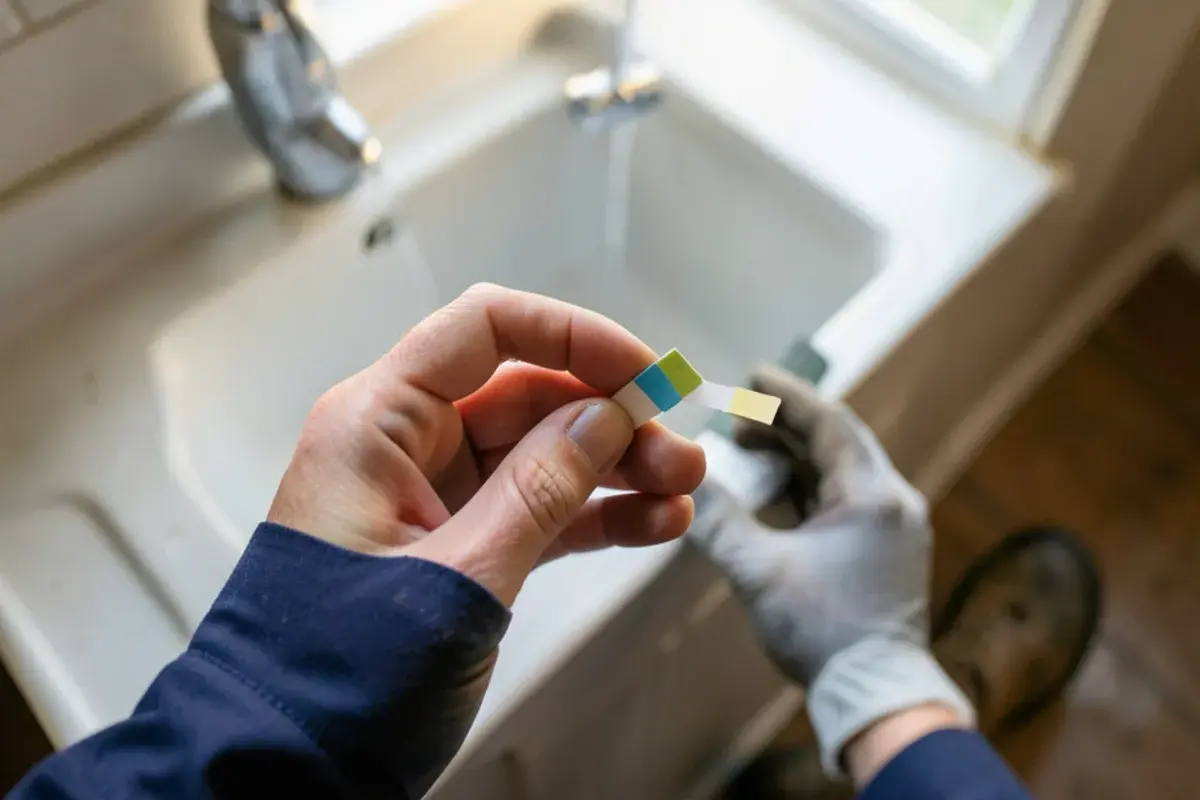
Find your number from the water source, not a regional average. Public water comes with an annual water quality report from the utility, and that report usually lists hardness. A private well needs a lab test or a test kit, and a kit is fine for a first look.
Units matter when you read it. IDPH gives 12 grains per gallon as equal to 200 mg/L, and says 3 grains is about 50 ppm. Ask the lab or the utility which unit they used before you size anything.
For a home on a well, there is no utility report to read. Deep wells in this region usually run hard, and iron can come with the hardness, so test for both.
Is a Softener the Right Answer?
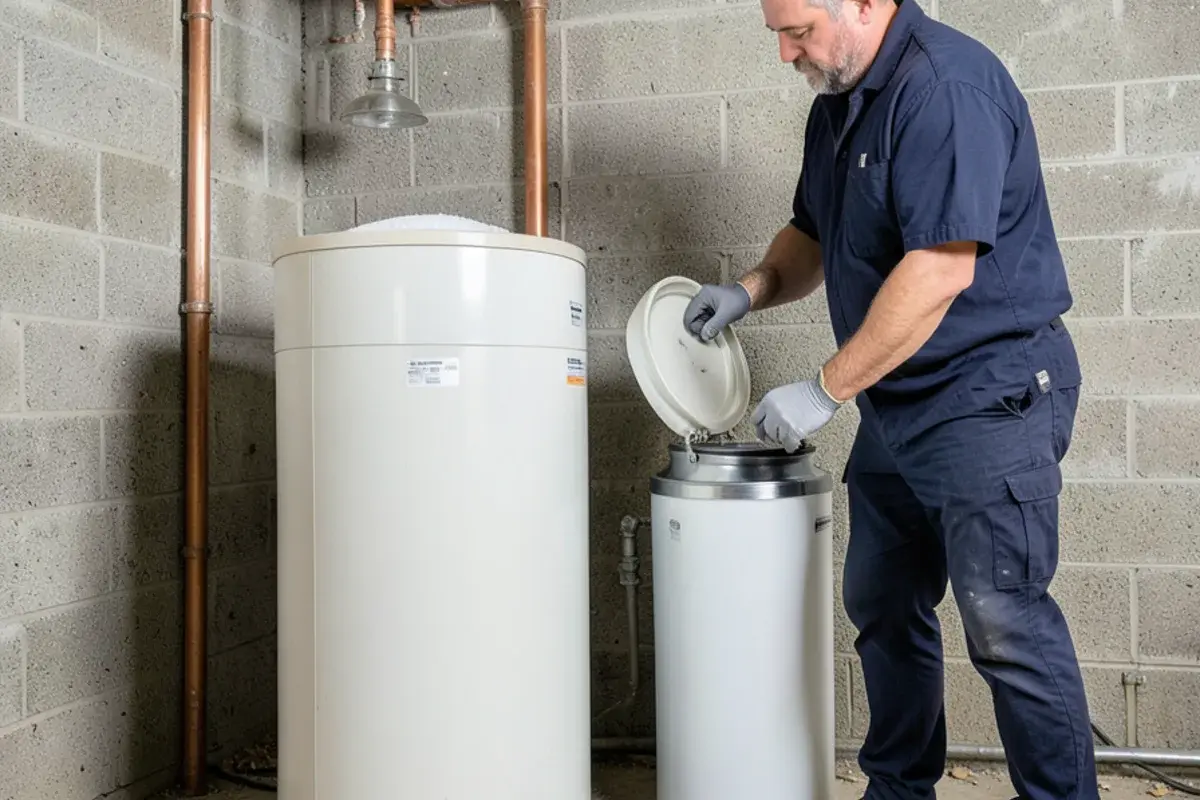
A softener is the right answer when the number is high and you see its effects. A zeolite softener swaps calcium and magnesium for sodium, and the owner adds salt to the brine tank. IDPH lists low maintenance as its main advantage and says a properly maintained unit can last almost indefinitely.
The limits are real. It removes calcium, magnesium and only small amounts of iron. People on salt-restricted diets should ask a doctor before drinking softened water. Reverse osmosis, which strains minerals out through a membrane, is the other route IDPH names, and it suits drinking water better than a whole house.
Read water softener installation for sizing and placement, and whole house water filtration if iron or taste is part of the complaint. For Marquette Heights homes on either public water or a well, the first step is the same: test, then size.
What Does Softening Cost Once It Is Running?
Softening trades one set of costs for another, and it does not zero them out. A softener runs on salt, the water each regeneration flushes to the drain, and the sewer charge on that same water. University of Nebraska Extension puts one regeneration at about 50 gallons, roughly one load of laundry in an older washer.
Here is that water priced at the City of Washington's listed residential rates. Twice a week is an assumption for the arithmetic, not a measurement of any home, and your own count follows your hardness and how much water the house uses.
| Line | The math | Per year |
|---|---|---|
| Water sent to the drain | 50 gallons, twice a week, 52 weeks | 5,200 gallons |
| Water charge | 5.2 thousand gallons at $3.28 | About $17 |
| Sewer charge | 5.2 thousand gallons at $6.01 | About $31 |
| Water and sewer total | Before salt | About $48 |
Salt comes on top. Extension says the amount depends on the household, daily water use, softener capacity and hardness, so count your own bags over a few months instead of trusting a chart. Check the current rates with the city, or with your utility if you live elsewhere.
Three Ways to Shrink the Running Cost
- Pick demand-initiated regeneration. The EPA's WaterSense program says units that regenerate on actual use are more efficient than units on a fixed schedule.
- Read the efficiency rating. The NSF/ANSI 44 standard includes a voluntary rating of 5.0 gallons or less per 1,000 grains removed.
- Soften less of the house. WaterSense suggests softening only some uses, such as hot water, and says outdoor water may not need it. Extension advises against repeated use of softened water on plants and lawns.
The Sodium Line on the Ledger
Sodium is a cost of a different kind. Extension says softening adds about 8 mg/L of sodium for each grain per gallon removed. Applied to the 9.2-grain Illinois median, that is about 74 mg in every liter. The median is only a stand-in, so use your own test result. A cold line to the kitchen tap that bypasses the softener is the common way around it.
What We Look at Before Anyone Buys a Softener
We start with the water, not the equipment. Who lives in the house, and how much hot water do they use? What does the test say about hardness and iron? Are there scale deposits on aerators and showerheads, and what comes out of the heater's drain valve?
If a softener already exists, we check the salt level, the bypass valve position and the last time anyone looked. A softener that has run out of salt delivers hard water and gives no warning. When the sizing makes sense, you get a clear, upfront quote that shows what the test justified and what it did not.
Sometimes the honest answer is no softener. WaterSense says softeners are not necessary in all homes and belong where hardness is substantial. If your reading sits in the middle of the scale and the heater is healthy, descaling aerators and draining the tank on schedule costs less than salt and regeneration water. The picture changes in a house on a private septic system, because Extension notes regeneration adds load to it, and WaterSense warns that the sodium and chloride can harm those systems. That is a reason to choose an efficient unit, or soften less water, before you buy.
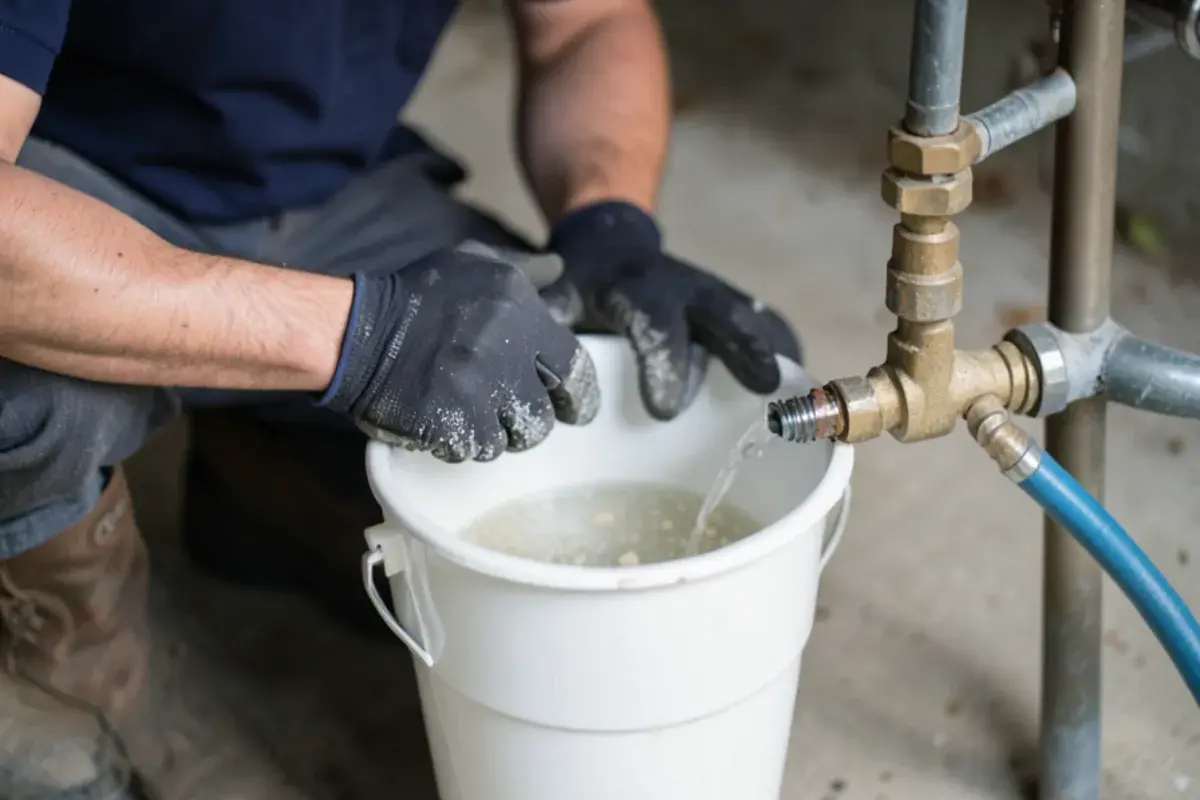
If scale has already built up in the tank, the annual water heater maintenance checklist shows what to drain and what to leave to a plumber.
Test First, Then Compare the Bills
The cheapest step is the reading. Get your number from the utility report or a test, then set what scale is costing you against what a softener would cost to run. A heater that already rumbles or runs out early may need water heater repair whichever way you decide.
Ready to talk it through? Call (209) 563-1400 with your test result and the age of your water heater. We work in Morton, Marquette Heights and across the Peoria area, and we will tell you whether the number justifies equipment at all.
Sources
- U.S. Geological Survey: Explanation of Water Hardness (archived)
- Illinois Department of Public Health: Commonly Found Substances in Drinking Water and Available Treatment
- Tap Water Data: Water Hardness in Illinois
- National Board of Boiler and Pressure Vessel Inspectors: Residential Water Heater Safety
- U.S. EPA WaterSense: Water Softeners, Technical Reference Manual fact sheet
- University of Nebraska-Lincoln Extension: Drinking Water Treatment, Water Softening (Ion Exchange)

Written by the Professional Sewer & Drain Services team
A plumbing and sewer company based in Washington, IL. About us