Problem solving
Why You Have No Hot Water: Common Causes
Published November 1, 2026. Updated November 1, 2026.
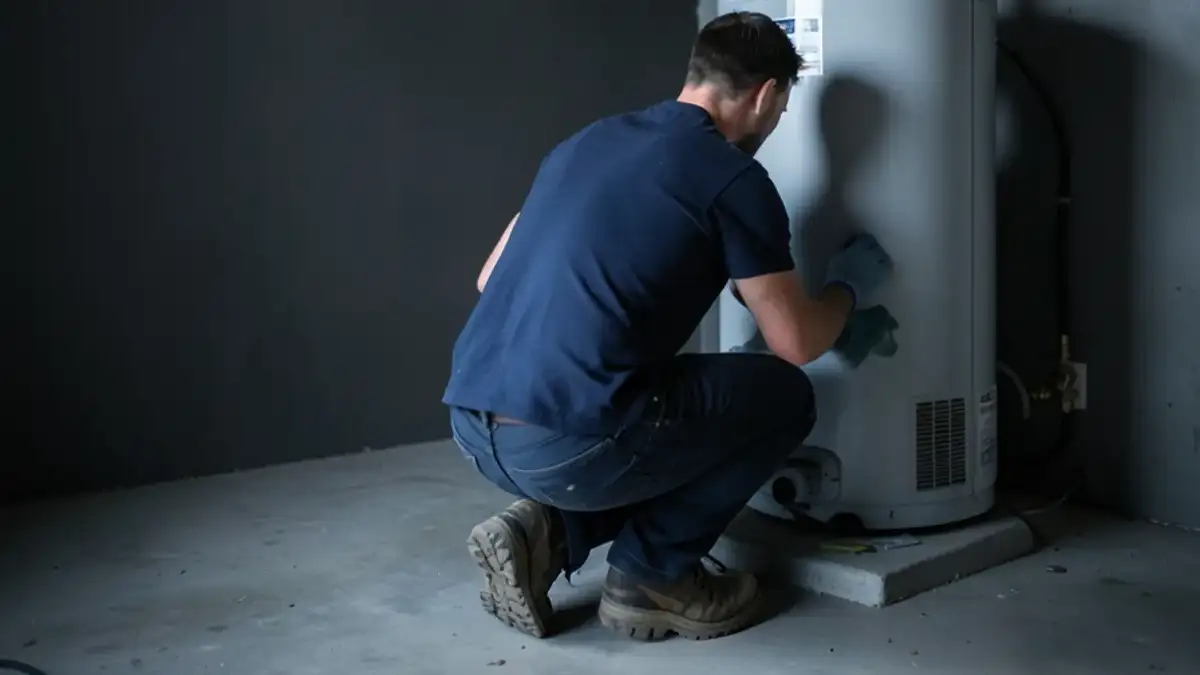
The most common no hot water causes are a gas pilot that went out, a tripped breaker or limit switch, a failed element or thermocouple, and a worn-out tank. Find out whether your heater is gas or electric, then check the simple items first. Stop and call if you smell gas or see water at the base.
What Are the Most Common Causes of No Hot Water?
Start with the fuel. A gas heater and an electric heater fail in different ways, so check the one you own.
| Heater type | Likely cause | What you can check |
|---|---|---|
| Gas storage tank | Pilot out, bad thermocouple, closed gas valve | Whether the pilot is lit and the gas valve is open |
| Electric storage tank | Tripped breaker, tripped high-limit switch, failed element | The breaker, then the red reset button, once |
| Any tank | Thermostat set too low, sediment, tank at end of life | The dial and the age of the unit |
| Gas tankless | Scaled heat exchanger, no power, low flow | Power to the unit and whether the faucet is open enough |
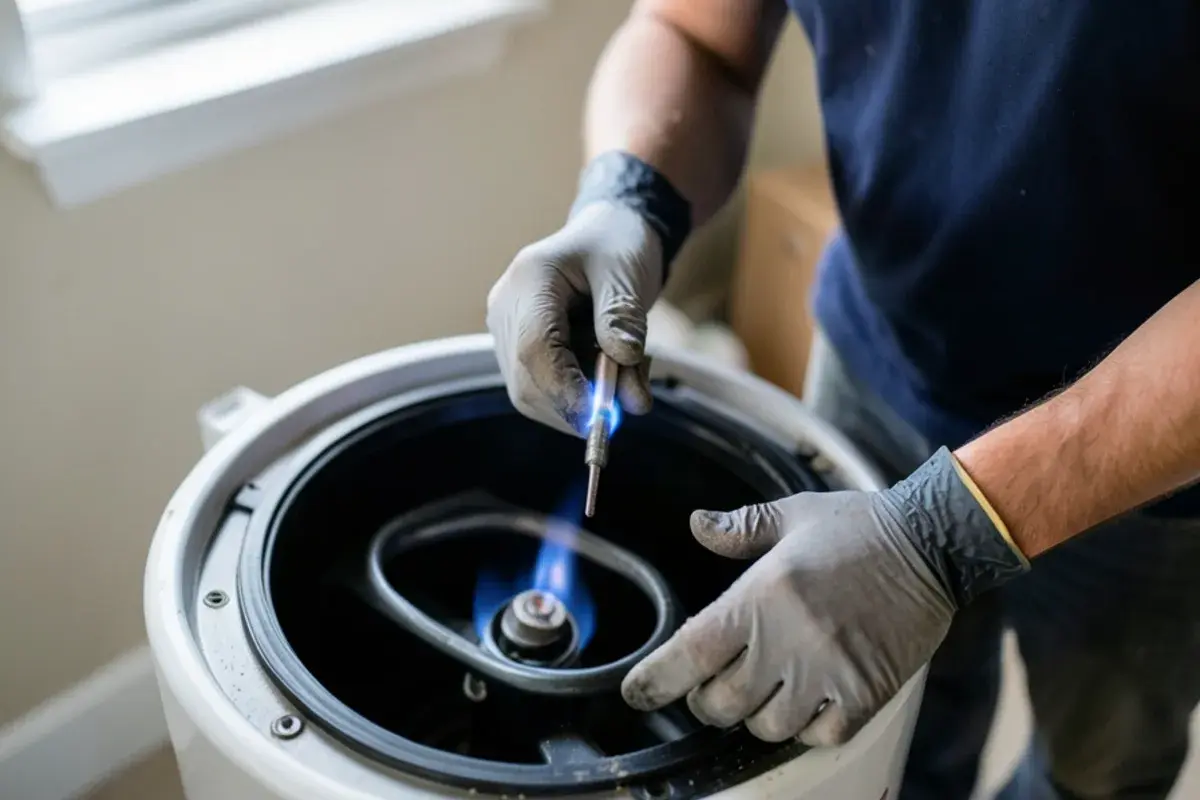
Safety comes first. If you smell gas, leave the house and call the gas utility or 911 from outside. Do not hunt for the leak yourself. A yellow pilot flame instead of blue can point to a gas-to-air problem and, according to Bob Vila's guide, possibly carbon monoxide, so leave if anyone feels dizzy or sick. For electric units, turn the power off before you open any panel.
No hot water this morning? Call (209) 563-1400
Open 7 days, 7:15 AM to 6:15 PM. Tell us what is happening and we will give you a clear, upfront quote.
Is the Water Cold, Lukewarm or Just Running Out?
Each symptom points somewhere different, so name yours before you touch the heater. Cold, lukewarm and short-lived are three separate problems.
| What happens at the tap | What it points to | Where to look |
|---|---|---|
| Stone cold at every fixture | The heater is not firing | Power or gas, then the pilot or reset button |
| Lukewarm at every fixture | Part of the system is working | Thermostat, one failed element, a yellow gas flame |
| Hot for a few minutes, then gone | Too little usable hot water | Sediment, a lower element, a tank too small for the house |
| Fine after an hour of waiting | The tank was emptied | Showers, laundry and dishes all running together |
| Cold at one fixture only | The fixture, not the heater | The cartridge, aerator or shutoff at that fixture |
Bob Vila's guide puts household tanks at about 30 to 80 gallons. A home that has added people or a big soaking tub can outgrow its heater with nothing broken at all.
Why Is the Pilot Light Out on a Gas Water Heater?
A draft is the simple cause, a thermocouple is the common one. A breeze or a downdraft in the vent can blow out the pilot, and the unit's label shows how to relight it. If the flame dies as soon as you release the control, the thermocouple may be misaligned or failing, as Bob Vila's guide explains. It is the small sensor that proves the pilot is lit before gas flows to the burner.
If the pilot will not stay lit, or the gas valve is open but no gas reaches the unit, stop and call. That is gas work and it needs a pressure test and leak check when it is done.
When Gas Is Not Reaching the Burner
Check whether the problem is the heater or the supply. If your stove or furnace also has no gas, the fault may be upstream, so call Ameren Illinois, which serves the area for gas. Bob Vila's guide lists a closed valve, a kinked line or interrupted service as the usual reasons. If gas is confirmed at the house and still does not reach the heater, that is a plumber's job.
Newer Tanks With Sealed Burners
Some gas tanks have no open pilot you can reach. Bob Vila's guide says a pilot in an enclosed chamber may need a plumber to relight. Chadwell Supply's troubleshooting sheet adds that a pilot failing to stay lit can come from a clogged air intake or vent as well as a bad thermocouple, and that the flammable vapor sensor is another part to test. None of those are a homeowner fix, and forcing the unit to run with a blocked vent is how carbon monoxide gets into a house.
What Goes Wrong With Electric Heaters?
Electric tanks lose hot water to power or parts. A storm surge or a breaker slightly out of position can cut the unit off. A failed heating element or a tripped high-temperature cutoff stops the heating. The common first move is to switch the breaker off, wait about 20 seconds and switch it on. A breaker that will not stay on needs replacing.
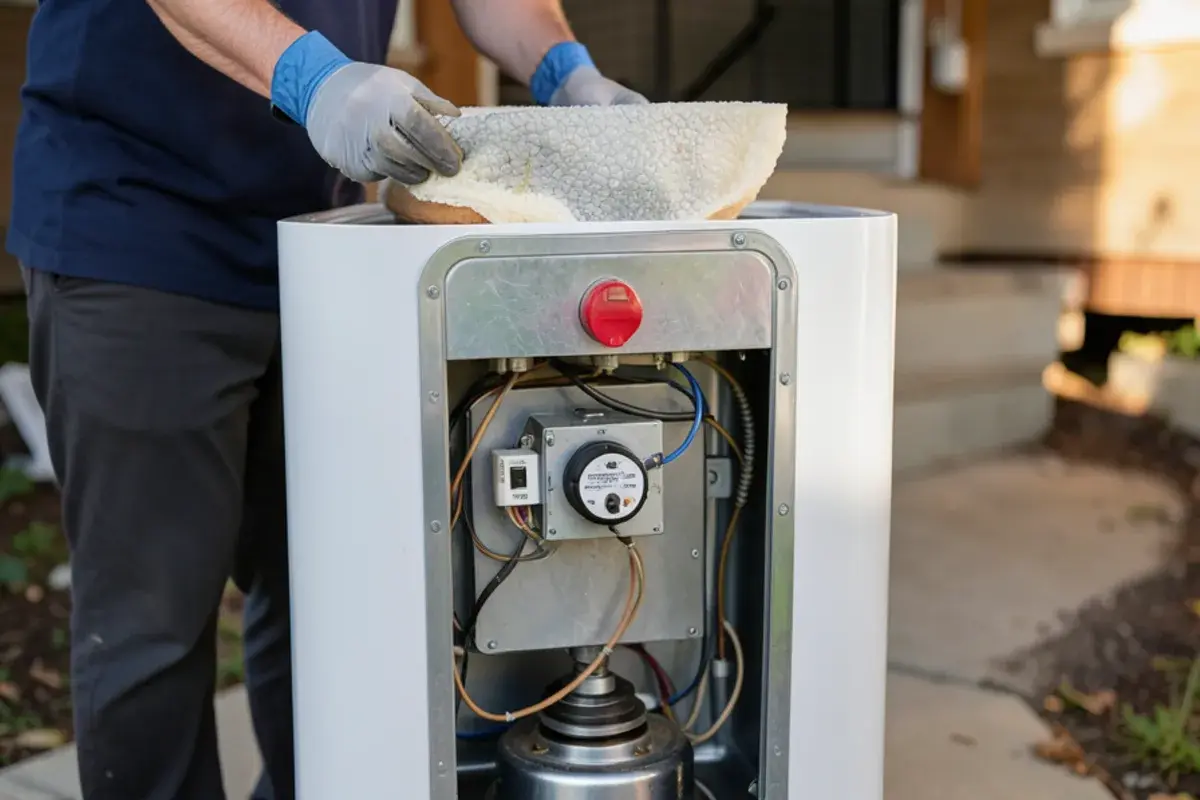
If the red reset button trips again after you press it once, do not keep pressing it. Repeated trips mean a fault that needs testing.
Hunker's guide lists the usual reasons a button trips: a faulty thermostat or one set too high, a short in an element, a bad high-limit switch, or a power outage. The button sits close to live wiring, so cut the power at the breaker before you take a panel off. A lukewarm tank with a healthy breaker often means only one of a tank's two elements is working.
When Is Sediment or Age the Real Cause?
A heater that heats but runs out fast is often full of sediment or near the end of its life. Bob Vila's guide puts a standard tank at about 10 years, and a Department of Energy Building America document puts storage tanks at 10 to 15 years, against more than 20 for tankless. A tank that is rusting, leaking or past that range is usually a replacement case, not a repair.
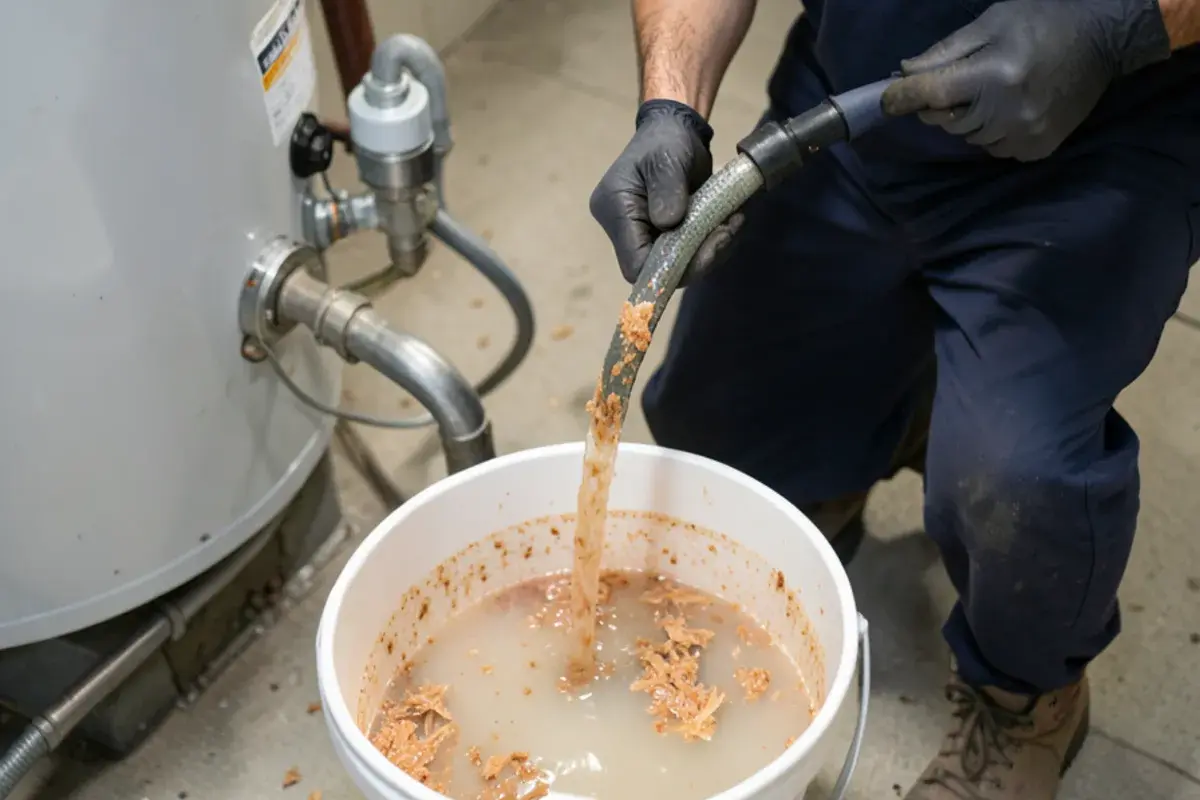
Cold weather adds to it. Washington's cold season runs about December 1 to March 1 with average highs under 43°F, and a tank has more to heat when the incoming water is colder. A unit already near its limit shows it first in January. Hard water speeds sediment up, which our post on what hard water does to your plumbing explains.
What Can You Safely Check Before You Call?
Five checks take ten minutes and need no tools:
- Confirm the problem is the whole house, not one fixture. Run hot at a sink and a shower.
- Check the thermostat dial. Bob Vila's guide gives 122 to 140°F as the usual range, and a low setting causes a shortage.
- On an electric unit, look at the breaker. On gas, look at the pilot window and the gas valve handle.
- Look at the floor around the tank. Any water at the base means stop and call.
- Note the age on the data label so you can tell us on the phone.
If those checks turn up nothing, the cause is inside the heater.
Give the Fix Time Before You Judge It
A tank does not recover in five minutes. Bob Vila's guide says hot water should return 30 to 40 minutes after a thermostat change and that the tank should reach temperature within two hours. Hunker gives about one to two hours after a successful electric reset. If the tap is still cold after that wait, stop trying fixes and call.
What About a Tankless Unit With No Hot Water?
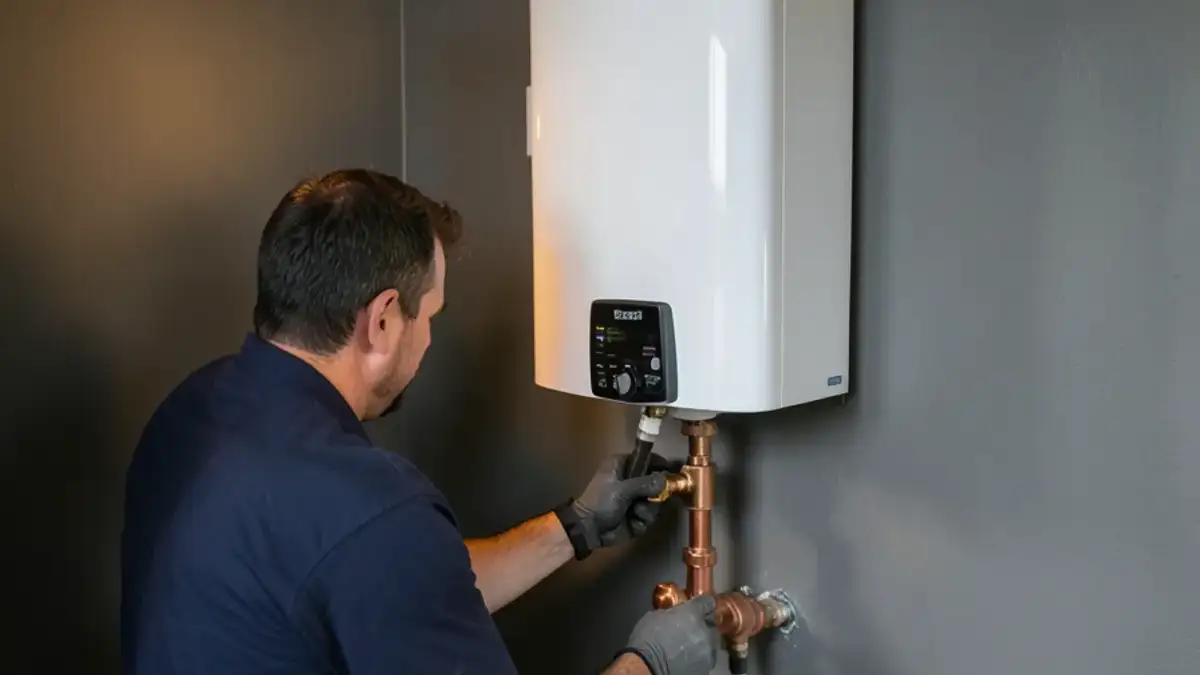
Start with the flow and the power. The Department of Energy Building America document notes that gas tankless units need about 0.5 gallons per minute to fire, so a barely open faucet can run cold. They also need an electric connection, which means no hot water during an outage, and they scale up in mineral-heavy water. Our tankless water heater page covers service for these units, and our tankless and tank comparison explains the flow limits in winter.
What We Look For on a No Hot Water Call
We ask which fuel, how old the heater is and whether the whole house is out. Then we check the simple items in order: power or gas, the thermostat, the controls, the burner or elements, and the tank. We look at the base for moisture before anything else. A wet tank bottom changes the plan, since a leaking tank cannot be repaired.
Age decides how much repair makes sense. A thermocouple or element on a five-year-old tank is an easy yes. The same part on a tank past its expected life buys time and no more, and the next failure may be the tank itself. Bob Vila's guide counts repeated resets and frequent repairs as signs to replace. We will give you both prices, and our post on water heater replacement cost shows what moves the number if water heater installation is the better call.
Our water heater repair page covers what we repair. If the numbers say replace, we explain why and give a clear, upfront quote. We take these calls from Washington, Peoria and nearby towns, seven days a week from 7:15 AM to 6:15 PM.
Still Cold? Have These Ready When You Call
Call (209) 563-1400 and tell us the fuel type, the age on the label, whether the whole house is out and what you have already tried. A photo of the data label helps us bring the right part. If you smell gas, leave the house and make the call to the gas utility or 911 from outside, before anything else.
Sources

Written by the Professional Sewer & Drain Services team
A plumbing and sewer company based in Washington, IL. About us